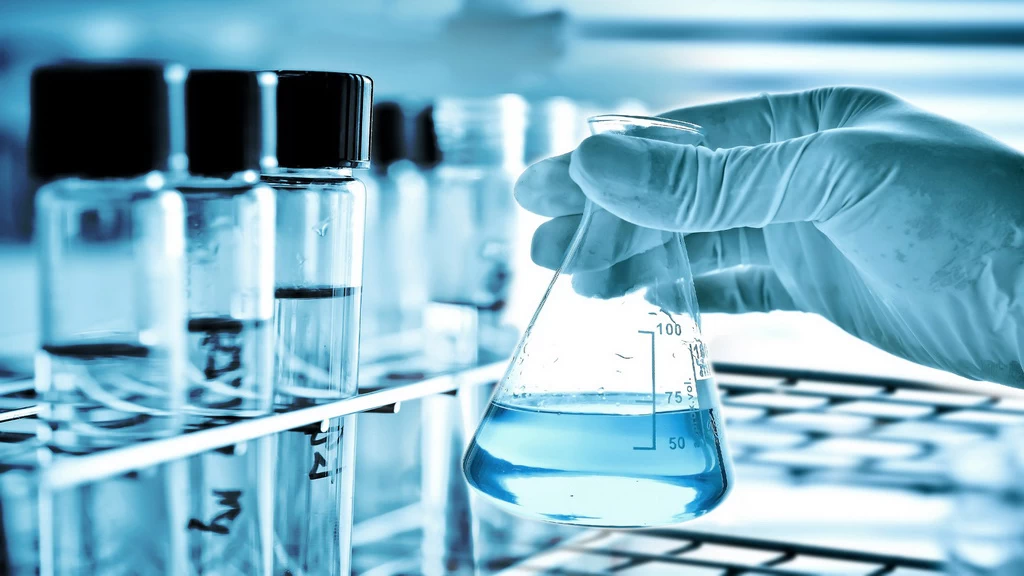
Nanobubbles in Research & Testing
Low-flow nanobubble systems for research purposes, from nanobubble generation characteristics and gas dissolution
to industrial applications.
Using bubble mixers from the same family as our commercial equipment, they support
basic research, comparison tests and pilot validation at universities, research institutes and corporate R&D
centers.
Reproducibility and operating condition control in nanobubble tests
Nanobubble research requires comparing operating conditions such as gas type, gas supply and treatment flow while adjusting them step by step. To carry lab results into real processes, the reproducibility of test conditions and scalability must also be reviewed.
-
Low-flow test environment
Labs need equipment and setups that allow repeated tests with small volumes of water.
-
Comparison of various operating conditions
Gas type, injection rate, treatment flow and operating time must be tested and recorded separately.
-
Reproducibility and scale-up
Tests under comparable conditions should give consistent results within an acceptable range, and those results should be evaluated against the flow rates and operating conditions of the intended process.
Role of research nanobubble systems
- Bubble mixers from the same family as field equipment The HQN and HEN bubble mixers used in commercial equipment are configured for research flow rates.
- Adjustable test conditions and scale-up review Runs on 220 V single-phase power with adjustable gas injection. Test results serve as baseline data for selecting larger models and reviewing processes.
Bubble mixers from the same family share the same design; this does not mean research and commercial units have the same bubble characteristics or gas dissolution performance.
What Are NanobubblesFrom small-scale tests to industrial application review
Research nanobubble systems can be used to check operating conditions and performance at small scale and to obtain the technical data needed before adopting commercial equipment. The benefits below are expected benefits that depend on research purpose and test design; they do not represent validated effects for each research field.
-
Action
Low-flow nanobubble water supply
- Circulation connected to a lab tank
- Supply of air, oxygen, nitrogen and other gases
- Repeated runs and condition changes
Expected benefit
-
Field effect
Comparison tests under various conditions
- Comparison of gas types and injection rates
- Performance evaluation by target
- Recording and reproducing operating conditions
Expected benefit
-
Business effect
Commercial-scale application review
- Small-scale tests before adopting commercial equipment
- Review of required treatment flow
- Baseline data for scale-up
Expected benefit
From basic research to industrial process trials
Research nanobubble systems can be used in many research fields, including bubble generation characteristics, gas dissolution, cleaning, water treatment, agriculture and culture; operating conditions and performance evaluation methods are set for each research purpose.
-
Basic & characterization research
Bubble size, number concentration, stability, gas dissolution characteristics
-
Laundry & cleaning
Comparison tests for laundry, surface and parts cleaning
-
Water treatment & ozone oxidation
Dissolved oxygen improvement and ozone oxidation conditions
-
Agriculture & smart farms
Dissolved oxygen management of irrigation water and nutrient solution
-
Fermentation · Culture
Gas transfer conditions in culture media
-
Food & dish washing
Applicability to food ingredient and dish washing
- Commercial: research systems are in field use and repeated supply (this differs from the validation stage of effects in each research field)
Research systems matched to test flow and gas
There are three research models: HQN-001, HQN-002 and HEN-002. They are chosen by the treatment flow, gas and injection rate needed for the test, and the circulation piping and gas supply setup for the research purpose are reviewed as well.
Swipe left or right to see the full table.
| Item | HQN-001 | HQN-002 | HEN-002 |
|---|---|---|---|
| Treatment flow rate | 0.6 m³/h (10 L/min) | 1.2 m³/h (20 L/min) | 2.0 m³/h (about 33 L/min) |
| Pump power | 0.75 kW | 1.0 kW | 1.0 kW |
| Power supply | 220 V single-phase | 220 V single-phase | 220 V single-phase |
| Recommended gas injection rate | 0.3 L/min | 0.5 L/min | 1.0 L/min |
| Bubble mixer | HQN | HQN | HEN |
| Details HQN-001 | Details HQN-002 | Details HEN-002 |
Gas supply equipment is not included. For tests using ozone, order the ozone option; the ozone generator, off-gas ozone treatment and lab safety equipment are provided by the lab. Hydrogen is flammable, so check leakage and ventilation conditions. For tests with strict hygiene standards, consider HTV.
Selection factors
- Required flow
- Gas used (air, O₂, N₂, H₂; ozone optional)
- Gas injection range
- Tank and piping connection
- Measuring equipment (particle size analyzers etc. provided by the lab)
Information to include in your inquiry
- Research purpose
- Required flow and tank size
- Gas used and injection range
- Test conditions and measuring equipment
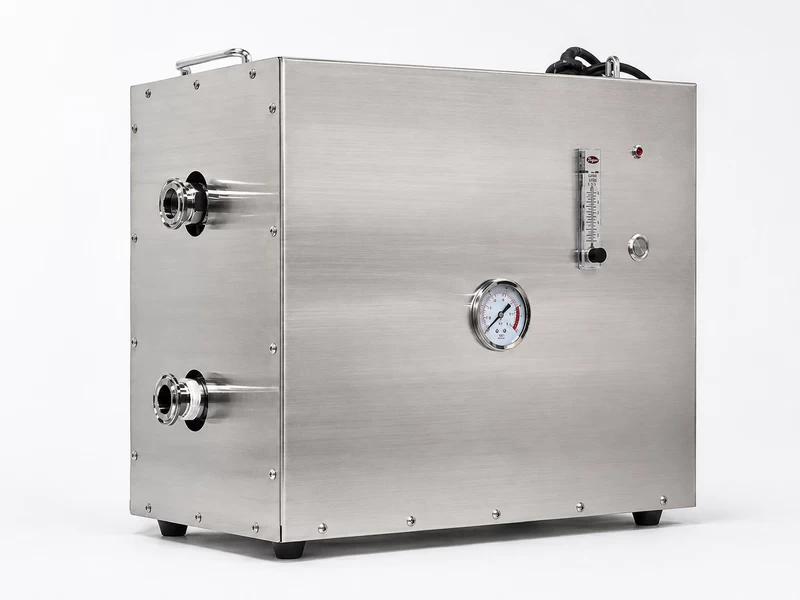
Supplied to research institutes and corporate R&D centers
Honour Tech has supplied research nanobubble systems to universities, public research institutes and corporate R&D centers in Korea and abroad, and supports technical discussions so research results can lead to industrial-scale application reviews. Supply records are presented with regard to confidentiality and the disclosure scope agreed with client institutions.
National research institutes
Government-funded and public research institutes
University laboratories
University laboratories, industry-academia cooperation foundations
Corporate R&D centers
Corporate R&D centers, technology centers
Frequently Asked Questions
Common questions about model differences, gases used, lab installation, scaling up to commercial size, bubble measurement and validation of research results.
How do the three research nanobubble system models differ?
HQN-001, HQN-002 and HEN-002 differ in treatment flow rate and bubble mixer, and are selected according to research purpose and test conditions.
HQN-001 is configured for 0.6 m³/h, HQN-002 for 1.2 m³/h and HEN-002 for 2.0 m³/h. The two HQN models use the HQN bubble mixer, and HEN-002 uses the HEN bubble mixer.
Honour Tech checks the volume of water needed for testing, gas dose, target performance and tank and piping conditions to propose a model. Performance of each model may vary with actual operating conditions.
Which gases can be used with research systems?
Air, oxygen (O₂), nitrogen (N₂) and hydrogen (H₂) can be used according to the research purpose, and ozone (O₃) is ordered as the ozone option.
Supply pressure and flow, wetted-part materials and safety conditions vary by gas. Hydrogen is flammable and requires leak and ventilation management, while ozone requires an ozone generator, off-gas treatment and laboratory safety equipment.
Gas supply equipment is not included in the standard configuration and must be prepared by the laboratory. Honour Tech checks the gas, target dose and test environment to review the system configuration.
Can it be connected to standard laboratory power and tanks?
All three research models run on 220 V single-phase power and are connected to suit tank and piping conditions.
Research systems circulate water from a tank, and installation requires piping and tank connections suited to the operating conditions of the pump and device. Depending on the test purpose, a gas source and measuring instruments must also be prepared separately.
Honour Tech checks the laboratory's power, installation space, tank size and piping configuration to advise on installation.
Can results obtained with a research nanobubble system be applied to large commercial systems?
Results from research systems are useful for confirming feasibility and operating conditions and for obtaining baseline data for commercial system design. Research systems use bubble mixers from the same family as field equipment.
However, as flow rate and system scale change, bubble size distribution, number concentration, gas transfer performance and energy use can also change. Rather than scaling up conditions confirmed on small equipment as they are, they should be reviewed again for commercial flow rates and operating conditions.
Honour Tech reviews commercial system configurations based on the target performance and key operating variables confirmed in small-scale tests, and verifies performance step by step under field conditions where needed.
Can bubble size and number concentration also be measured with a research system?
A nanobubble generator and a bubble analyzer are different instruments, so a separate analytical instrument is needed to evaluate size distribution and number concentration.
Nanoparticle tracking analysis (NTA) instruments are commonly used; measurement methods and limitations are explained under Myths & Facts on the FAQ page. Measurement of generation characteristics and actual application effects such as cleaning, water treatment or agriculture are different indicators, and application effects are confirmed separately with actual targets and control conditions.
In research that evaluates process performance, recording dissolved gas concentration, flow rate, operating pressure, gas supply and operating time along with particle size analysis makes it possible to review both reproducibility and commercial applicability.
Tell us your research purpose, required treatment flow, gas and test conditions, and we will review a research system and installation setup.
Contact Us