
Nanobubble Validation and Research Library
Tests and field results from Honour Tech, together with published research from Korea and abroad, in one place. Each entry states its test conditions and limitations.
- 5 In-house tests
- 9 PoC projects
- 10 Videos
- 92 Research papers
In-house tests
Comparison tests conducted by Honour Tech. Each is compared with a control under the same conditions, and every result states its evidence level: measured, observed or estimated.
Crop growth
-
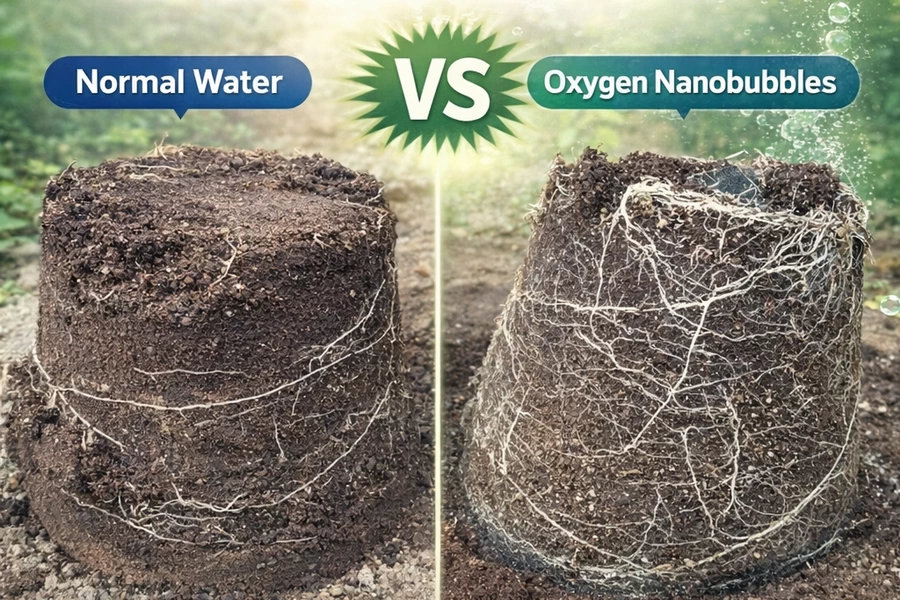
Yield and root development of 11 crops Measured
+3–58%Yield, 10 pepper and fruit-vegetable varieties, vs. control
Test overview
- Overview
- Eleven crops, including peppers and fruit vegetables, were grown in pots in a greenhouse with NB-treated water or ordinary groundwater, and yield and root development were compared.
- Location
- Greenhouse, Goyang, Gyeonggi Province
- Cultivation method
- Pot culture. 70% potting mix, 10% compost, 20% soil (same for treatment and control)
- Transplanting date
- May 14, 2016
- Cultivation period
- 77–106 days depending on crop (36 days for oriental melon)
- Treatment
- Irrigation with NB-treated water (DO about 32 mg/L)
- Control
- Irrigation with ordinary groundwater
- Test equipment
- Early-development equipment
- Notes
- Pot trial with 5 or 10 plants per variety. For oriental melon, root development (30% or more) was compared instead of yield.
- Category
Surface cleaning
-
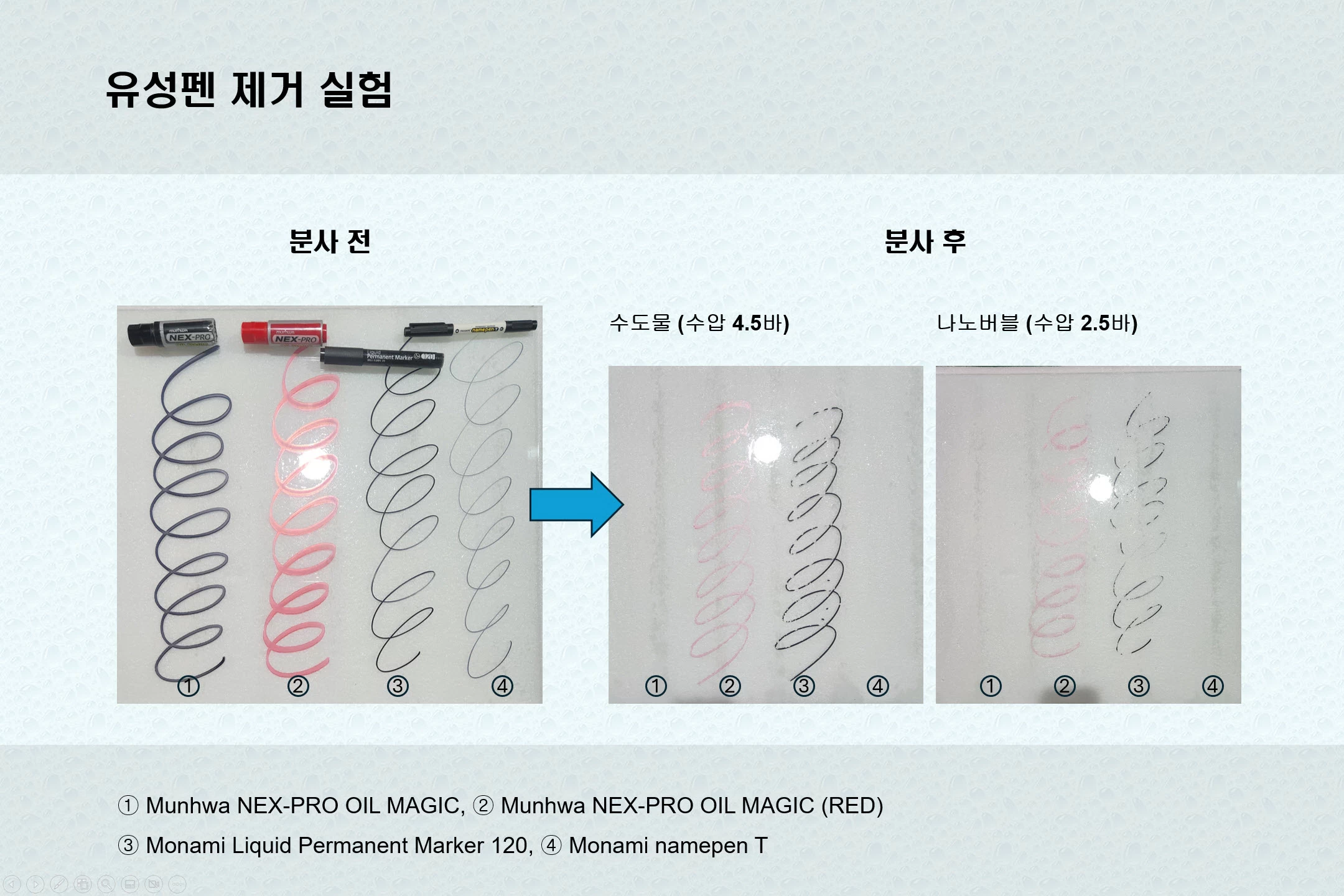
Oil-based marker cleaning comparison on glass Observed
2 of 4fully removed, vs. tap water spray
Test overview
- Overview
- Tap water and nanobubble water were sprayed with the same device and nozzle to compare how well four oil-based markers drawn on glass were removed.
- Target
- Four oil-based markers on a glass surface; two of them normally require rubbing with acetone to remove
- Test date
- September 10, 2025 (earlier tests: November 2024, January 2025)
- Treatment
- Nanobubble water. Nozzle pressure 2.5 bar, gas 1 L/min
- Control
- Tap water. Nozzle pressure 4.5 bar, no gas
- Evaluation
- Visual comparison of marks remaining after cleaning
- Test equipment
- Test rig consisting of a nanobubble mixer and a 1.5 HP pump
- Notes
- Nanobubble water dropped to 2.5 bar after passing through the mixer, so this is not a comparison with tap water (4.5 bar) at the same pressure. Evaluation was visual.
- Category
Textile cleaning
-
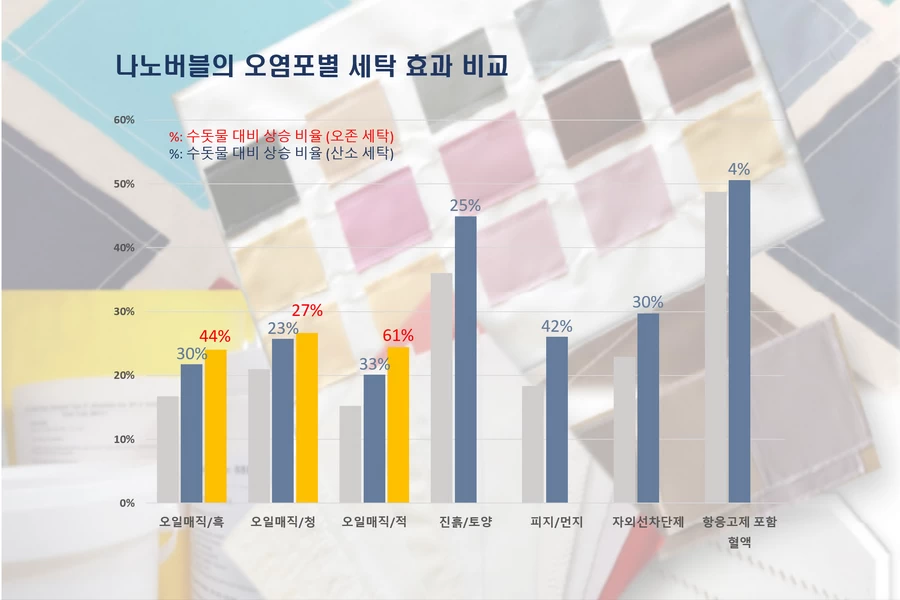
Cleaning rate and residual detergent for 7 soil types Measured
+23–42%Cleaning rate, 6 of 7 soil types, vs. tap water laundry
Test overview
- Overview
- Standard soiled fabrics and oil-based marker fabrics were washed with tap water, oxygen nanobubble wash water and ozone nanobubble wash water and compared.
- Target
- Four commercial standard soiled fabrics (clay/soil, sebum/dust, sunscreen, blood) and in-house oil-based marker fabrics in 3 colors
- Test period
- September 2025 (first test)
- Treatment
- Oxygen nanobubble wash water (dissolved oxygen 55.0 mg/L). Ozone nanobubble wash water was also tested on oil-based marker fabrics
- Wash conditions
- 7 kg top-loading washer. One wash (13 min, 25.8 L) and three rinses (30.4 L each), 50 min in total
- Control
- Tap water (dissolved oxygen 7.0 mg/L)
- Replicates
- 5 soiled fabric swatches per condition, one wash
- Measurement
- Cleaning rate calculated from the color difference before and after washing, measured with a colorimeter (D65, 10°) (CIE Lab color difference)
- Notes
- Results of the first test, with 5 swatches per condition washed once.
- Category
Wastewater treatment & reuse
-
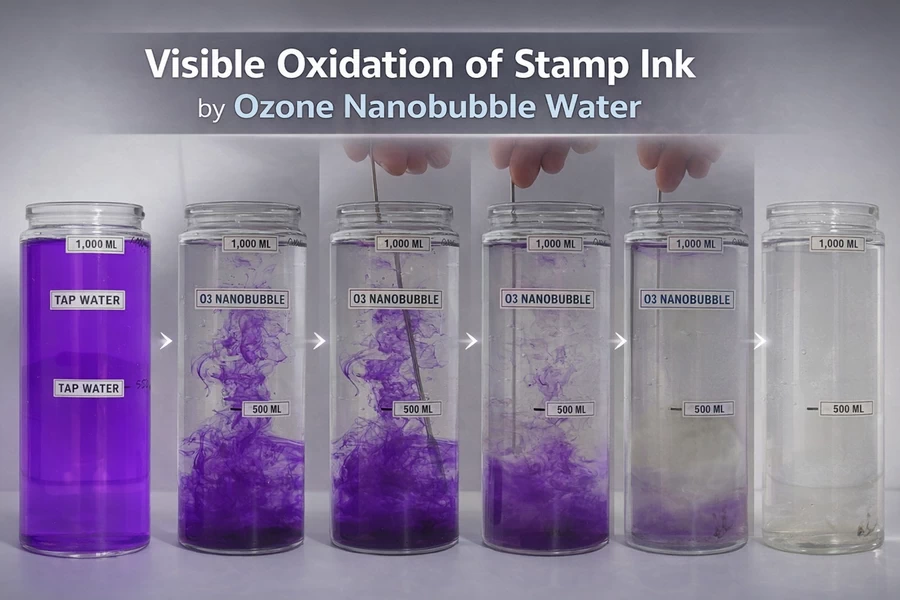
Oxidation and decolorization of oil-based ink Observed
Almost clearOzone nanobubble water. Color remained in tap water
Test overview
- Overview
- The same amount of oil-based stamp ink was dropped simultaneously into tap water and ozone nanobubble water, and the color change was compared.
- Target
- Oil-based stamp ink
- Test date
- March 22, 2022 (water temperature 9.0 ℃)
- Method
- Tap water and ozone nanobubble water in two 1,000 mL containers, with the same amount of ink added at the same time
- Ozone nanobubble water
- Flow 600 L/hr, oxygen 1 L/min, ozone generator 20 g/hr
- Basis of comparison
- Tap water
- Evaluation
- Visual comparison of color change
- Test equipment
- HQN-001
- Notes
- A basic test comparing color change by eye.
- Category
Hygiene, disinfection & biosecurity
-
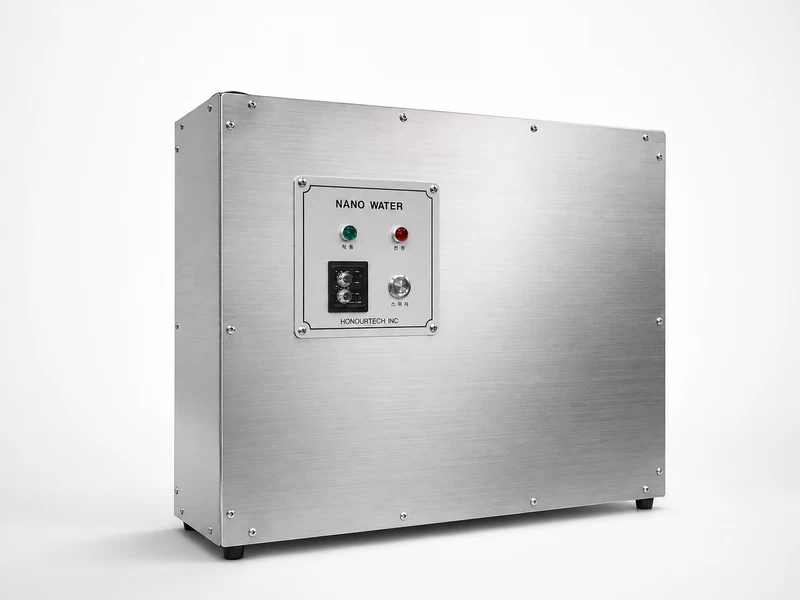
Dissolved oxygen of oxygen nanobubble water Measured
65–100 mg/LTreated water dissolved oxygen, S Series (SQN)
Test overview
- Overview
- The dissolved oxygen of oxygenated treated water was measured in a configuration connected to a dental unit chair's water line.
- Target
- S Series (SQN) configured for dental unit waterlines
- Treatment flow rate
- 0.5–3.0 L/min
- Operating pressure
- 3.5–4.0 bar
- Notes
- Values for treated water immediately after production; concentration changes after storage were not evaluated.
- Category
PoC
Field demonstration results confirmed by operating equipment at actual sites. Site conditions, measurement scope and items not confirmed are included.
Crop growth
-
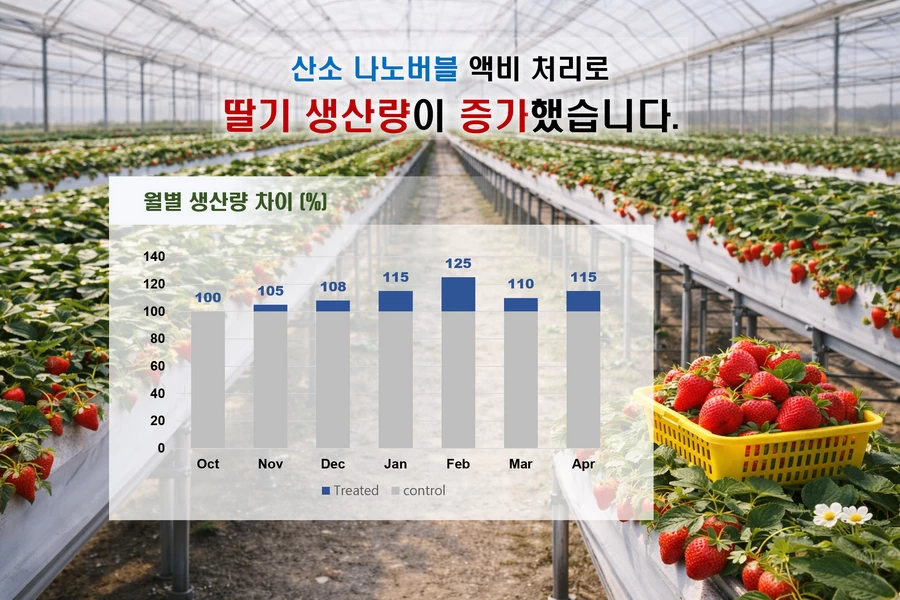
Strawberry yield and marketability Measured
+15% or moreYield, greenhouse strawberry farm
Demonstration overview
- Overview
- A raised-bed strawberry farm irrigated with NB-treated water for one growing season, and yields were compared.
- Target
- Strawberry (Seolhyang)
- Location
- Raised-bed farm, Jinju, South Gyeongsang Province, 3,000 ㎡ (about 1,000 pyeong)
- Period
- September 10, 2018 – April 15, 2019
- Application
- Irrigation with NB-treated water (DO about 32 mg/L)
- Basis of comparison
- Irrigation with ordinary groundwater
- Test equipment
- Early-development equipment
- Notes
- Results from one farm over one growing season.
- Category
-
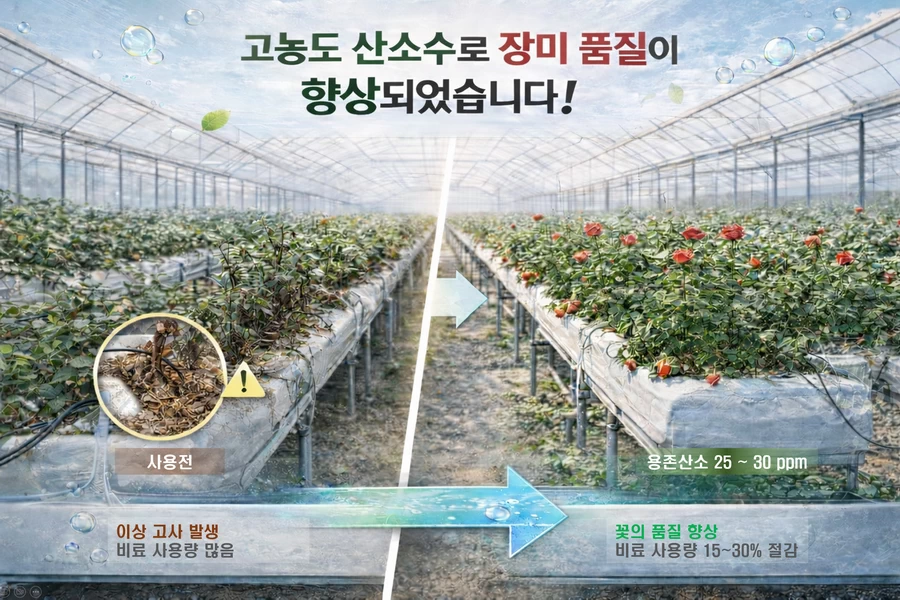
Recovery of rose growth Observed
3 days laterRecovery of wilting plants observed, hydroponic roses
Demonstration overview
- Overview
- Equipment was installed at a hydroponic rose farm with poor growth, and growth was observed before and after.
- Target
- Rose (hydroponic)
- Location
- Farm in Goyang, Gyeonggi Province, 3,000 ㎡ (about 1,000 pyeong)
- Period
- April 28 – June 30, 2017
- Application
- Irrigation with NB-treated water
- Basis of comparison
- Before and after installation
- Test equipment
- Early-development equipment
- Notes
- Observational results comparing before and after installation.
- Category
Wastewater treatment & reuse
-
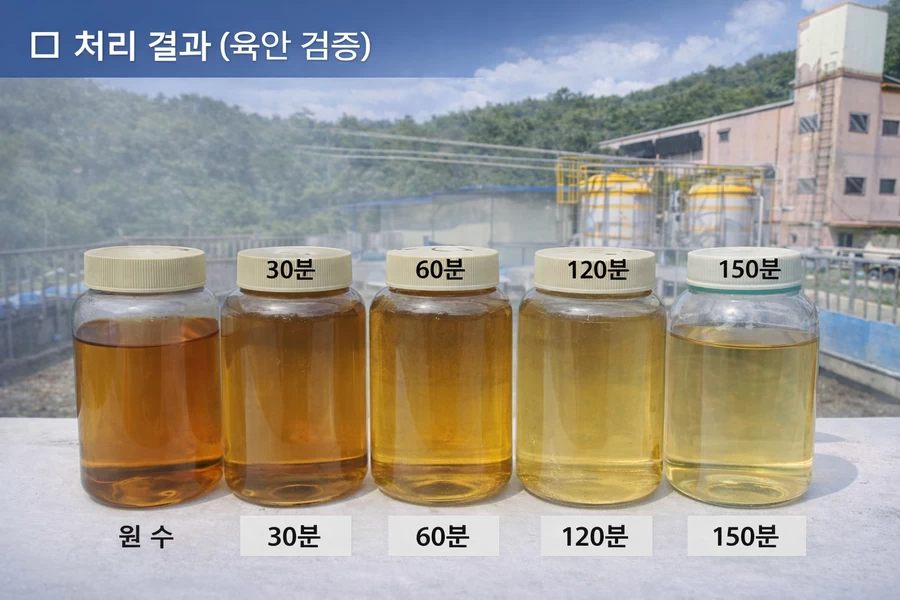
Color change in livestock wastewater Observed
150 minutesPoint at which color clearly faded, secondary effluent from a pig farm
Demonstration overview
- Overview
- Ozone nanobubbles were applied to pig farm effluent that remained brown after biological treatment, and changes in color and turbidity over time were observed.
- Target
- Secondary effluent from a pig farm wastewater treatment facility
- Location
- South Gyeongsang Province
- Test date
- August 19, 2022
- Application
- Ozone nanobubble treatment while circulating 7 m³ of effluent
- Evaluation
- Visual comparison of color and turbidity of collected samples
- Test equipment
- Ozone equipment at the time (2 mixers, 2 × 5.5 kW pumps)
- Notes
- Results from visual comparison of color and turbidity.
- Category
-
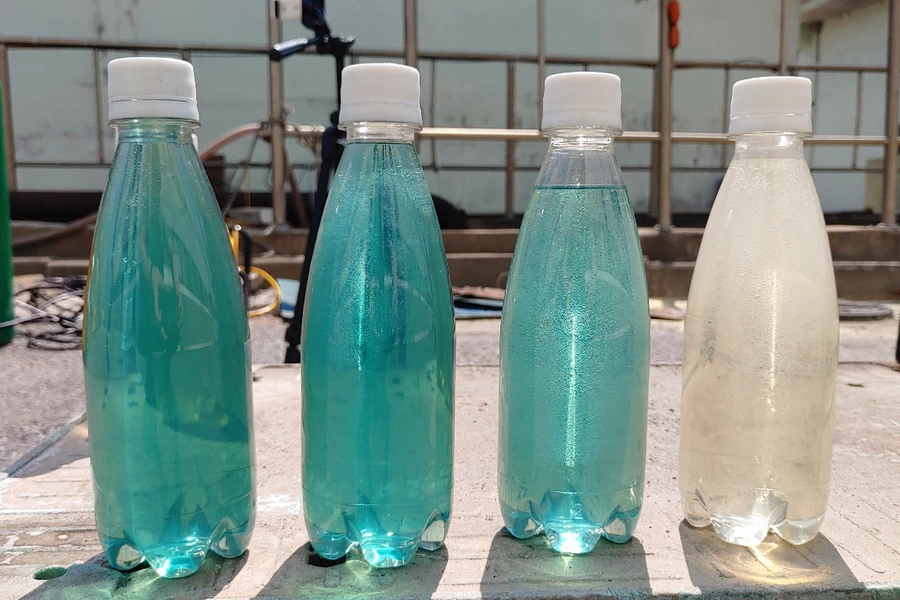
Decolorization of dyeing wastewater and the effect of water temperature Observed
12 passesPoint at which the yellow-brown color of ~60 ℃ wastewater disappeared
Demonstration overview
- Overview
- Ozone nanobubbles were applied to wastewater from a dyeing plant and the color change was observed. Efficiency was lower for hot wastewater.
- Target
- Dyeing wastewater from a dyeing plant's treatment facility (2 types at different temperatures)
- Location
- Korea
- Test date
- May 16, 2022
- Application
- Ozone nanobubble treatment with the wastewater passed through the unit several times
- Evaluation
- Visual comparison of color change by number of passes
- Unit
- Flow 1,500 L/hr, 1 HP pump
- Test equipment
- Small test equipment at the time
- Notes
- Efficiency was lower for hot wastewater.
- Category
-
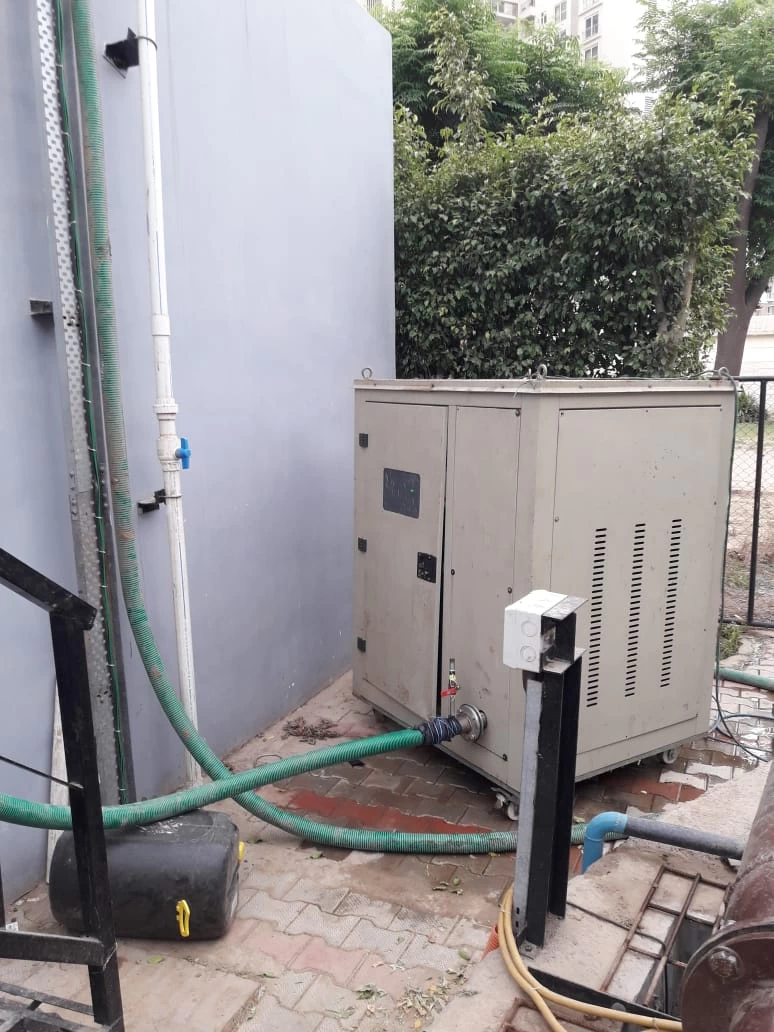
COD reduction at a sewage treatment plant Measured
56–92%COD reduction, range of 12 of 14 analyses
Demonstration overview
- Overview
- An oxygen nanobubble unit was connected to the existing process of a sewage treatment plant whose effluent COD exceeded the limit, and influent and effluent COD were analyzed for two months.
- Target
- Private sewage treatment plant (1,250 m³/day, MBBR process)
- Location
- Mohali, Punjab, India
- Period
- February 14 – April 16, 2022 (62 days)
- Application
- Water in treatment was drawn off, oxygenated and returned to the MBBR reactor, with existing process equipment kept in place
- Basis of comparison
- Effluent COD before application 70–90 mg/L (limit below 50 mg/L)
- Measurement
- Influent and effluent COD, analyzed by an accredited local laboratory
- Unit
- Nanobubble unit 60 m³/h, oxygen generator 40 L/min
- Notes
- Range of 12 of 14 analyses; operated and reported by the local partner.
- Category
-
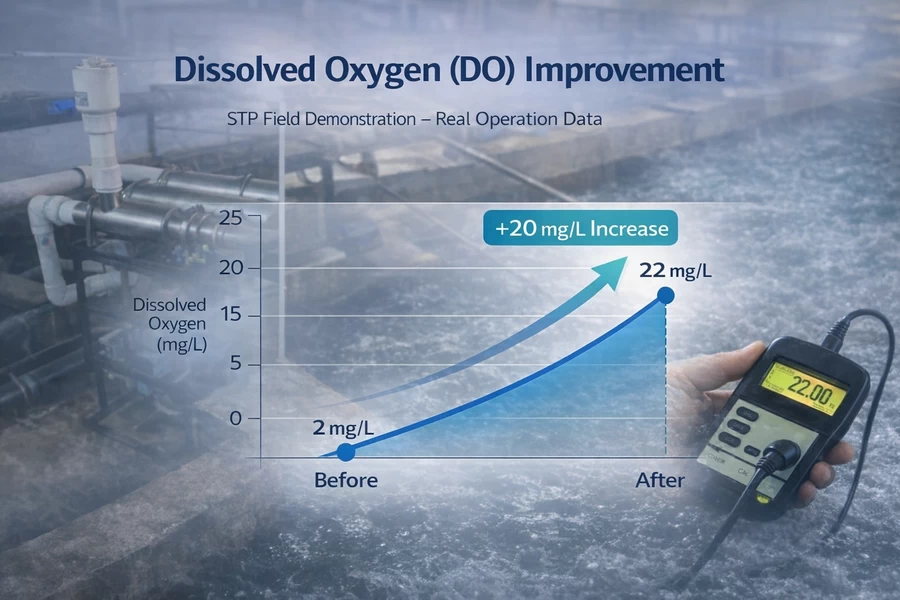
Rise in dissolved oxygen of treated water Measured
22.06 mg/LDissolved oxygen in final storage tank, 0.20 mg/L before supply
Demonstration overview
- Overview
- An oxygen nanobubble unit was connected to the final storage tank of an apartment complex sewage treatment plant that reuses its treated water, and changes in dissolved oxygen were measured.
- Target
- Treated water from an apartment complex sewage treatment plant (300 m³/day, in its third year of operation)
- Location
- Bengaluru, India
- Period
- February 4–16, 2020 (13 days)
- Application
- Treated water that had passed activated carbon filtration was drawn off, oxygenated and returned to the final storage tank
- Basis of comparison
- Dissolved oxygen before installation
- Measurement
- Portable dissolved oxygen meter (water temperature 25.7 ℃)
- Unit
- Flow 12 m³/h, operating pressure 4.0 bar, oxygen 6.0 L/min (90% purity)
- Notes
- Operated and measured by the local partner.
- Category
Water body management
-
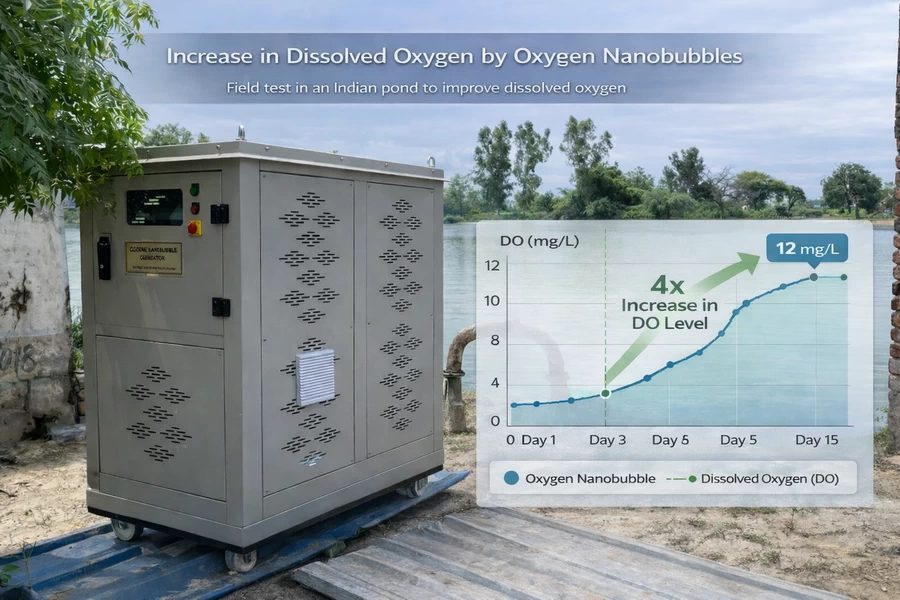
Dissolved oxygen changes in 3 village ponds Measured
8.30–14.32 mg/LHighest dissolved oxygen in each pond, 0.23–1.80 mg/L before supply
Demonstration overview
- Overview
- A mobile oxygen nanobubble unit was installed at each of three village ponds that received household graywater and had almost no oxygen, and dissolved oxygen was measured twice a day.
- Target
- Three village ponds receiving household graywater (volume 6,306–29,343 m³)
- Location
- Three villages in Haryana, India (Kanheri, Loha Khera, Dangra)
- Period
- June 21 – August 5, 2022, with 9–15 days of records per pond
- Application
- Pond water was drawn off, oxygenated and returned. No civil works or chemicals
- Basis of comparison
- Dissolved oxygen before supply
- Measurement
- Portable dissolved oxygen meter, twice a day (morning and evening)
- Unit
- One unit per pond. Flow 12 m³/h, operating pressure 4.0 bar, oxygen generator (90% purity)
- Notes
- 9–15 days of records per pond; operated and measured by the local partner.
- Category
-
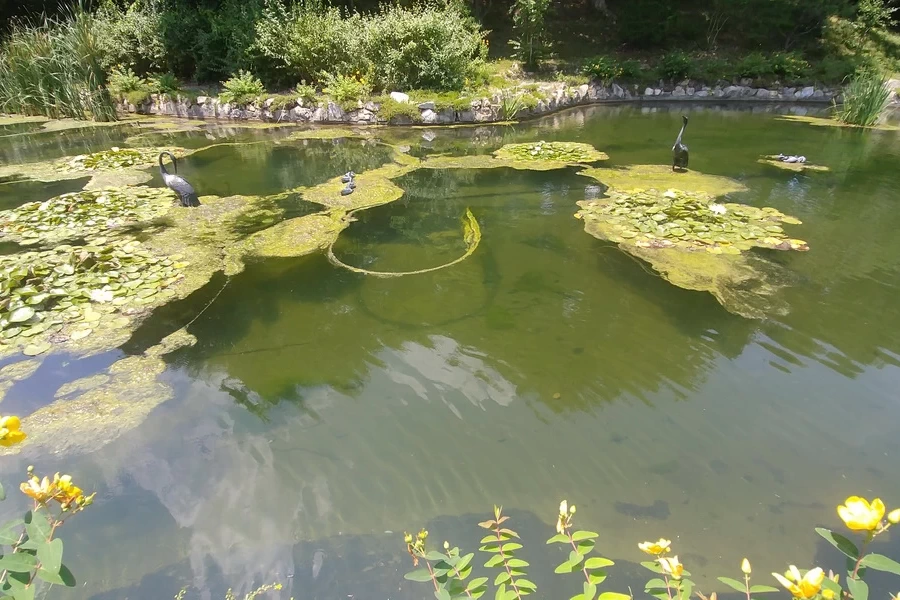
Changes in the aquatic environment of a pond in Korea Observed
After 2 monthsChanges in the aquatic environment observed. No numerical data
Demonstration overview
- Overview
- Oxygen nanobubbles were supplied to a pond in Korea, and the aquatic environment was observed before and after application.
- Target
- Pond in Korea
- Location
- Goesan, North Chungcheong Province
- Period
- 2019
- Application
- Oxygen nanobubble supply
- Basis of comparison
- Before and after application
- Notes
- Observational results without numerical data.
- Category
Hygiene, disinfection & biosecurity
-
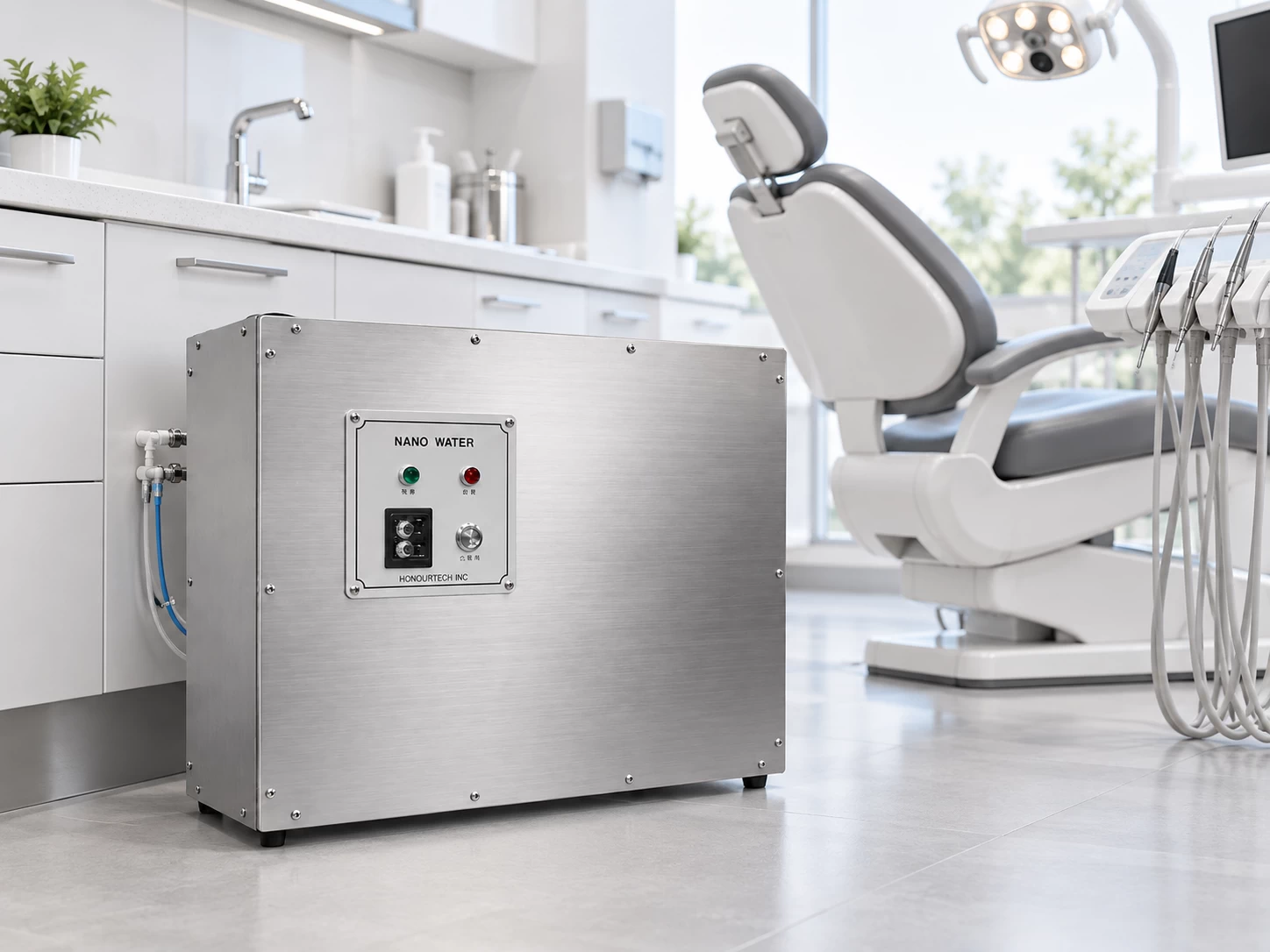
Dental clinic field pilot To Be Validated
3 clinicsInstalled on unit chair waterlines and in operation
Demonstration overview
- Overview
- A dental waterline configuration is connected to the unit chair water lines of three dental clinics in Korea and is in operation.
- Target
- Dental unit chair waterlines
- Period
- In operation
- Location
- Three dental clinics in Korea
- Application
- Connected to the unit chair water lines to supply oxygen nanobubble water
- Product used
- S Series (SQN)
- Status
- Installed and in operation
- Notes
- Sites are in operation and results are being compiled.
- Category
Videos
See how the equipment works, how tests are run and what field installations look like.
-
[2025-09-06]
How to operate the HQN-001 systemOperating procedure of the HQN-001 system and verification of nanobubble generation
-
[2022-10-17]
LAB-006 nanobubble testVerification of nanobubble generation and oxygen dissolution rate with LAB-006 (flow: 600 L/h, oxygen supply: 0.42 L/min)
Dissolution rate: 97.0% -
[2023-03-24]
HNmB-001 oxidation test with stamp inkVerification of ozone nanobubble generation and oxidation efficiency with HNmB-001 (flow: 1,400 L/h, oxygen supply: 1.0 L/min)
-
[2021-09-29]
HNB-010 nanobubble test IIIVerification of nanobubble generation and oxygen dissolution rate with HNB-010 (flow: 1,895 L/h, oxygen supply: 1.10 L/min)
Dissolution rate: 94.6% -
[2021-09-29]
HNB-010 nanobubble test IIVerification of nanobubble generation and oxygen dissolution rate with HNB-010 (flow: 1,125 L/h, oxygen supply: 0.55 L/min)
Dissolution rate: 95.5% -
[2021-09-29]
HNB-010 nanobubble test IVerification of nanobubble generation and oxygen dissolution rate with HNB-010 (flow: 1,125 L/h, oxygen supply: 0.4 L/min)
Dissolution rate: 97.6% -
[2019-09-09]
Microbubble generation experimentLarge numbers of microbubbles form and remain in the tank for a long time, but only a very small amount of microbubbles reappears when the water is struck.
-
[2019-09-04]
Micro-nanobubble generation experimentAfter a small amount of microbubbles rises to the surface, striking the water produces large numbers of microbubbles.
-
[2018-11-19]
KIEMSTA (Cheonan)Highlights and visitor reactions from our participation in the Korea International Exhibition of Machinery, Science and Technology for Agriculture (Cheonan), October 31 – November 3, 2018
-
[2017-09-14]
Nanobubble generation experiment (early model)Micro-nanobubble generation experiment with an early model
Research papers
From published nanobubble research in Korea and abroad, we selected the papers with the strongest evidence in each field. Studies with limited effects are included as well, and the limitations of each study are stated. These are results of published research, not performance measured with Honour Tech products.
Crop growth
Positive studies 8
-
Greenhouse cucumber yield up 22–28% with oxygenated irrigation
Reported that greenhouse cucumbers grown with oxygenated irrigation water at 9 mg/L dissolved oxygen yielded 22–28% more than the control.
Paper details · Study conditions · Detailed results
- Original title
- Micro-nano oxygenated irrigation improves the yield and quality of greenhouse cucumbers under-film drip irrigation
- Summary
- Cucumbers were grown for two seasons with plastic-mulched drip irrigation in a greenhouse in Ningxia, China, comparing irrigation water dissolved oxygen of 4 (control), 6, 7.5 and 9 mg/L.
- Key findings
- Compared with the control, the 9 mg/L treatment showed yield +22.47% (spring-summer) and +28.04% (autumn-winter), irrigation water use efficiency +22–28% and soil oxygen +33–35%, with vitamin C up and nitrate down (yield effect P<0.05). Bubble size and count were not reported.
- Gas used
- Not stated (micro-nano oxygenation device)
- Bibliographic information
- Ouyang et al. (5 authors) · 2023 · Scientific Reports 13: 19453 · DOI 10.1038/s41598-023-45121-3
-
Drip irrigation with nanobubble-oxygenated treated wastewater improves soil aeration
Reported that lettuce yield increased in both soil types when drip-irrigated with treated wastewater oxygenated by nanobubbles.
Paper details · Study conditions · Detailed results
- Original title
- Drip irrigation with nanobubble oxygenated treated wastewater improves soil aeration
- Summary
- Lettuce was grown with surface and subsurface drip irrigation on a sandy soil and a clayey soil, comparing treated wastewater with and without oxygen nanobubbles.
- Key findings
- Yield increased and leaf membrane leakage fell significantly in both soils and both irrigation methods. An oxygen mass balance showed that the oxygen supplied by irrigation water was about 1% of daily soil oxygen flux, and the mechanism behind the observed growth changes is presented as a subject for further research.
- Gas used
- Oxygen
- Bibliographic information
- Baram et al. (8 authors) · 2022 · Scientia Horticulturae 291: 110550 · DOI 10.1016/j.scienta.2021.110550
-
Nitrous oxide emissions down 14–37% with oxygen nanobubble irrigation
Reported that irrigation with treated wastewater containing oxygen nanobubbles raised soil oxygen and cut nitrous oxide emissions by 14–37%.
Paper details · Study conditions · Detailed results
- Original title
- Irrigation with treated wastewater containing nanobubbles to aerate soils and reduce nitrous oxide emissions
- Summary
- In soil-filled lysimeters, treated wastewater was applied by surface and subsurface drip irrigation, comparing soil oxygen and greenhouse gas emissions with and without nanobubbles.
- Key findings
- Soil oxygen rose from 15.6 to 19.7% with surface drip (p=0.0001) and from 18.2 to 19.2% with subsurface drip (p=0.0266), and cumulative nitrous oxide emissions fell by 37% (surface) and 14% (subsurface). Crop yield was not reported.
- Gas used
- Oxygen
- Bibliographic information
- Baram et al. (4 authors) · 2021 · Journal of Cleaner Production 280: 124509 · DOI 10.1016/j.jclepro.2020.124509
-
Optimal dissolved oxygen and timing of micro-nanobubble water oxygation in greenhouse crops
Reported that micro-nanobubble oxygenated irrigation raised yield and irrigation water use efficiency in greenhouse tomato and cucumber, with 15 mg/L dissolved oxygen more effective than 25 mg/L.
Paper details · Study conditions · Detailed results
- Original title
- Appropriate dissolved oxygen concentration and application stage of micro-nano bubble water oxygation in greenhouse crop plantation
- Summary
- Over two greenhouse seasons, irrigation water dissolved oxygen (15, 25 mg/L), treatment timing (seedling/flowering or fruiting) and water source (reclaimed water or groundwater) were compared in combination.
- Key findings
- When applied at the fruiting stage, there were significant differences in vitamin C (both crops) and lycopene (tomato) (p<0.05). The authors recommended combining 15 mg/L dissolved oxygen with treatment at the fruiting stage.
- Gas used
- Not stated (micro-nanobubble oxygenation)
- Bibliographic information
- Zhou et al. · 2019 · Agricultural Water Management 223: 105713 · DOI 10.1016/j.agwat.2019.105713
-
Micro/nanobubble oxygenated irrigation raises soil phosphorus availability and yield by shifting soil bacterial communities and keystone microbes
Reported that spring maize irrigated with oxygenated water at 30 mg/L dissolved oxygen yielded 18.7% more than the control.
Paper details · Study conditions · Detailed results
- Original title
- Micro-/nanobubble oxygenation irrigation enhances soil phosphorus availability and yield by altering soil bacterial community abundance and core microbial populations
- Summary
- Spring maize was grown in field soil columns, comparing micro-nanobubble oxygenated irrigation water at 30 mg/L dissolved oxygen with ordinary irrigation water (8–9 mg/L).
- Key findings
- Yield was 17,942.72 vs. 15,118.5 kg/ha (+18.7%, p<0.01), and available soil phosphorus rose 21.3%. Fungal diversity did not differ. This was a one-season soil column trial, and bubble size was not measured.
- Gas used
- Oxygen (90%)
- Bibliographic information
- Bian et al. · 2025 · Frontiers in Plant Science 15: 1497952 · DOI 10.3389/fpls.2024.1497952
-
Cotton yield up about 20% with oxygenated irrigation in saline soil
Reported that in saline soil, oxygenated irrigation at 30 mg/L dissolved oxygen alone raised cotton yield by 20%, and by 45% when combined with a microbial agent.
Paper details · Study conditions · Detailed results
- Original title
- Effects of combined technology of micro-/nanobubble oxygenation irrigation and microbial agents on saline soil remediation and cotton yield
- Summary
- Cotton was grown in a saline field in Xinjiang, China (10 m × 5 m plots, 4 treatments × 3 replicates), applying oxygenated irrigation and a microbial agent alone or together.
- Key findings
- Seed cotton yield was 4,344.26 (control), 5,216.49 with oxygenated irrigation alone (+20.08%) and 6,278.65 kg/ha with the microbial agent (+44.53%), all P<0.05. Oxygenated irrigation alone reduced soil salinity by 16.36%. Results are from one season.
- Gas used
- Oxygen (90%)
- Bibliographic information
- Bian et al. · 2025 · Frontiers in Plant Science 16: 1605834 · DOI 10.3389/fpls.2025.1605834
-
Turf quality maintained with 50% less irrigation using oxygen nanobubble water
Reported that turf quality was maintained even with 50% less irrigation when oxygen nanobubble irrigation water was used.
Paper details · Study conditions · Detailed results
- Original title
- Irrigation Water Treated with Oxygen Nanobubbles Decreases Irrigation Volume While Maintaining Turfgrass Quality in Central Chile
- Summary
- In central Chile, turf was irrigated over a summer with oxygen nanobubble water or ordinary water, and quality was compared at reduced irrigation volumes.
- Key findings
- The treatment with 50% less irrigation and no nanobubbles showed lower quality.
- Gas used
- Oxygen
- Bibliographic information
- Calvo et al. · 2025 · Grasses 4(1): 6 · DOI 10.3390/grasses4010006
-
Potential effects of aqueous oxygen and nitrogen nanobubbles on the plant rhizosphere microbiome
Reported that oxygen and nitrogen nanobubble irrigation water significantly changed the composition of microbial communities around tomato roots.
Paper details · Study conditions · Detailed results
- Original title
- Unveiling the potential impacts of oxygen and nitrogen nanobubbles in water on plant rhizosphere microbiome
- Summary
- Tomatoes were irrigated for 34 days with oxygen nanobubble water (dissolved oxygen 9.30 and 26.73 mg/L) or nitrogen nanobubble water (2.69 and 8.84 mg/L), and rhizosphere microbes were analyzed.
- Key findings
- Both gases significantly changed rhizosphere microbial communities, and the proportion of specific microbes increased at high concentrations. These are results on rhizosphere microbial community change, separate from quantitative improvements in crop growth.
- Gas used
- Oxygen, nitrogen
- Bibliographic information
- Le et al. · 2025 · Rhizosphere 35: 101163 · DOI 10.1016/j.rhisph.2025.101163
Neutral studies 2
-
No increase in lettuce yield, but lower leaf nitrate
Reported that in deep-water culture lettuce, nanobubble aeration did not change yield but affected quality, lowering leaf nitrate by 8.5%.
Paper details · Study conditions · Detailed results
- Original title
- Nanobubble- and Microbubble Aeration Affect Leaf Quality Without Changing Yield of Lettuce Grown in Floating Systems
- Summary
- In greenhouse deep-water hydroponic lettuce (3 treatments × 5 replicates), no aeration, venturi aeration, and venturi plus nanobubble aeration were compared over one winter season.
- Key findings
- End-of-season dissolved oxygen was 2.98, 7.76 and 7.91 mg/L, but shoot fresh and dry weight did not differ among treatments. Nanobubble aeration lowered leaf nitrate by 8.5% and raised phosphorus, manganese, zinc, copper and magnesium, while calcium fell.
- Gas used
- Air
- Bibliographic information
- Fiore et al. · 2025 · Horticulturae 11(9): 1141 · DOI 10.3390/horticulturae11091141
-
No significant improvement in soil oxygen or turf quality on a golf course
Reported no significant differences in soil oxygen or turf quality on golf greens irrigated with oxygen nanobubble water.
Paper details · Study conditions · Detailed results
- Original title
- Field Evaluation of the Impact of Oxygenated Nanobubble Water on Turfgrass Growth and Soil Health
- Summary
- On a bermudagrass putting green over two years (2021–2022), oxygen nanobubble water and ordinary water were applied, comparing soil oxygen, roots, turf quality and soil microbes (2 treatments × 4 replicates).
- Key findings
- Dissolved oxygen was about 32 mg/L immediately after generation and 22 mg/L at the sprinkler nozzle. Soil oxygen (P=0.083), turf quality and soil microbes and enzymes did not differ, and root mass rose 26% in 2022 only. The authors cited oxygen loss from overhead application as a limitation.
- Gas used
- Oxygen
- Bibliographic information
- Molini et al. · 2025 · HortScience 60(11): 1942-1947 · DOI 10.21273/HORTSCI18855-25
Aquaculture
Positive studies 6
-
Ozone nanobubble treatment improves survival of Nile tilapia infected with multidrug-resistant bacteria
Reported that Nile tilapia challenged with a pathogen survived significantly better in rearing water treated with ozone nanobubbles than in untreated water.
Paper details · Study conditions · Detailed results
- Original title
- Ozone nanobubble treatments improve survivability of Nile tilapia (Oreochromis niloticus) challenged with a pathogenic multi-drug-resistant Aeromonas hydrophila
- Summary
- In a recirculating rearing system, Nile tilapia were infected with multidrug-resistant bacteria (Aeromonas hydrophila) and the effect of ozone nanobubble treatment was examined. In a 14-day safety test, no abnormal behavior or mortality occurred.
- Key findings
- Relative survival in the treated groups was 64.7–66.7%. Bacterial counts in rearing water fell 15.9–35.6% over the first two days in the treated groups and rose 13.1–27.9% in the untreated groups.
- Gas used
- Ozone
- Bibliographic information
- Dien et al. · 2021 · Journal of Fish Diseases 44(9), 1435-1447 · DOI 10.1111/jfd.13451
-
Better shrimp survival with combined biofloc and ozone nanobubbles
Reported that in the nursery phase of whiteleg shrimp, survival with combined biofloc and ozone nanobubbles was 82%, higher than in clear water (40%).
Paper details · Study conditions · Detailed results
- Original title
- Integration of Biofloc and Ozone Nanobubbles for Enhanced Pathogen Control in Prenursery of Pacific White Shrimp (Penaeus vannamei)
- Summary
- Four rearing methods were compared in the nursery phase of whiteleg shrimp: clear water, clear water with ozone, biofloc, and biofloc with ozone.
- Key findings
- Compared with clear water, the combined biofloc and ozone nanobubble group showed a final body weight of 11.65 vs. 10.32 mg, 61% lower total ammonia nitrogen and 78% lower nitrite nitrogen, and Vibrio fell from 228,885 to 107 CFU/mL. Because these results come from use with biofloc, they cannot be attributed to ozone nanobubbles alone.
- Gas used
- Ozone (0.3 mg/L or higher, 15 minutes a day)
- Bibliographic information
- Liang et al. · 2025 · Fishes 10(5), 218 · DOI 10.3390/fishes10050218
-
Higher survival in live fish transport using nanobubble technology
Reported that in 12-hour live transport using ozone or oxygen nanobubbles, survival of trout fry exceeded 99%, higher than with conventional oxygen supply (64.5–76.7%).
Paper details · Study conditions · Detailed results
- Original title
- Enhancing the Survival Rate in Live Fish Transport by Utilizing Nanobubble Technology
- Summary
- Trout fry were transported for 12 hours in sealed bags (500–750 per bag) and open tanks, comparing nanobubble treatment with conventional oxygen supply.
- Key findings
- Survival was 99.3–99.6% with ozone nanobubbles vs. 64.5% with conventional oxygen packing in sealed transport, and 99.0% with oxygen nanobubbles vs. 76.7% with conventional aeration in open transport (P<0.05). Nanobubble groups maintained dissolved oxygen of 8–9 mg/L and ammonia of 0.01–0.03 mg/L. The study was published in a regional journal.
- Gas used
- Oxygen, ozone, air
- Bibliographic information
- Devkota et al. · 2023 · Nepalese Journal of Aquaculture and Fisheries 10(1): 33-42 · DOI 10.3126/njaf.v10i1.78789
-
Control of Vibrio parahaemolyticus (AHPND strain) and water quality improvement with nanobubble technology
Reported that a shrimp pathogen (the Vibrio strain causing AHPND) fell to undetectable levels after 6 minutes of ozone nanobubble treatment.
Paper details · Study conditions · Detailed results
- Original title
- Control of Vibrio parahaemolyticus (AHPND strain) and improvement of water quality using nanobubble technology
- Summary
- In 100 L tanks at 15‰ salinity (3 replicates), air, oxygen and ozone nanobubbles were applied for one week, comparing Vibrio counts and water quality.
- Key findings
- Final counts relative to the control were 69% with air nanobubbles, 46% with oxygen nanobubbles (60 minutes a day), and 23%, 2.2% and 0% with ozone nanobubbles for 2, 4 and 6 minutes. Oxygen and ozone nanobubbles raised oxidation-reduction potential and oxygen concentration.
- Gas used
- Air, oxygen, ozone
- Bibliographic information
- Nghia et al. · 2021 · Aquaculture Research 52(6): 2727-2739 · DOI 10.1111/are.15124
-
Improved growth of whiteleg shrimp with nanobubbles in an indoor raceway
Reported that when whiteleg shrimp were raised for 81 days in an indoor raceway, the nanobubble group had higher dissolved oxygen and faster growth.
Paper details · Study conditions · Detailed results
- Original title
- Enhancement of Penaeus vannamei shrimp growth using nanobubble in indoor raceway pond
- Summary
- Whiteleg shrimp were reared at high density (680/m³) for 81 days in a 50 ㎡ indoor raceway, comparing nanobubble supply with diffuser aeration.
- Key findings
- The nanobubble group showed survival of up to 95%, mean weight of 15.1 g, harvest of 436 kg and productivity of 8.7 kg/m³, with harvest and productivity reported as about double. Dissolved oxygen was significantly higher and feed conversion ratio lower. Mean bubble size was about 82 nm.
- Bibliographic information
- Rahmawati et al. · 2021 · Aquaculture and Fisheries 6(3), 277-282 · DOI 10.1016/j.aaf.2020.03.005
-
Oxygen and air nanobubble water promote the growth of plants, fish and mice
Reported that total body weight of sweetfish and rainbow trout raised in air nanobubble water increased much more than in ordinary water.
Paper details · Study conditions · Detailed results
- Original title
- Oxygen and Air Nanobubble Water Solution Promote the Growth of Plants, Fishes, and Mice
- Summary
- Sweetfish (3 weeks) and rainbow trout (6 weeks) were raised in air nanobubble water (bubbles below 200 nm) or ordinary water, comparing total fish weight. The same paper also covered plants and mice.
- Key findings
- Total fish weight went from 3.0 to 10.2 kg for sweetfish (ordinary water 3.0 to 6.4 kg) and from 50.0 to 148.0 kg for rainbow trout (ordinary water 50.0 to 129.5 kg).
- Gas used
- Air
- Bibliographic information
- Ebina et al. · 2013 · PLoS ONE 8(6): e65339 · DOI 10.1371/journal.pone.0065339
Neutral studies 2
-
Air nanobubbles increase viable bacteria and nitrifying bacteria and lower nitrite in a seawater recirculating aquaculture system
Reported that air nanobubbles in a seawater recirculating aquaculture system made no difference to growth, survival or dissolved oxygen, while nitrite was lower.
Paper details · Study conditions · Detailed results
- Original title
- Air Nanobubbles Enhance Viable Bacteria Counts, Abundance of Nitrifying Bacteria, and Reduce Nitrite Levels in Marine Recirculation Aquaculture Systems
- Summary
- Three fish species were reared for 6 weeks in two seawater recirculating aquaculture systems (RAS), comparing a system with air nanobubbles against one without.
- Key findings
- Growth rate, survival (95–100%), feed conversion ratio and dissolved oxygen showed no significant differences. Nitrite was lower with nanobubbles (0.99 vs. 1.40 mg/L), and nitrifying bacteria increased. The authors cited low stocking density and high water exchange as limitations.
- Gas used
- Air
- Bibliographic information
- Sean et al. · 2025 · Fishes 10(11), 550 · DOI 10.3390/fishes10110550
-
Effects of hyperoxia during oxygen nanobubble treatment on innate immunity, growth, gill histology and gut microbiota of Nile tilapia
Reported no harmful effects on growth or immunity in tilapia raised for 26 days in water whose dissolved oxygen was raised to 24 mg/L by oxygen nanobubbles.
Paper details · Study conditions · Detailed results
- Original title
- Effects of hyperoxia during oxygen nanobubble treatment on innate immunity, growth performance, gill histology, and gut microbiome in Nile tilapia, Oreochromis niloticus
- Summary
- Nile tilapia were raised for 26 days in water supersaturated with oxygen nanobubbles (24.2 mg/L after 10 minutes of treatment) and in ordinary water, comparing growth, immunity, gill histology and gut microbiota.
- Key findings
- Growth, survival and immune gene expression did not differ from the control, and there were no signs of gas bubble disease. Mild histological changes were occasionally observed in the gills. There was no growth-promoting effect; the study confirmed the safety of high dissolved oxygen.
- Gas used
- Oxygen
- Bibliographic information
- Linh et al. · 2023 · Fish and Shellfish Immunology 143: 109191 · DOI 10.1016/j.fsi.2023.109191
Microbial Culture & Fermentation
Positive studies 3
-
Investigation of the effect of ultrafine bubbles on bacterial growth
Reported that E. coli and Staphylococcus aureus grew better in media containing hydrogen and air ultrafine bubbles.
Paper details · Study conditions · Detailed results
- Original title
- Investigating the effects of ultrafine bubbles on bacterial growth
- Summary
- Ultrafine bubbles were generated in culture media by ultrasound, and two bacteria were grown in static culture at 37 ℃, comparing growth and cell size with ordinary media.
- Key findings
- Growth and dry cell weight ranked hydrogen > air > control (shown only in figures), and cell area was smaller in bubble media (p<0.05). Bubble size and concentration were not measured, and the authors noted that bubbles could interfere with turbidity measurements.
- Gas used
- Air, hydrogen
- Bibliographic information
- Vu et al. · 2024 · RSC Advances · DOI 10.1039/d3ra07454d
-
Microalgae biomass up about 10% with CO₂ nanobubbles
Reported that when carbon dioxide was supplied as nanobubbles in microalgae culture, biomass after 14 days was about 10% higher than with ordinary bubbles.
Paper details · Study conditions · Detailed results
- Original title
- Comparative study of CO2 nanobubbles and macrobubbles: Effects on water chemistry, microalgal growth, and carbon utilization
- Summary
- Microalgae (Scenedesmus obliquus) were cultured for 14 days, comparing carbon dioxide supplied as nanobubbles with carbon dioxide supplied as ordinary-sized bubbles.
- Key findings
- Biomass was 10.11% higher than with ordinary bubbles, and nanobubble carbon utilization efficiency was 27.86%. The reported mass transfer coefficients were 12.41–18.91 h⁻¹ for nanobubbles and 10.18 h⁻¹ for ordinary bubbles, but variability was large and the ranges overlap.
- Gas used
- Carbon dioxide
- Bibliographic information
- Li et al. · 2026 · Water Research 288, 124714 · DOI 10.1016/j.watres.2025.124714
-
Comparison of gas utilization and bioconversion productivity between fine-bubble and macrobubble aeration
Reported that at the same oxygen transfer conditions, fine-bubble aeration raised enzymatic reaction productivity by 32% and greatly increased gas utilization compared with ordinary bubbles.
Paper details · Study conditions · Detailed results
- Original title
- Comparative investigation of fine bubble and macrobubble aeration on gas utility and biotransformation productivity
- Summary
- In an enzymatic reaction converting glucose to gluconic acid, fine-bubble and ordinary-bubble aeration were compared at the same oxygen transfer coefficient (kLa).
- Key findings
- At the same kLa, gas utilization was 25–44 times higher, gluconic acid productivity rose 32% and oxygen utilization was 41.6 times higher. Enzyme damage from foam and gas consumption were reduced. This is an enzymatic reaction, not a microbial culture, and a microbubble study.
- Gas used
- Air
- Bibliographic information
- Thomas et al. · 2021 · Biotechnology and Bioengineering 118(1): 130-141 · DOI 10.1002/bit.27556
Neutral studies 1
-
Effect of nanobubble water on the growth and lactic acid production of Lactobacillus acidophilus 1028
Reported that in lactic acid bacteria culture, nitrogen and hydrogen nanobubble water raised early growth but made no difference to final biomass, and carbon dioxide nanobubble water had no effect.
Paper details · Study conditions · Detailed results
- Original title
- Effects of nanobubble water on the growth of Lactobacillus acidophilus 1028 and its lactic acid production
- Summary
- Lactic acid bacteria were cultured in media made with nanobubble water of four gases, comparing growth and lactic acid production.
- Key findings
- At 90% nanobubble water, growth at 6 hours of culture rose by 51.1% with nitrogen and 34.2% with hydrogen. From about 15–21 hours onward, in the stationary phase, there was no significant difference from the control. Because medium dissolved oxygen and pH varied with the gas, the effect of the bubbles alone is difficult to isolate.
- Gas used
- Air, nitrogen, hydrogen, carbon dioxide
- Bibliographic information
- Guo et al. · 2019 · RSC Advances 9(53), 30760-30767 · DOI 10.1039/c9ra05868k
Surface cleaning
Positive studies 4
-
Removal of oil contamination from glass and microchannels with nanobubbles
Reported that nanobubble water removed more cooking oil from glass and microchannel surfaces than ultrapure water.
Paper details · Study conditions · Detailed results
- Original title
- Surface Cleaning of Oil Contaminants Using Bulk Nanobubbles
- Summary
- Sunflower oil on glass, microchannels and ceramic dishes was washed with nanobubble water made by water electrolysis (about 100 nm, 7.78×10⁸/mL) and compared with ultrapure water.
- Key findings
- In hydrophilic microchannels, about 85% of the oil was removed in 90 seconds, versus about 7% with ultrapure water. When glass was immersed and stirred, oil area fell about 80% in 10 minutes, versus about 20% with ultrapure water. Replicates and statistical tests were not reported.
- Gas used
- Gas produced by water electrolysis
- Bibliographic information
- Hansen et al. · 2024 · ChemSusChem 17(21), e202400802 · DOI 10.1002/cssc.202400802
-
A study on cleaning and purification with fine bubbles
Reported that fine bubbles removed oil from plastic surfaces and salt from aluminum foil surfaces, with removal efficiency related to the total surface area of the bubbles.
Paper details · Study conditions · Detailed results
- Original title
- Research on Cleaning and Purification Using Fine Bubbles (ファインバブルを用いた洗浄・浄化に関する研究)
- Summary
- The study covered washing oil from polypropylene surfaces and salt from aluminum foil with fine-bubble water, and the effect on bottom sediments in a model river channel.
- Key findings
- In the model river channel, an oxidized layer formed on the sediment surface and phosphorus release decreased.
- Gas used
- Air
- Bibliographic information
- Hata et al. · 2018 · 混相流 (Japanese Journal of Multiphase Flow) 32(1): 4-11 · DOI 10.3811/jjmf.32.4
-
Cleaning with bulk nanobubbles
Reported that nanobubble water of about 100 nm prevented proteins from adhering to surfaces and also cleaned surfaces that were already fouled.
Paper details · Study conditions · Detailed results
- Original title
- Cleaning with Bulk Nanobubbles
- Summary
- Nanobubble water made by electrolysis (lasting about 24 hours) was examined for preventing and cleaning protein (BSA, lysozyme) fouling on hydrophilic and hydrophobic surfaces.
- Key findings
- The authors proposed that nanobubbles act in the same way detergents keep detached soils suspended in water. This is a mechanistic study explaining the potential of nanobubbles to disperse contaminants and inhibit their redeposition.
- Gas used
- Oxygen, hydrogen (electrolysis)
- Bibliographic information
- Zhu et al. · 2016 · Langmuir 32(43): 11203-11211 · DOI 10.1021/acs.langmuir.6b01004
-
Cleaning protein-coated surfaces with nanobubbles: a quartz crystal microbalance (QCM) study
Reported that electrochemically generated nanobubbles completely removed protein fouling in 2 cycles on hydrophobic surfaces and 4 cycles on hydrophilic surfaces.
Paper details · Study conditions · Detailed results
- Original title
- Cleaning of protein-coated surfaces using nanobubbles: An investigation using a Quartz Crystal Microbalance
- Summary
- Nanobubbles were generated for 10 seconds at a time on electrode surfaces with adsorbed protein (BSA), and protein detachment was tracked with a quartz crystal microbalance (QCM).
- Key findings
- Cleaning efficiency compared well with 20 minutes of surfactant (SDS) treatment. The nanobubbles were generated directly on the surface, and the method applies only to conductive substrates.
- Gas used
- Electrochemically generated gas
- Bibliographic information
- Liu et al. · 2008 · Journal of Physical Chemistry C 112(43): 16748-16753 · DOI 10.1021/jp805143c
Neutral studies 1
-
Combined effect of nanobubbles and surfactant in cleaning protein fouling
Reported that nanobubbles alone did not sufficiently remove surface-bound protein, but combined with surfactant they removed it completely from hydrophilic surfaces.
Paper details · Study conditions · Detailed results
- Original title
- Improved cleaning of hydrophilic protein-coated surfaces using the combination of nanobubbles and SDS
- Summary
- Hydrophobic and hydrophilic surfaces fouled with protein (lysozyme) were cleaned with nanobubbles, surfactant, or both, and the remaining amounts were compared.
- Key findings
- On hydrophobic surfaces, considerable protein remained even after 10 nanobubble treatments, while surfactant removed about 90%. On hydrophilic surfaces, neither alone removed the protein, but together they removed it completely in 6 cycles.
- Gas used
- Gas generated electrochemically
- Bibliographic information
- Liu, Craig · 2009 · ACS Applied Materials & Interfaces 1(2), 481-487 · DOI 10.1021/am800150p
Industrial & Precision Cleaning
Positive studies 3
-
Cleaning with nanobubbles: removal of fouling by electrochemical bubble generation
Reported that nanobubbles produced by electrolysis reduced protein fouling on stainless steel and graphite surfaces, and pretreatment reduced fouling itself by 26–34%.
Paper details · Study conditions · Detailed results
- Original title
- Cleaning using nanobubbles: Defouling by electrochemical generation of bubbles
- Summary
- Nanobubbles were produced by electrolysis before and after protein (BSA) was applied to graphite and stainless steel surfaces, comparing prevention and removal of fouling.
- Key findings
- Protein coverage on graphite fell from 100 to 82% with 50 seconds of treatment, and residual protein on stainless steel fell about 20% with 3 minutes of treatment, with more removed by repeated treatment. Significance was not reported.
- Gas used
- Gas produced by electrolysis
- Bibliographic information
- Wu et al. · 2008 · Journal of Colloid and Interface Science 328(1): 10-14 · DOI 10.1016/j.jcis.2008.08.064
-
Development of wafer cleaning equipment using nanobubbles and megasonics
Reported that wafer cleaning equipment combining nanobubbles with megasonic ultrasound removed more than 97% of simulated contaminant particles.
Paper details · Study conditions · Detailed results
- Original title
- Development of Wafer Cleaning Equipment Using Nano Bubble and Megasonic Ultrasound
- Summary
- Alumina and latex particles were applied to silicon wafers, and cleaning equipment combining nanobubble water with megasonic ultrasound was developed and its removal rate evaluated.
- Key findings
- Because the results were obtained together with ultrasound, the contribution of nanobubbles alone cannot be separated, and they were not validated on a production line. The study was published in a Korean journal.
- Gas used
- Not stated
- Bibliographic information
- Kim et al. · 2023 · Korean journal (KCI ART003039069)
-
Microbubbles for chemical-free cleaning of metal surfaces
Reported oil removal of 78.5% on carbon steel and 49.8% on stainless steel after 15 minutes of cleaning with air microbubbles.
Paper details · Study conditions · Detailed results
- Original title
- Microbubbles for Effective Cleaning of Metal Surfaces Without Chemical Agents
- Summary
- Oil was washed from carbon steel and stainless steel surfaces with air microbubbles produced by hydrodynamic cavitation and compared with bubble-free water.
- Key findings
- Without bubbles, removal was 6.5% on carbon steel and 9.9% on stainless steel. Combined with ultrasound, removal reached 85.5% after 3 minutes, versus 69.0% with ultrasound alone. This is a microbubble study.
- Gas used
- Air
- Bibliographic information
- Li et al. · 2022 · Langmuir 38(2), 769-776 · DOI 10.1021/acs.langmuir.1c02769
Textile cleaning
Positive studies 3
-
Cleaning effect of nanobubble and surfactant mixtures under alternating flow
Reported that nanobubble water had a cleaning rate about 5% higher than ion-exchanged water, and combined with surfactant about 10% higher than surfactant alone.
Paper details · Study conditions · Detailed results
- Original title
- Investigation on Washing Effects for Nano-Bubble/Surfactant Mixtures in an Alternating Flow (交番流におけるナノバブル/界面活性剤混合液の洗浄効果の検討)
- Summary
- Fabrics were washed in a laundry test apparatus that alternates the direction of water flow, comparing the cleaning rates of nanobubble water, ion-exchanged water and anionic surfactant solution.
- Key findings
- Nanobubble water was reported to have lower surface tension than water. The effect was on the order of 5–10%, and the paper is in Japanese.
- Bibliographic information
- Ushida et al. · 2011 · 日本機械学会論文集 B編 77(777), 1219-1228 · DOI 10.1299/kikaib.77.1219
-
Evaluation of the cleaning power of micro-nanobubbles using ATP measurement
Reported that micro-nanobubble water, alone and with surfactant, washed protein soil from fabrics and glass.
Paper details · Study conditions · Detailed results
- Original title
- Evaluating the detergency affects of micro/nanobubble by the ATP testing method (ATP測定法を用いたマイクロ・ナノバブルの洗浄力評価)
- Summary
- Cotton, polyester and glass slides soiled with gelatin protein were washed with micro-nanobubble water, and cleaning power was evaluated from the ATP luminescence of the wash water.
- Key findings
- ATP luminescence rose under both conditions and was interpreted as indicating a cleaning effect.
- Gas used
- Not stated
- Bibliographic information
- Yamaguchi et al. · 2015 · 共立女子短期大学生活科学科紀要 58: 57-65
-
A sustainable cotton pretreatment process using nanobubble technology
Reported that using nanobubble water in cotton pretreatment achieved quality similar to the conventional process with 30% less water, though compositional analysis showed no significant difference attributable to nanobubbles.
Paper details · Study conditions · Detailed results
- Original title
- Sustainable cotton pre-treatment processes with nanobubble technology
- Summary
- Nanobubble water was applied to cotton pretreatment (desizing, scouring, bleaching) in several recipes, comparing desizing, absorbency, whiteness, tear strength and wastewater COD with the conventional process.
- Key findings
- With 30% less water, desizing, whiteness and tear strength were similar to the conventional process. Infrared spectroscopy confirmed starch removal but showed no significant difference due to nanobubbles. The result is equal cleaning quality with less water.
- Bibliographic information
- Anış et al. · 2026 · Cellulose 33(8), 4883-4905 · DOI 10.1007/s10570-026-07076-2
Food washing
Positive studies 8
-
Decontamination of apples using air micro-nanobubbles and ε-polylysine
Reported that washing apples with air micro-nanobubbles combined with an antimicrobial reduced bacteria and yeast by more than 3 log and removed 77.3% of pesticide.
Paper details · Study conditions · Detailed results
- Original title
- Decontamination of fresh apples using air micro-nanobubbles with epsilon-poly-lysine
- Summary
- Apples inoculated with Listeria, spoilage yeast and a pesticide (trichlorfon) were washed with air micro-nanobubble water combined with an antimicrobial (ε-polylysine 250 mg/L) and compared with each treatment alone.
- Key findings
- The pesticide removal of 77.3% was significantly higher than with either treatment alone, and quality after 20 days of storage did not differ. This removal rate was obtained with nanobubbles and the antimicrobial combined; the contribution of each was not evaluated separately.
- Gas used
- Air
- Bibliographic information
- Lu et al. · 2025 · Food Innovation and Advances 4(4), 446-453 · DOI 10.48130/fia-0025-0038
-
Inhibitory efficacy of air and oxygen micro-nanobubble water against Colletotrichum gloeosporioides and effects on postharvest quality of 'Fan Retief' guava
Reported that surface microbes on guavas washed with air or oxygen micro-nanobubble water fell to less than one-hundredth, with quality retention similar to chlorine sanitizing.
Paper details · Study conditions · Detailed results
- Original title
- Efficacy of Air and Oxygen Micro-nano Bubble Waters Against Colletotrichum gloeosporioides and Impacts on Postharvest Quality of 'Fan Retief' Guava Fruit
- Summary
- Guavas were washed for 15 or 30 minutes with tap water, sodium hypochlorite or air/oxygen bubble water and stored for 21 days at 13 ℃, comparing quality. In vitro tests against the anthracnose fungus were also carried out.
- Key findings
- Bubble water washing was similar to chlorine in maintaining firmness and delaying changes in color and sugar content, and reduced surface microbes by more than 2 log (p<0.05). In vitro, fungal survival was lowest after 60 minutes of exposure to air bubbles.
- Gas used
- Air, oxygen
- Bibliographic information
- Malahlela et al. · 2025 · Journal of Food Protection 88(1): 100437
-
Optimizing inactivation of aerobic bacteria and extending shelf life of tilapia fillets with carbon dioxide micro-nanobubbles
Reported that tilapia fillets washed with carbon dioxide micro-nanobubbles stayed below the acceptable bacterial limit even after 7 days of refrigerated storage.
Paper details · Study conditions · Detailed results
- Original title
- The Optimization of Aerobic Bacteria Inactivation in Tilapia (Oreochromis niloticus) Fillets using Micro-Nano Bubbles of Carbon Dioxide and Shelf-Life Extension
- Summary
- Conditions for washing tilapia fillets with brine and carbon dioxide micro-nanobubbles after dipping in chlorinated water were optimized by response surface methodology.
- Key findings
- Under optimal conditions (32-minute wash), aerobic bacteria fell by 1.5 log (5.623 → 4.120 log CFU/g), while untreated fillets exceeded the limit (6 log) after 7 days of storage. Because chlorine and salt were used together, the contribution of bubbles alone cannot be separated.
- Gas used
- Carbon dioxide
- Bibliographic information
- Naewkanya et al. · 2025 · Applied Science and Engineering Progress 18(1) · DOI 10.14416/j.asep.2024.08.002
-
Reduction of pesticide residues on curly chili using ozone fine-bubble technology
Reported that a 10-minute wash with ozone fine-bubble water reduced pesticide residues (profenofos) on chili by up to 89.8% without loss of quality.
Paper details · Study conditions · Detailed results
- Original title
- Pesticide Residue Reduction on Curly Chili (Capsicum annum L.) Using Ozone Fine Bubble Technology
- Summary
- Chili peppers with pesticide residues were washed for 10 minutes with ozone fine-bubble water (1 mg/L), and quality changes during storage at room temperature were examined.
- Key findings
- There was no loss of quality after washing, and marketability began to decline from day 6–8 of storage at room temperature. Bubble size was not measured, and the effect relative to ordinary ozonated water falls outside the scope of this result.
- Gas used
- Ozone
- Bibliographic information
- Levianny et al. · 2024 · jTEP Jurnal Keteknikan Pertanian 12(3): 340-351 · DOI 10.19028/jtep.012.3.340-351
-
Effect of ozone micro-nanobubbles on extending the shelf life of longan
Reported that longans dipped in ozone micro-nanobubble water showed slower weight loss, peel browning and mold development than those washed with water.
Paper details · Study conditions · Detailed results
- Original title
- Effect of ozone micro-nano bubbles on longan shelf life extension
- Summary
- Longans were dipped in distilled water (5 minutes) or ozone micro-nanobubble water (10, 20 or 30 minutes) and stored at 5 ℃ for 15 days (4 treatments × 4 replicates).
- Key findings
- The control lost the most weight, with peel browning after 9 days and mold after 12 days. This storage test was compared against the stated control, not directly against ordinary ozonated water.
- Gas used
- Ozone
- Bibliographic information
- Kidtuengkun et al. · 2023 · Journal of Science and Agricultural Technology 4(2): 46-52 · DOI 10.14456/jsat.2023.12
-
Effect of gas micro-nanobubbles on the efficacy of antimicrobials commonly used in the food industry
Reported that adding carbon dioxide micro-nanobubbles to food sanitizers greatly increased the kill of E. coli O157 and Listeria.
Paper details · Study conditions · Detailed results
- Original title
- Impact of gas micro-nano-bubbles on the efficacy of commonly used antimicrobials in the food industry
- Summary
- The bactericidal effect of peracetic acid, chlorine, citric acid and lactic acid sanitizers with and without air, carbon dioxide or nitrogen micro-nanobubbles was compared in culture suspensions.
- Key findings
- Reductions were 5.2 log with chlorine plus CO₂ bubbles vs. 3.8 log without bubbles for E. coli, and 4.4 log vs. 1.7 log with peracetic acid plus CO₂ bubbles for Listeria. These were suspension tests, not food surfaces, and the authors noted that validation on food is needed.
- Gas used
- Air, carbon dioxide, nitrogen
- Bibliographic information
- Singh et al. · 2021 · Journal of Applied Microbiology 130(4): 1092-1105 · DOI 10.1111/jam.14840
-
Effect of ozone micro-nanobubble treatment on maintaining postharvest freshness of spinach
Reported that spinach treated with ozone micro-nanobubbles (4 mg/L, 5 minutes) showed slower loss of chlorophyll and vitamin C during storage.
Paper details · Study conditions · Detailed results
- Original title
- Effect of Ozone Micro-nano-bubble Treatment on Postharvest Preservation of Spinach
- Summary
- Spinach was treated with ozone micro-nanobubbles and stored at 20 ℃ for 8 days, examining membrane damage, respiration, ethylene and antioxidant enzymes.
- Key findings
- Membrane damage indicators accumulated less, respiration and ethylene release were delayed, and antioxidant enzyme activity increased.
- Gas used
- Ozone
- Bibliographic information
- Wang et al. · 2020 · Food Science (食品科学) 41(23): 190-196 · DOI 10.7506/spkx1002-6630-20191102-014
-
Ozone microbubble technology for disinfecting alfalfa sprout seeds
Reported that ozone microbubble water reduced bacteria on alfalfa seeds as much as chlorinated water without affecting germination or sprout growth.
Paper details · Study conditions · Detailed results
- Original title
- An ozone micro-bubble technique for seed sterilization in alfalfa sprouts
- Summary
- Alfalfa seeds were treated for 5 minutes with tap water, microbubble water, ozonated water, ozone microbubble water or chlorinated water, comparing bacterial counts and germination and growth.
- Key findings
- Reductions in total bacteria were greatest with ozone microbubble water and chlorinated water, and chlorinated water lowered germination and sprout weight. E. coli was also removed by ordinary ozonated water, so the added effect of bubbles was confirmed only for total bacteria. This is a Korean microbubble study.
- Gas used
- Ozone
- Bibliographic information
- Kwack et al. · 2014 · Horticultural Science and Technology (원예과학기술지) 32(6): 901-905 · DOI 10.7235/hort.2014.14129
Neutral studies 2
-
Evaluation of the effect of ozone nanobubble treatment on the postharvest quality of fresh peaches
Reported that dipping peaches in high-concentration ozone nanobubble water caused peel burn and decay, while oxygen nanobubble water did not differ from chlorine sanitizing.
Paper details · Study conditions · Detailed results
- Original title
- Evaluating the Effects of Ozone Nanobubble Treatments on Postharvest Quality of Fresh Peaches
- Summary
- Two peach varieties (3,200 fruits in total) were dipped for 30 minutes in oxygen nanobubble water (dissolved oxygen 10, 20 or 30 mg/L), ozone-saturated water (about 8 mg/L) or chlorinated water (50 mg/L) and stored for 28 days.
- Key findings
- Firmness did not differ among treatments, and oxygen nanobubble water had no effect on decay. Ozone-saturated treatment caused white-spot peel burn within 7 days that led to decay, reaching about 20% in one variety (0% with chlorinated water). The study indicates an upper limit for ozone concentration.
- Gas used
- Oxygen, ozone
- Bibliographic information
- Giannopoulos et al. · 2025 · HortTechnology 35(1) · DOI 10.21273/HORTTECH05557-24
-
Effect of ultrasound and surfactant on bacterial reduction by nanobubbles: bacterial suspensions and produce surfaces
Reported that oxygen nanobubbles alone did not reduce bacteria on spinach surfaces, but did so substantially when combined with ultrasound.
Paper details · Study conditions · Detailed results
- Original title
- The Effect Ultrasound and Surfactants on Nanobubbles Efficacy against Listeria innocua and Escherichia coli O157:H7, in Cell Suspension and on Fresh Produce Surfaces
- Summary
- Two bacteria in suspension and on spinach leaves were treated with oxygen nanobubbles, ultrasound, both combined, and with added surfactant.
- Key findings
- In suspension, nanobubbles alone or ultrasound alone produced no significant reduction even after 15 minutes. Combined, they removed more than 2 log of Listeria and more than 4 log of E. coli from spinach. Adding surfactant did not significantly increase the effect.
- Gas used
- Oxygen
- Bibliographic information
- Rafeeq, Ovissipour · 2021 · Foods 10(9), 2154 · DOI 10.3390/foods10092154
Equipment & pipe interior cleaning
Positive studies 8
-
Effect of micro-nanobubbles on emitter clogging in drip irrigation systems
Reported that adding micro-nanobubbles to drip irrigation lines delayed emitter clogging by 20–130%.
Paper details · Study conditions · Detailed results
- Original title
- Influence of micro/nanobubbles on clogging in drip irrigation systems
- Summary
- In a drip irrigation system recirculating groundwater, five emitter types were run for 430 hours, comparing lines with and without micro-nanobubbles (200 nm–4 μm).
- Key findings
- The time for mean flow to fall to 75% was delayed by 20–130% depending on the emitter (e.g., from 306 to 422 hours). The bubble effect was statistically significant but much smaller than the effect of operating time. Microbes and mechanisms were not measured.
- Bibliographic information
- Li et al. · 2020 · RSC Advances 10(64), 38912-38922 · DOI 10.1039/D0RA07782H
-
Potential of air micro-nanobubbles and carbon dioxide bubbles to remove and prevent biofouling of seawater reverse osmosis membranes
Reported that bubble-based cleaning of biofilm on seawater reverse osmosis membranes recovered 49–56% of the pressure drop, similar to chemical cleaning (51%).
Paper details · Study conditions · Detailed results
- Original title
- The potential of air micro-nano bubbles and nucleated CO2 bubbles as curative and preventive strategies for SWRO biofouling removal
- Summary
- Biofilm on seawater reverse osmosis membranes was evaluated with air micro-nanobubbles and carbon dioxide bubbles formed in water, used both for cleaning and as a daily preventive treatment. The indicator was pressure drop.
- Key findings
- Recovery with water flushing alone was 24%. With daily treatment, the onset of performance loss was delayed by 123% with carbon dioxide bubbles and 95% with air micro-nanobubbles. Recovery was not complete.
- Gas used
- Air, carbon dioxide
- Bibliographic information
- Alvarez Sosa et al. · 2025 · Desalination 610, 118865 · DOI 10.1016/j.desal.2025.118865
-
Micro-nanobubbles for removing foulants from nanofiltration membranes used in drinking water treatment
Reported that cleaning nanofiltration membranes with micro-nanobubbles for 90 minutes or more fully restored water permeability.
Paper details · Study conditions · Detailed results
- Original title
- Micro-nanobubbles for removing membrane foulants from the surface of nanofiltration membranes in drinking water applications
- Summary
- A submerged nanofiltration membrane treating surface water directly was operated for 49 days and cleaned once a week with micro-nanobubbles.
- Key findings
- In the first four filtration cycles, transmembrane pressure returned to its initial value, but cleaning efficiency declined thereafter. Dissolved organic carbon removal remained at 74% or higher.
- Bibliographic information
- Son et al. · 2025 · Separation and Purification Technology 377, 134259 · DOI 10.1016/j.seppur.2025.134259
-
Performance of micro-nanobubbles for controlling combined inorganic and colloidal fouling in reverse osmosis
Reported that with combined inorganic and colloidal fouling of reverse osmosis membranes, adding micro-nanobubbles reduced the flux decline from 76.3% to 18.5%.
Paper details · Study conditions · Detailed results
- Original title
- Evaluation of the Performance of Micro–Nano Bubbles to Control the Simultaneous Inorganic and Colloidal Foulings in Reverse Osmosis
- Summary
- A reverse osmosis membrane was operated with feed water containing both gypsum and colloidal silica, comparing operation with and without air micro-nanobubble injection.
- Key findings
- Without bubbles, a dense fouling layer formed and flux fell 76.3% and salt rejection 4%; with bubbles, these declines were reduced to 18.5% and about 1%. Fouling was not completely prevented, and the study was laboratory-scale.
- Gas used
- Air
- Bibliographic information
- Dahrazma et al. · 2024 · Journal of Environmental Engineering 150(8) · DOI 10.1061/JOEEDU.EEENG-7648
-
Evaluation of the antifouling effect of micro-nanobubbles on reverse osmosis membrane performance
Reported that adding micro-nanobubbles to reverse osmosis made the colloidal fouling layer more loosely packed and improved flux by 21–40%.
Paper details · Study conditions · Detailed results
- Original title
- Evaluation of the Anti-Fouling Effects of Micro-Nano Bubbles on the Performance of Reverse Osmosis Membrane
- Summary
- A reverse osmosis membrane was operated with synthetic feed water at different colloidal silica concentrations, comparing operation with and without air micro-nanobubble injection.
- Key findings
- Without bubbles, flux fell 24–56%. With bubbles, the fouling layer formed as a porous structure, improving flux and salt rejection, and was easily removed by cleaning-in-place (CIP). The study was laboratory-scale, and energy costs were not evaluated.
- Gas used
- Air
- Bibliographic information
- Authors · 2023 · Journal of Environmental Engineering 149(4) · DOI 10.1061/JOEEDU.EEENG-7072
-
Effect and mechanism of micro-nanobubbles on membrane antifouling performance
Reported that introducing micro-nanobubbles raised the antifouling performance of separation membranes by 165.9% and slowed the decline in flux.
Paper details · Study conditions · Detailed results
- Original title
- Effects of micro-/nanobubble on membrane antifouling performance and the mechanism insights
- Summary
- Micro-nanobubbles were introduced into membrane filtration, and antifouling performance and changes in foulant particles were analyzed.
- Key findings
- Foulants were observed to aggregate into larger particles, and the authors interpreted the bubbles as preventing adhesion between foulants and the membrane surface.
- Gas used
- Not stated
- Bibliographic information
- Fan et al. · 2022 · Journal of Cleaner Production 376
-
Scaling inhibition with nanobubbles in membrane distillation of hypersaline brine
Reported that a single dose of air nanobubbles in membrane distillation of hypersaline brine reduced scaling and allowed 98 hours of operation.
Paper details · Study conditions · Detailed results
- Original title
- Nanobubble-assisted scaling inhibition in membrane distillation for the treatment of high-salinity brine
- Summary
- A 100 g/L brine was treated by membrane distillation, comparing operation with and without air nanobubbles averaging 128.81 nm.
- Key findings
- Without nanobubbles, severe scaling brought flux to zero after 13 hours; with nanobubbles, flux decline was limited to 63% even after 98 hours. Scaling was delayed rather than eliminated, and the study was laboratory-scale.
- Gas used
- Air
- Bibliographic information
- Farid et al. · 2022 · Water Research 209: 117954 · DOI 10.1016/j.watres.2021.117954
-
Membrane fouling control by micro-nanobubbles in vacuum membrane distillation of high-salinity organic wastewater
Reported that micro-nanobubble aeration effectively controlled combined organic and salt fouling in vacuum membrane distillation of high-salinity organic wastewater.
Paper details · Study conditions · Detailed results
- Original title
- Study on micro-nanobubble control of membrane fouling in vacuum membrane distillation of high salt organic wastewater
- Summary
- Vacuum membrane distillation was run with feed water containing humic acid, protein, sodium alginate and salts, examining fouling patterns and the effect of bubble aeration.
- Key findings
- Combined fouling by humic acid and salts was the most severe, with relative flux falling to 20.59–36.33% after 7 hours. These flux decline rates describe the combined fouling condition itself, not the improvement achieved with nanobubbles.
- Gas used
- Not stated
- Bibliographic information
- Huang et al. · 2022 · 环境工程技术学报 (Journal of Environmental Engineering Technology) 12(4): 1333-1341 · DOI 10.12153/j.issn.1674-991X.20220100
Neutral studies 2
-
Microbubble-assisted CIP process and environmental performance of an ultrafiltration system
Reported that adding microbubbles to CIP of ultrafiltration membranes raised flux recovery, but protein removal did not differ.
Paper details · Study conditions · Detailed results
- Original title
- Microbubble-Assisted Cleaning-in-Place Process for Ultrafiltration System and Its Environmental Performance
- Summary
- On pilot-scale ultrafiltration membranes used to filter whole milk, air microbubbles (mean about 4 μm) were added to the rinse, alkaline and acid steps of a 7-step CIP and compared with conventional CIP.
- Key findings
- Flux recovery was 31–72% higher than conventional, and protein removal did not differ significantly. A life cycle assessment estimated 29% less cleaning power and 34% lower global warming impact. This is a microbubble study.
- Gas used
- Air
- Bibliographic information
- Chung et al. · 2023 · Membranes 13(4), 424 · DOI 10.3390/membranes13040424
-
Effect of nanobubbles on ultrafiltration membrane performance and properties of model cheese whey
Reported that in ultrafiltration of cheese whey, adding nanobubbles raised early-stage flux by up to 34% and shortened concentration time by 28%.
Paper details · Study conditions · Detailed results
- Original title
- Effect of Nanobubbles on Ultrafiltration Membrane Performance and Properties of Model Cheese Whey
- Summary
- Model cheese whey was concentrated by ultrafiltration with and without air nanobubbles (3 runs per treatment).
- Key findings
- Time to reach 3× concentration was 79.77 vs. 111.40 minutes. The flux advantage appeared only from 20 to 60 minutes, however, and at 120 minutes flux was lower than the control. Nanobubble size and concentration were not measured, and this is a filtration performance study, not a cleaning study.
- Gas used
- Air
- Bibliographic information
- Akshit et al. · 2025 · Foods 14(24): 4224 · DOI 10.3390/foods14244224
Wastewater treatment & reuse
Positive studies 8
-
Enhanced ammonia removal in ozonation using nanobubble technology
Reported that at the same ozone flow, ammonia removal after 30 minutes was 82.5% with ozone nanobubbles and 44.2% with ordinary bubbles.
Paper details · Study conditions · Detailed results
- Original title
- Nanobubble Technology Enhanced Ozonation Process for Ammonia Removal
- Summary
- Using 10 L of synthetic wastewater high in ammonia, ozone supplied as nanobubbles was compared with ozone supplied through a ceramic diffuser at the same flow rate, in triplicate.
- Key findings
- The reaction rate constant was 0.064 vs. 0.017 min⁻¹ (3.78×), and the proportion of bubbles below 200 nm was 87.1% vs. 33.3%. The water was synthetic, and the generator's energy consumption was not measured.
- Gas used
- Ozone
- Bibliographic information
- Wu et al. · 2022 · Water 14(12), 1865 · DOI 10.3390/w14121865
-
How ozone micro-nanobubbles enhance the oxidation of tetracycline in wastewater
Reported that ozone micro-nanobubbles produced higher hydroxyl radical and dissolved ozone concentrations than conventional ozone diffusion and removed 96.25% of an antibiotic (tetracycline) in 120 seconds.
Paper details · Study conditions · Detailed results
- Original title
- Mechanisms of Enhancing Tetracycline Oxidation in Wastewater by Ozone Micro-Nano Bubbles
- Summary
- Using 5 L of synthetic solution containing tetracycline (40 mg/L), ozone micro-nanobubbles (50–1,200 nm) were compared with conventional ozone diffusion.
- Key findings
- Mean hydroxyl radical concentration was 117% higher than with conventional diffusion, and peak dissolved ozone (27.9 mg/L) 85.5% higher. Total organic carbon (TOC) removal averaged only 11.01%, so the compound was not fully mineralized. Real wastewater was not tested.
- Gas used
- Ozone
- Bibliographic information
- Li et al. · 2026 · Processes 14(7), 1093 · DOI 10.3390/pr14071093
-
Design and development of a nanobubble-assisted modified advanced oxidation process (M-AOP) for high-efficiency wastewater treatment
Reported that an advanced oxidation process combined with nanobubbles removed 92–98% of the COD of municipal sewage effluent in 15 hours, higher than conventional advanced oxidation (70.6%).
Paper details · Study conditions · Detailed results
- Original title
- Design and development of a modified nanobubble-assisted advanced oxidation process (M-AOP) for high-efficiency wastewater treatment
- Summary
- Five liters of sewage effluent with an initial COD of about 921 mg/L were treated by ordinary aeration, conventional advanced oxidation and nanobubble-assisted advanced oxidation and compared (3 replicates).
- Key findings
- The study evaluated pollutant removal by the combined application of nanobubbles and advanced oxidation. Removal rates should be compared with the test conditions and evaluation time points kept distinct.
- Gas used
- Not stated
- Bibliographic information
- Shakouri et al. · 2025 · Scientific Reports 15: 41368 · DOI 10.1038/s41598-025-25407-4
-
Degradation of tetracycline in wastewater by ozone nanobubble advanced oxidation: nanobubble formation, kinetics, mechanisms and effects of water matrix
Reported tetracycline removal after 45 minutes of 95.73% with ozone nanobubbles, 83.85% with ozone microbubbles and 76.75% with conventional ozone diffusion.
Paper details · Study conditions · Detailed results
- Original title
- Tetracycline degradation for wastewater treatment based on ozone nanobubbles advanced oxidation processes (AOPs) - Focus on nanobubbles formation, degradation kinetics, mechanism and effects of water composition
- Summary
- Tetracycline dissolved in ultrapure water (100–400 mg/L) was treated with ozone nanobubbles (mean 230–260 nm), ozone microbubbles, conventional ozone diffusion and oxygen microbubbles and compared.
- Key findings
- Mass transfer coefficients were 0.150 for nanobubbles, 0.113 for microbubbles and 0.0085 min⁻¹ for diffusion. Conditions used high concentrations in ultrapure water, and TOC and COD were not measured. Replicates and statistics were not reported.
- Gas used
- Ozone (comparison: oxygen)
- Bibliographic information
- Koundle et al. · 2024 · Chemical Engineering Journal 501, 156236 · DOI 10.1016/j.cej.2024.156236
-
Combining ozone-based advanced oxidation with nanobubble generation for textile wastewater reuse
Reported that combining ozone advanced oxidation with nanobubble generation removed 81.1% of textile wastewater COD in 300 minutes, far higher than ozone alone (about 10%).
Paper details · Study conditions · Detailed results
- Original title
- Combination of ozone-based advanced oxidation process and nanobubbles generation toward textile wastewater recovery
- Summary
- Primary effluent from a textile mill (COD 114.30 mg/L) was treated in a 570 L/min recirculation loop with four nanobubble generators, ozone and ultraviolet light.
- Key findings
- Ammonia fell 30.81% and suspended solids 41.98%, and the peak bubble size was 216.9 nm. This was a single experiment without replicates or statistical tests, and some authors are affiliated with a related company.
- Gas used
- Ozone
- Bibliographic information
- Hutagalung et al. · 2023 · Frontiers in Environmental Science 11: 1154739 · DOI 10.3389/fenvs.2023.1154739
-
Treatment of organically contaminated wastewater by ozone micro-nanobubbles
Reported that ozone micro-nanobubbles reduced the COD of high-salinity industrial wastewater by 63% and removed more than 95% of benzene and chlorobenzene from contaminated groundwater in 30 minutes.
Paper details · Study conditions · Detailed results
- Original title
- Treatment of Organics Contaminated Wastewater by Ozone Micro-Nano-Bubbles
- Summary
- Ozone micro-nanobubbles averaging 265 nm were used in the laboratory (20 L) to treat dye solutions, high-salinity industrial wastewater and contaminated groundwater from a chemical plant site.
- Key findings
- Dyes were more than 90% removed in 30 minutes across pH 3–11, and removal was faster at higher salinity. Nitrobenzene removal reached only 67% and nitrochlorobenzene about 35%. There was no direct comparison with conventional ozone, and byproducts were not analyzed.
- Gas used
- Ozone
- Bibliographic information
- Xia et al. · 2019 · Water 11(1): 55 · DOI 10.3390/w11010055
-
High-performance ozone nanobubble-based advanced oxidation for degrading organic pollutants under high pollutant loads
Reported that ozone nanobubbles completely degraded high-concentration dyes within 300 seconds, with faster kinetics than ozone microbubbles.
Paper details · Study conditions · Detailed results
- Original title
- High Performance Ozone Nanobubbles Based Advanced Oxidation Processes (AOPs) for Degradation of Organic Pollutants under High Pollutant Loading
- Summary
- High-concentration solutions of two dyes were treated with ozone nanobubbles and ozone microbubbles, comparing reaction rates and the contribution of radicals.
- Key findings
- Complete degradation of both dyes was observed within 300 seconds under acidic conditions and with some additives. Reaction rates varied with test conditions.
- Gas used
- Ozone (5 L/min)
- Bibliographic information
- Koundle et al. · 2025 · Journal of Environmental Management 374: 124107 · DOI 10.1016/j.jenvman.2025.124107
-
Effectiveness of ozone micro-nanobubbles in removing infectious pathogens from contaminated water: E. coli, Pseudomonas aeruginosa, Staphylococcus aureus and Enterococcus
Reported that ozone micro-nanobubbles killed all four pathogens in 2–8 minutes, much faster than conventional ozone (60–120 minutes).
Paper details · Study conditions · Detailed results
- Original title
- Effect of Ozone Micronano Bubbles on the Removal of Infectious Pathogens in Contaminated Water: Escherichia coli, Pseudomonas aeruginosa, Staphylococcus aureus, and Enterococcus faecalis
- Summary
- Water contaminated with E. coli, Pseudomonas aeruginosa, Staphylococcus aureus and Enterococcus was treated with ozone micro-nanobubbles and conventional ozone bubbles at the same ozone dose (5 g/h).
- Key findings
- Time to 100% kill was 8 vs. 120 minutes for Pseudomonas aeruginosa, 5 vs. 90 minutes for Staphylococcus aureus, 3 vs. 60 minutes for E. coli and 2 vs. 60 minutes for Enterococcus.
- Gas used
- Ozone
- Bibliographic information
- Dehrazma et al. · 2024 · Journal of Environmental Engineering 150(3) · DOI 10.1061/JOEEDU.EEENG-7481
Neutral studies 2
-
Wastewater aeration with a ceramic membrane nanobubble generator: experimental validation and modeling of oxygen transfer
Reported that aerating wastewater with a ceramic membrane nanobubble generator gave low oxygen transfer and energy efficiency.
Paper details · Study conditions · Detailed results
- Original title
- Aeration of wastewater with a ceramic membrane nanobubble generator: Experimental validation and modelling of its oxygen transfer
- Summary
- Demineralized water, buffer solution and activated sludge from a sewage treatment plant were aerated with a ceramic membrane nanobubble generator, and oxygen transfer was measured and compared with a model. This was a short-term test in a 10 L laboratory unit.
- Key findings
- Standard oxygen transfer efficiency was about 20–54% in demineralized water and about 2–8% in wastewater, and standard aeration efficiency was below 0.01 kg O₂/kWh. The authors concluded that nanobubbles are not the main carrier of oxygen and that oxygen transfer comes mainly from microbubbles and turbulence.
- Gas used
- Air
- Bibliographic information
- Messina, Christensen · 2025 · Chemical Engineering Journal 524, 169390 · DOI 10.1016/j.cej.2025.169390
-
Are microbubbles magic or just small? A direct comparison of hydroxyl radical generation in microbubble and conventional bubble ozonation under typical operating conditions
Reported no evidence that ozone microbubbles generate more hydroxyl radicals than ordinary bubbles at the same effective ozone dose.
Paper details · Study conditions · Detailed results
- Original title
- Are microbubbles magic or just small? a direct comparison of hydroxyl radical generation between microbubble and conventional bubble ozonation under typical operational conditions
- Summary
- In a 100 L reactor, ozone was supplied as 37 μm microbubbles or 5.4 mm ordinary bubbles, and hydroxyl radical generation was compared directly at pH 6–8.
- Key findings
- The ratio of radical generation was 0.73–1.12 depending on pH, none significant (p=0.16–1.0), and radical levels were governed by effective ozone dose and pH. The authors suggested that the microbubble advantage reported in other studies may reflect laboratory conditions.
- Gas used
- Ozone
- Bibliographic information
- John et al. · 2022 · Chemical Engineering Journal 435: 134854 · DOI 10.1016/j.cej.2022.134854
Water body management
Positive studies 8
-
Micro-nanobubble-enhanced treatment for efficient volume reduction of contaminated sediment: dewatering characteristics and mechanism
Reported that pretreatment of dredged lake sediment with micro-nanobubbles reduced dewatering time by 89%.
Paper details · Study conditions · Detailed results
- Original title
- Micro-Nano Bubbles Conditioning Treatment of Contaminated Sediment for Efficient Reduction: Dehydration Characteristic and Mechanism
- Summary
- Dewatering pretreatment conditions combining a flocculant (PAM) with micro-nanobubbles were tested on dredged lake sediment with 90% water content.
- Key findings
- Under optimal conditions (1 μm bubbles, air 30 L/min, 90 seconds), the dewatering index (CST) fell from 1,500 to 160.6 seconds, and filter cake water content was 65.2% (78.2% with flocculant alone). This is pretreatment of dredged sediment, not treatment of a water body, and replicates and statistics were not reported.
- Gas used
- Air
- Bibliographic information
- Zhang et al. · 2023 · Water 15(11): 1985 · DOI 10.3390/w15111985
-
Multifunctional materials for eutrophication restoration: simultaneous control of internal nutrient loading and hypoxia
Reported that in a field experiment in a eutrophic lake, bottom water dissolved oxygen reached 6.2 mg/L with a material loaded with oxygen nanobubbles, higher than without it (about 1.5 mg/L).
Paper details · Study conditions · Detailed results
- Original title
- Exploring a multifunctional geoengineering material for eutrophication remediation: simultaneously control internal nutrient load and tackle hypoxia
- Summary
- Eight field enclosures were set up in a shallow eutrophic lake to compare, over 35 days, no treatment, natural zeolite, modified zeolite and modified zeolite loaded with oxygen nanobubbles.
- Key findings
- The sediment shifted from releasing phosphorus to absorbing it. The additional reduction attributable to the oxygen nanobubble loading was 57.3% for phosphorus and 56.1% for ammonia nitrogen. Bubbles were not injected directly into the water but carried on a solid material that settled to the bottom.
- Gas used
- Oxygen
- Bibliographic information
- Zhang et al. · 2021 · Chemical Engineering Journal 406, 127206 · DOI 10.1016/j.cej.2020.127206
-
Experimental application of micro-nanobubbles to reduce phosphorus release from lake sediments and separate phosphorus particles
Reported that in a lake sediment experiment, micro-nanobubbles raised bottom water dissolved oxygen from 1 to 5 mg/L and lowered phosphorus release by up to 3 times compared with the untreated case.
Paper details · Study conditions · Detailed results
- Original title
- Experimental application of micro/nano bubbles to control P release and separate P particles from benthic lake sediment
- Summary
- Lake bottom sediment was placed in laboratory tanks and injected with air micro-nanobubbles, examining phosphorus release from the sediment and flotation separation of phosphorus particles.
- Key findings
- Dissolved oxygen rose and then gradually declined. Separation efficiency for phosphorus particles was 12% with nanobubbles, 44% with microbubbles and 62% with both combined. The study was laboratory-scale, and significance was mostly not reported.
- Gas used
- Air
- Bibliographic information
- Choi et al. · 2025 · Journal of Contaminant Hydrology 268, 104466 · DOI 10.1016/j.jconhyd.2024.104466
-
Removal of algae-derived taste and odor micropollutants by nanobubble-based foam fractionation
Reported that nanobubble foam fractionation removed 83.2% of an odor compound (geosmin) from lake water.
Paper details · Study conditions · Detailed results
- Original title
- Nanobubble-enabled foam fractionation to remove algogenic odorous micropollutants
- Summary
- Odor compounds produced by algae (geosmin, 2-MIB) were removed from synthetic water and actual lake water by foam fractionation using air nanobubbles and surfactant.
- Key findings
- Removal was 91.81% for geosmin and 85.0% for 2-MIB in synthetic water and 83.2% and 48.1% in actual lake water, with nanobubbles outperforming microbubbles. Because surfactant addition is a precondition, this is not an effect of nanobubbles alone.
- Gas used
- Air
- Bibliographic information
- Zhang et al. · 2024 · Water Research 267 · DOI 10.1016/j.watres.2024.122540
-
Effects of ozone nanobubbles on the microbial ecology of pond water and safety for jade perch
Reported that ozone nanobubbles (0.15 mg/L) reduced bacteria in pond water by more than 90% with no effect on fish.
Paper details · Study conditions · Detailed results
- Original title
- Effect of ozone nanobubbles on the microbial ecology of pond water and safety for jade perch (Scortum barcoo)
- Summary
- Pond water was treated with ozone nanobubbles and ordinary ozone bubbles, comparing bacterial communities and safety for fish (jade perch).
- Key findings
- Heterotrophic bacteria fell by 90.9–99.4%, and nanobubbles reached the target ozone concentration faster while also raising dissolved oxygen substantially. Bacterial communities recovered within 24 hours, however, which limits how long the effect lasts.
- Gas used
- Ozone
- Bibliographic information
- Huang et al. · 2023 · Aquaculture 576: 739866 · DOI 10.1016/j.aquaculture.2023.739866
-
A novel treatment of Microcystis aeruginosa with chitosan-modified nanobubbles
Reported that positively charged chitosan-modified nanobubbles inactivated 73% of bloom-forming cyanobacteria in 24 hours with almost no toxin release.
Paper details · Study conditions · Detailed results
- Original title
- Novel treatment of Microcystis aeruginosa using chitosan-modified nanobubbles
- Summary
- Chitosan-modified nanobubbles (255 nm, positively charged) were added to cyanobacteria (Microcystis) to evaluate inactivation, cell lysis and toxicity.
- Key findings
- Cell lysis was 0.25% or less, and no acute toxicity to Daphnia was observed. Inactivation was strongly proportional to reactive oxygen species generation (r²=0.97). Results are from laboratory culture conditions.
- Gas used
- Not stated
- Bibliographic information
- Nam et al. · 2022 · Environmental Pollution 292 · DOI 10.1016/j.envpol.2021.118458
-
Reducing arsenic toxicity with interfacial oxygen nanobubble technology for sediment remediation
Reported that oxygen nanobubble treatment lowered dissolved arsenic above hypoxic sediment from 23.2 μg/L to below 10 μg/L.
Paper details · Study conditions · Detailed results
- Original title
- Reducing arsenic toxicity using the interfacial oxygen nanobubble technology for sediment remediation
- Summary
- In tanks simulating the sediment-water interface made hypoxic by algae, the effect of oxygen nanobubble treatment on arsenic behavior was examined.
- Key findings
- 65–75% of the more toxic trivalent arsenic was converted to the pentavalent form, and the sediment shifted from releasing arsenic to retaining it.
- Gas used
- Oxygen
- Bibliographic information
- Tang et al. · 2021 · Water Research 205: 117657 · DOI 10.1016/j.watres.2021.117657
-
Interfacial oxygen nanobubbles reduce methylmercury production potential in sediments of eutrophic waters
Reported that oxygen nanobubbles lowered methylmercury production potential in eutrophic lake sediment by up to 48%.
Paper details · Study conditions · Detailed results
- Original title
- Interfacial oxygen nanobubbles reduce methylmercury production ability of sediments in eutrophic waters
- Summary
- Mercury was added to columns containing sediment and water from Lake Taihu, comparing methylmercury production with and without oxygen nanobubble treatment.
- Key findings
- Overlying water dissolved oxygen rose from 0 to 2.1 mg/L, and the gene for methylmercury production (hgcA) fell by up to 86%. These are laboratory column results and should be distinguished from application conditions in actual water bodies.
- Gas used
- Oxygen
- Bibliographic information
- Ji et al. · 2020 · Ecotoxicology and Environmental Safety 188: 109888 · DOI 10.1016/j.ecoenv.2019.109888
Neutral studies 2
-
Effects of ozone nanobubble treatment on cyanobacterial blooms: mesocosm and field trials
Reported that ozone nanobubbles reduced cyanobacteria by 98–99% in mesocosms but showed no effect in the lake field trial, and oxygen nanobubbles showed no effect.
Paper details · Study conditions · Detailed results
- Original title
- Effectiveness of ozone nanobubble treatments on high biomass cyanobacterial blooms: A mesocosm experiment and field trial
- Summary
- In an Ohio (USA) lake with a major cyanobacterial bloom, ozone nanobubble treatment was tested in 2,000 L mesocosms and in an actual bay (about 47 million L).
- Key findings
- In the mesocosms, at moderate or higher doses, chlorophyll and cyanobacterial pigments fell by 98–99% and toxin (microcystin) by 62–92%. The field trial, with two treatments over 4 weeks, showed no effect; the dose was low and the treated water reached only a limited area. Nanobubbles containing only oxygen had no effect on chlorophyll or toxin.
- Gas used
- Ozone (comparison: oxygen)
- Bibliographic information
- Chaffin et al. · 2024 · Journal of Environmental Management 372, 123406 · DOI 10.1016/j.jenvman.2024.123406
-
Application of micro- and nano-sized bubbles to separate phosphorus nanoparticles released from sediment
Reported that micro-nanobubble flotation removed 34% of phosphorus nanoparticles released from sediment, with limitations as a stand-alone process.
Paper details · Study conditions · Detailed results
- Original title
- Application of micro- and nanosized bubbles for the separation of phosphorus nanoparticles released from sediments
- Summary
- The separation of phosphorus particles of 0.45 μm or smaller released from sediment was compared between flotation with microbubbles alone and with nanobubbles added.
- Key findings
- With nanobubbles added, 5 minutes of flotation removed 34.09% of total phosphorus and 18.91% of dissolved phosphorus, while microbubbles alone gave limited removal. The authors suggested combining pretreatment for higher removal. This is a Korean study.
- Gas used
- Air
- Bibliographic information
- Nguyen et al. · 2026 · Chemical Engineering Research and Design 229: 134-144 · DOI 10.1016/j.cherd.2026.03.042
CCUS R&D
Positive studies 3
-
Nanobubble flow in porous media: a review of numerical and experimental studies of nanobubble technology for enhanced oil recovery and carbon sequestration
A review of numerical and experimental studies on nanobubble flow and interfacial behavior in porous media and their potential for carbon sequestration.
Paper details · Study conditions · Detailed results
- Original title
- Nanobubbles-laden fluid flow in porous media: A review study of numerical and experimental insights of nanobubble technology for enhanced oil recovery and carbon sequestration
- Summary
- The review brings together experimental and numerical modeling studies on using nanobubbles for enhanced oil recovery and geological CO₂ sequestration.
- Key findings
- This is a literature review and does not demonstrate actual long-term storage for any specific system. The field is at the R&D stage.
- Gas used
- Carbon dioxide and others
- Bibliographic information
- Pal · 2026 · Advances in Colloid and Interface Science 355:103917 · DOI 10.1016/j.cis.2026.103917
-
Feasibility of a carbon dioxide nanobubble system for enhanced oil recovery in ultra-low-permeability reservoirs
Oil recovery performance in ultra-low-permeability formations was evaluated in the laboratory using carbon dioxide nanobubbles stabilized with modified particles.
Paper details · Study conditions · Detailed results
- Original title
- Investigating the Potential of CO2 Nanobubble Systems for Enhanced Oil Recovery in Extra-Low-Permeability Reservoirs
- Summary
- Particle-stabilized carbon dioxide nanobubbles were injected into cores simulating ultra-low-permeability reservoirs to test oil recovery performance.
- Key findings
- This is a laboratory core test combined with particle stabilization technology; the effect of an ordinary generator alone and long-term CO₂ storage were not verified. The field is at the R&D stage.
- Gas used
- Carbon dioxide
- Bibliographic information
- Cai · 2024 · Nanomaterials 14(15):1280 · DOI 10.3390/nano14151280
-
Micro-nanobubble technology as a new frontier for CO₂ enhanced oil recovery and geological storage: a review
The review examines the potential benefits and limits of micro-nanobubbles for CO₂ gas transfer, migration within formations and storage.
Paper details · Study conditions · Detailed results
- Original title
- Micro and nanobubbles technologies as a new horizon for CO2-EOR and CO2 geological storage techniques: A review
- Summary
- A review summarizing micro-nanobubble research in CO₂ enhanced oil recovery and geological storage.
- Key findings
- These results were not validated at commercial storage facilities. The field is at the R&D stage.
- Gas used
- Carbon dioxide
- Bibliographic information
- Authors · 2023 · Fuel 341:127661 · DOI 10.1016/j.fuel.2023.127661
Hygiene, disinfection & biosecurity
Positive studies 2
-
Evaluation of the bactericidal effect of hydrogen- and ozone-charged ultrafine bubble water
Reported that hydrogen and ozone ultrafine bubble water reduced E. coli and Staphylococcus aureus by more than 90% in 3–6 hours.
Paper details · Study conditions · Detailed results
- Original title
- Evaluation of Bactericidal Effects of H2- and O3-filled Ultrafine Bubbles Water
- Summary
- Bacterial suspensions were exposed to hydrogen ultrafine bubble water and ozone ultrafine bubble water, and survival was measured.
- Key findings
- Survival fell by more than 90% after 6 hours of exposure for E. coli and 3 hours for Staphylococcus aureus. Because a 90% reduction (about 1 log) took several hours, this is insufficient evidence for short-contact disinfection. The paper is a 4-page short report.
- Gas used
- Hydrogen, ozone
- Bibliographic information
- Morishita et al. · 2022 · Biocontrol Science 27(3): 139-142 · DOI 10.4265/bio.27.139
-
Nanobubble ozone stored in hyaluronic acid-decorated liposomes: antibacterial and anti-SARS-CoV-2 effects and biocompatibility tests
Reported that a liposome solution containing nanobubble ozone inhibited the growth of three bacteria and showed no toxicity in animal tests.
Paper details · Study conditions · Detailed results
- Original title
- Nanobubble Ozone Stored in Hyaluronic Acid Decorated Liposomes: Antibacterial, Anti-SARS-CoV-2 Effect and Biocompatibility Tests
- Summary
- A solution of nanobubble ozone in hyaluronic acid liposomes was tested for bacterial inhibition, cytotoxicity, skin and mucosal irritation, and prevention of COVID-19 virus infection in mice.
- Key findings
- There was no cytotoxicity and no skin, oral, nasal or eye irritation, and viral RNA decreased when given intranasally to mice in advance. This is a liposome formulation, not ozone nanobubble water, and the authors noted that clinical validation is needed.
- Gas used
- Ozone (liposome formulation)
- Bibliographic information
- Sabanci et al. · 2022 · International Journal of Nanomedicine 17: 351-379 · DOI 10.2147/ijn.s328090
Neutral studies 2
-
Antibacterial effect of nanobubble water and potential application in healthcare-associated infection control
Reported that nanobubble water without ozone did not reduce bacterial counts with exposures of 60 minutes or less.
Paper details · Study conditions · Detailed results
- Original title
- Antibacterial Effects of Nanobubble Water and Its Potential Application in Healthcare-associated Infection Control
- Summary
- Nanobubble water made with four gases (bubbles 50–100 nm) was applied to E. coli and Staphylococcus aureus (including resistant strains) to examine antibacterial effects over time.
- Key findings
- Antibacterial effects grew with time and varied by gas and bacterial species. With no reduction at 60 minutes or less, the authors concluded it suits long-immersion uses rather than short-contact disinfection.
- Gas used
- Air, oxygen, nitrogen, carbon dioxide
- Bibliographic information
- Yoshida et al. · 2026 · In Vivo 40(2), 889-903 · DOI 10.21873/invivo.14245
-
Bactericidal effect of ozonated water produced with nanobubble technology after storage
Reported that nanobubble ozonated water retained its bactericidal power when stored frozen, but ozone fell rapidly when stored at room temperature or refrigerated.
Paper details · Study conditions · Detailed results
- Original title
- Microbicidal Effects of Stored Aqueous Ozone Solution Generated by Nano-bubble Technology
- Summary
- Commercial nanobubble ozonated water was stored at room temperature, refrigerated or frozen, comparing residual ozone and bactericidal activity against E. coli and a tuberculosis surrogate.
- Key findings
- After one week at room temperature, about 90% of the ozone had disappeared, and in refrigerated water about 60% of E. coli survived even after 60 minutes of exposure. Water stored frozen for one year killed more than 95% in 60 minutes. The study also serves as counter-evidence to claims of long-term stability of ozone nanobubble water.
- Gas used
- Ozone
- Bibliographic information
- Seki et al. · 2017 · In Vivo 31(4): 579-583
Functional water production
Positive studies 3
-
Effect of an oxygen nanobubble beverage on 16.1 km time trial and repeated sprint cycling performance: a double-blind, randomized, placebo-controlled pilot study
Reported that 16.1 km completion time was 2.4% shorter after drinking an oxygen nanobubble beverage than after a placebo beverage.
Paper details · Study conditions · Detailed results
- Original title
- A double-blind, randomized, placebo-controlled pilot study examining an oxygen nanobubble beverage for 16.1-km time trial and repeated sprint cycling performance
- Summary
- Ten male cyclists completed the same riding test after drinking an oxygen nanobubble beverage and a placebo beverage. Neither cyclists nor researchers knew which beverage was taken, and the order was randomized.
- Key findings
- Completion time was 2.4% shorter (p=0.010), mean power 4.1% higher (p=0.006) and mean peak power over four 30-second sprints 7.1% higher (p=0.002). This was a pilot study of 10 people, and the test beverage was provided by the beverage manufacturer.
- Gas used
- Oxygen
- Bibliographic information
- King et al. · 2023 · Journal of Dietary Supplements 21(2), 167-181 · DOI 10.1080/19390211.2023.2203738
-
Metagenomic analysis of the effect of nanobubble water on gut microbiota composition in mice
Reported that mice drinking nitrogen or hydrogen nanobubble water for 5 weeks had higher gut microbial diversity than mice drinking deionized water.
Paper details · Study conditions · Detailed results
- Original title
- Metagenomic insights into the effects of nanobubble water on the composition of gut microbiota in mice
- Summary
- Mice on a standard diet drank nitrogen nanobubble water, hydrogen nanobubble water or deionized water for 5 weeks, and their gut microbiota were analyzed.
- Key findings
- With nitrogen nanobubble water, the proportion of some bacteria (Clostridium, Coprococcus) rose 6.3–9.7 times, and with hydrogen nanobubble water, the proportion of some bacteria fell 60–86%. This animal study examined microbial composition only, not health indicators.
- Gas used
- Nitrogen, hydrogen
- Bibliographic information
- Guo et al. · 2020 · Food & Function 11(8): 7175-7182 · DOI 10.1039/d0fo01592j
-
Nanobubble water supplementation alleviates obesity-related indicators in high-fat-diet mice by modulating gut microbiota
Reported that high-fat-diet mice drinking nitrogen nanobubble water for 10 weeks had lower serum total cholesterol than those drinking deionized water.
Paper details · Study conditions · Detailed results
- Original title
- Supplementation with nanobubble water alleviates obesity-associated markers through modulation of gut microbiota in high-fat diet fed mice
- Summary
- High-fat-diet mice drank deionized water, nitrogen nanobubble water or hydrogen nanobubble water for 10 weeks, comparing serum indicators and gut microbiota.
- Key findings
- Mice drinking nitrogen nanobubble water had significantly lower serum total cholesterol, liver enzyme (ALT) and lipopolysaccharide. This animal study observed selected blood biochemistry indicators after nitrogen nanobubble water administration and is distinct from human efficacy data.
- Gas used
- Nitrogen, hydrogen
- Bibliographic information
- Guo et al. · 2020 · Journal of Functional Foods 67, 103820 · DOI 10.1016/j.jff.2020.103820
Neutral studies 2
-
Effect of ultrafine bubble water on gut microbiota composition and health indicators in rats
Reported that rats drinking ultrafine bubble water for 12 weeks showed more gut metabolites and lower inflammatory markers, but no differences in body weight or intestinal tissue.
Paper details · Study conditions · Detailed results
- Original title
- Effects of Ultrafine Bubble Water on Gut Microbiota Composition and Health Markers in Rats
- Summary
- Twenty-four rats drank ultrafine bubble water (mean about 168 nm) or ordinary water for 12 weeks, comparing gut microbiota and health indicators.
- Key findings
- Fecal butyrate +56.0% and inflammatory marker (TNF-α) −84.0%, among others, were significant, but major gut bacterial proportions and body weight did not differ. Bubble concentration was raised at week 7, confounding duration and concentration, and all authors are affiliated with a bubble technology supplier.
- Gas used
- Air
- Bibliographic information
- Jackowetz et al. · 2025 · Nanomaterials 15(15): 1193 · DOI 10.3390/nano15151193
-
Radioprotective effect and serum protein response of ultrafine bubble hydrogen water in mice exposed to whole-body irradiation
Reported that mice drinking ultrafine bubble hydrogen water had higher survival after radiation exposure, while those drinking oxygen water did not differ from tap water.
Paper details · Study conditions · Detailed results
- Original title
- Radio-protective effects of ultra-fine bubble hydrogen water and serum protein responses in whole-body radiation-exposed mice
- Summary
- Mice drank ultrafine bubble hydrogen water, ultrafine bubble oxygen water or tap water before whole-body X-ray irradiation, comparing 30-day survival and serum proteins.
- Key findings
- At 6.0 Gy, 30-day survival was 100% with hydrogen water and 37% with tap water (P=0.0158). Oxygen water gave 60% at 6.0 Gy and 20% at 6.5 Gy, not significantly different from tap water. Because there was no comparison with bubble-free hydrogen water, the effect of nanobubbles alone cannot be separated. This is an animal study.
- Gas used
- Hydrogen, oxygen
- Bibliographic information
- Yamaguchi et al. · 2025 · Scientific Reports 15(1), 4447 · DOI 10.1038/s41598-025-87963-z
Skincare & body care
Positive studies 3
-
Effect of oxygen nanobubble water on wound healing in WI-38 fibroblasts
Reported that oxygen nanobubble water increased fibroblast proliferation and migration into the wound area in a concentration-dependent manner.
Paper details · Study conditions · Detailed results
- Original title
- Oxygen nanobubble water affects wound healing of fibroblast WI-38 cells
- Summary
- Human fibroblasts (WI-38) were treated in vitro with oxygen nanobubble water at 0, 50 and 100% concentration, examining cell count, reactive oxygen species and recovery of scratch wounds.
- Key findings
- There was no cytotoxicity, cell count was highest at 100%, and reactive oxygen species generation was suppressed. Because these are in vitro results in lung fibroblasts, not skin cells, they are not evidence of clinical wound healing, and the authors described the work as a preliminary study.
- Gas used
- Oxygen
- Bibliographic information
- Sofyana et al. · 2023 · Bioscience, Biotechnology, and Biochemistry 87(6): 620-626 · DOI 10.1093/bbb/zbad026
-
Effect of nanobubbles on skin delivery of drugs and cosmetics
Reported that nanobubbles in oil increased ingredient permeation through a skin-mimicking membrane by about 1.45 times.
Paper details · Study conditions · Detailed results
- Original title
- Effects of Nanobubbles in Dermal Delivery of Drugs and Cosmetics
- Summary
- Nanobubbles generated in oil were used as a delivery medium for cosmetic ingredients, and their effect was evaluated with artificial membrane permeation tests and pigment cell tests.
- Key findings
- Permeation over 24 hours was 3.00 vs. 2.06 mM, the depigmenting effect of a whitening ingredient (α-bisabolol) was greater with nanobubbles, and there was no cytotoxicity. These are nanobubbles in oil, not water, and the results are not evidence of efficacy on human skin.
- Gas used
- Not stated
- Bibliographic information
- Park et al. · 2022 · Nanomaterials 12(19): 3286 · DOI 10.3390/nano12193286
-
Effect of ultrafine bubble showering on stratum corneum hydration and moisturization
Reported that stratum corneum hydration after showering with ultrafine bubbles was significantly higher at 15 and 30 minutes than after a tap water shower.
Paper details · Study conditions · Detailed results
- Original title
- ウルトラファインバブルを含むシャワーの角層水分量・保湿への影響
- English title
- Effect of ultrafine bubble showering on stratum corneum hydration and moisturization
- Summary
- Tap water and ultrafine bubble water at 40 ℃ were each sprayed for 20 seconds on the forearms of 16 healthy adult women, and stratum corneum hydration was measured for up to 30 minutes. Conditions were randomized within each participant.
- Key findings
- With tap water, hydration rose immediately and returned to baseline after 30 minutes, while with ultrafine bubble water it stayed higher at every time point. Two of the three authors are affiliated with the manufacturer of the water heater used in the test. Measurements were short-term, up to 30 minutes.
- Bibliographic information
- Hayasaka et al. · 2023 · 日本健康開発雑誌 44, 55-60 · DOI 10.32279/jjhr.202344G05
Neutral studies 1
-
Beneficial effects of ultrafine bubble showering in mouse models of atopic dermatitis
Reported that ultrafine bubble showering lowered dermatitis scores in one atopic dermatitis mouse model, with no clear effect in the other.
Paper details · Study conditions · Detailed results
- Original title
- Beneficial effects of ultrafine bubble shower on a mouse model of atopic dermatitis
- Summary
- Two atopic dermatitis mouse models received a 1-minute ultrafine bubble shower daily for 7–14 days, comparing dermatitis scores, scratching and skin barrier genes.
- Key findings
- In the mite-induced model, dermatitis scores fell (p=0.009) and barrier-related genes increased, but scratching frequency and epidermal thickness did not differ. The other model showed no clear effect. This is an animal study funded in part by a shower head manufacturer.
- Gas used
- Not stated
- Bibliographic information
- Matsumoto et al. · 2024 · Frontiers in Immunology 15: 1483000 · DOI 10.3389/fimmu.2024.1483000
Others (soil washing, mineral processing, etc.) R&D
Positive studies 3
-
Microbubble-assisted enhancement of cleaning diesel-contaminated sand
Reported that microbubbles made with saline water cleaned 85% of diesel from contaminated sand in 30 minutes.
Paper details · Study conditions · Detailed results
- Original title
- Enhanced microbubbles assisted cleaning of diesel contaminated sand
- Summary
- Diesel-contaminated sand was cleaned with microbubbles below 50 μm, evaluating the effects of ultrasound, temperature and salinity.
- Key findings
- Diesel removal in 30 minutes was 41–68% with microbubbles alone and 47–76% with ultrasound, and microbubbles made with saline water (599 mM) reached 85% in fine sand. This is a microbubble study in a field at the R&D stage.
- Gas used
- Air
- Bibliographic information
- Agarwal et al. · 2017 · Marine Pollution Bulletin 124(1): 331-335 · DOI 10.1016/j.marpolbul.2017.07.041
-
Flotation of apatite tailings with nanobubbles: a beneficiation approach
Conditions under which nanobubble-assisted flotation could improve the recovery, grade and selectivity of apatite tailings were evaluated.
Paper details · Study conditions · Detailed results
- Original title
- Nanobubble-Assisted Flotation of Apatite Tailings: Insights on Beneficiation Options
- Summary
- Air nanobubbles were combined with flotation of apatite tailings to examine changes in recovery and separation performance.
- Key findings
- Results depend heavily on particle size, collector and bubble generation conditions, and are not guaranteed performance in a continuous commercial process. The field is at the R&D stage.
- Gas used
- Air
- Bibliographic information
- Chipakwe et al. · 2021 · ACS Omega 6(21):13888–13894 · DOI 10.1021/acsomega.1c01551
-
Nanobubble generation and its application in froth flotation (Part IV): coal flotation in mechanical cells and a specially designed column
Reported that coal flotation with nanobubbles raised coal recovery at the same grade by about 8–27%.
Paper details · Study conditions · Detailed results
- Original title
- Nanobubble generation and its applications in froth flotation (part IV): mechanical cells and specially designed column flotation of coal
- Summary
- Coal was separated with nanobubbles in mechanical flotation cells and a specially designed column.
- Key findings
- Results are for specific coal and particle size conditions and cannot be applied directly to other minerals. The field is at the R&D stage.
- Gas used
- Air
- Bibliographic information
- Fan · 2010 · Mining Science and Technology (China) 20(5) · DOI 10.1016/S1674-5264(09)60259-3
Need more detailed test data? Tell us your field and purpose, and we will let you know which technical data can be disclosed.
Contact Us