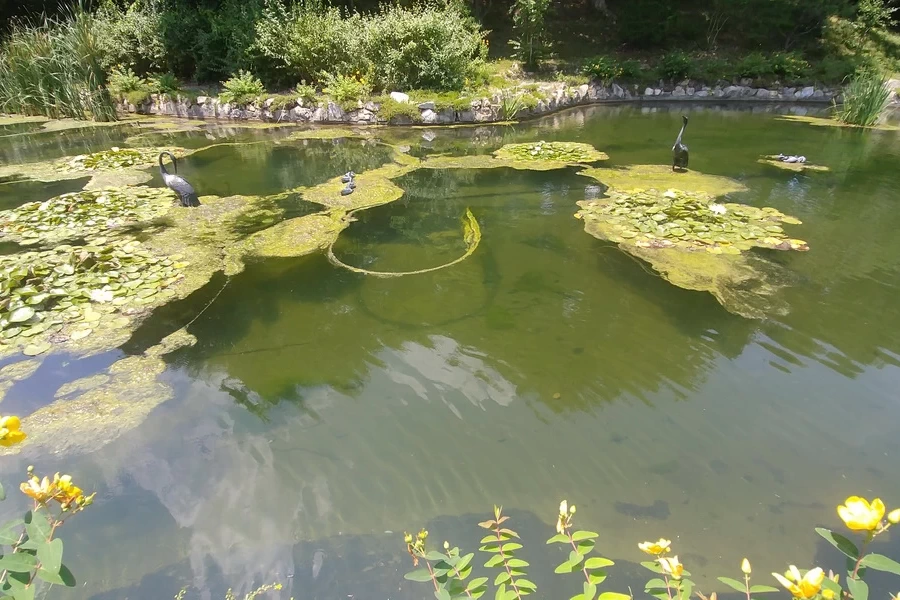
Nanobubbles in Pond & Lake Management
Oxygen nanobubbles are supplied to oxygen-deficient ponds and lakes to raise dissolved oxygen and support water
quality management.
Applied to ponds in parks and facilities; lakes and reservoirs are reviewed according
to the size and water quality of the water body.
In oxygen-deficient waters
Waters where water stagnates and organic matter accumulates easily become low in dissolved oxygen. Oxygen deficiency near the bottom in particular can lead to problems such as poor water quality and odors.
-
Dissolved oxygen deficiency
Oxygen is consumed as water stagnates and organic matter decomposes, so dissolved oxygen tends to drop, especially near the bottom.
-
Algal blooms and odors
Water conditions with accumulated nutrients and low oxygen appear together with algal blooms and odors, impairing the use and appearance of the water body.
-
Recurring water quality management burden
Water quality changes with water temperature, rainfall and incoming pollutants, so the same problems recur every season and require ongoing management.
Role of oxygen nanobubble supply
- Dissolved oxygen supply Oxygen nanobubble water is supplied to the water body to raise dissolved oxygen and help improve water quality in oxygen-deficient zones.
- Circulating supply linked to the water body Water from the pond or lake is circulated and treated with oxygen nanobubbles. Circulation flow and supply points are determined by surface area, depth, water quality and installation conditions.
Oxygen nanobubbles supply dissolved oxygen to improve oxygen-deficient conditions and are used to manage factors that degrade water quality. Algal bloom management takes into account conditions specific to each water body, such as nutrients, water temperature and residence time.
What Are NanobubblesWater quality benefits of oxygen nanobubbles
Oxygen nanobubbles can be used to improve oxygen conditions in waters low in dissolved oxygen. A pond field trial confirmed a rise in dissolved oxygen; more stable water quality and a lighter management burden are expected benefits to be confirmed under site conditions.
-
Action
Dissolved oxygen supply and rise
- Oxygen supply through oxygen nanobubbles
- Higher dissolved oxygen in oxygen-deficient ponds
- Better oxygen conditions in the water body
Verified · Field trial (observed)
-
Field effect
Supports better water quality
- Addresses water quality problems caused by oxygen deficiency
- Potential to improve bottom-layer oxygen conditions
- Supports management of odors and other water quality problems
Expected benefit
-
Business effect
Optimized water body management
- Operating conditions adjusted by dissolved oxygen measurements
- Oxygen supply configured to the size of the water body
- Potential to reduce maintenance burden
Expected benefit
Applicable pond and lake sites
Applied to waters where long residence time leads to oxygen deficiency. Ponds are at the 'commercial' stage; lakes and reservoirs are at the 'validation' stage.
-
Ponds
Garden and landscape ponds, golf course water hazards, artificial lakes and detention ponds
-
Lakes
Natural lakes, artificial lakes and stagnant waters
-
Reservoirs
Agricultural reservoirs and retention basins
- Commercial: field use and repeated supply
- Validation: field and economic validation in progress
Oxygen nanobubble systems for pond and lake management
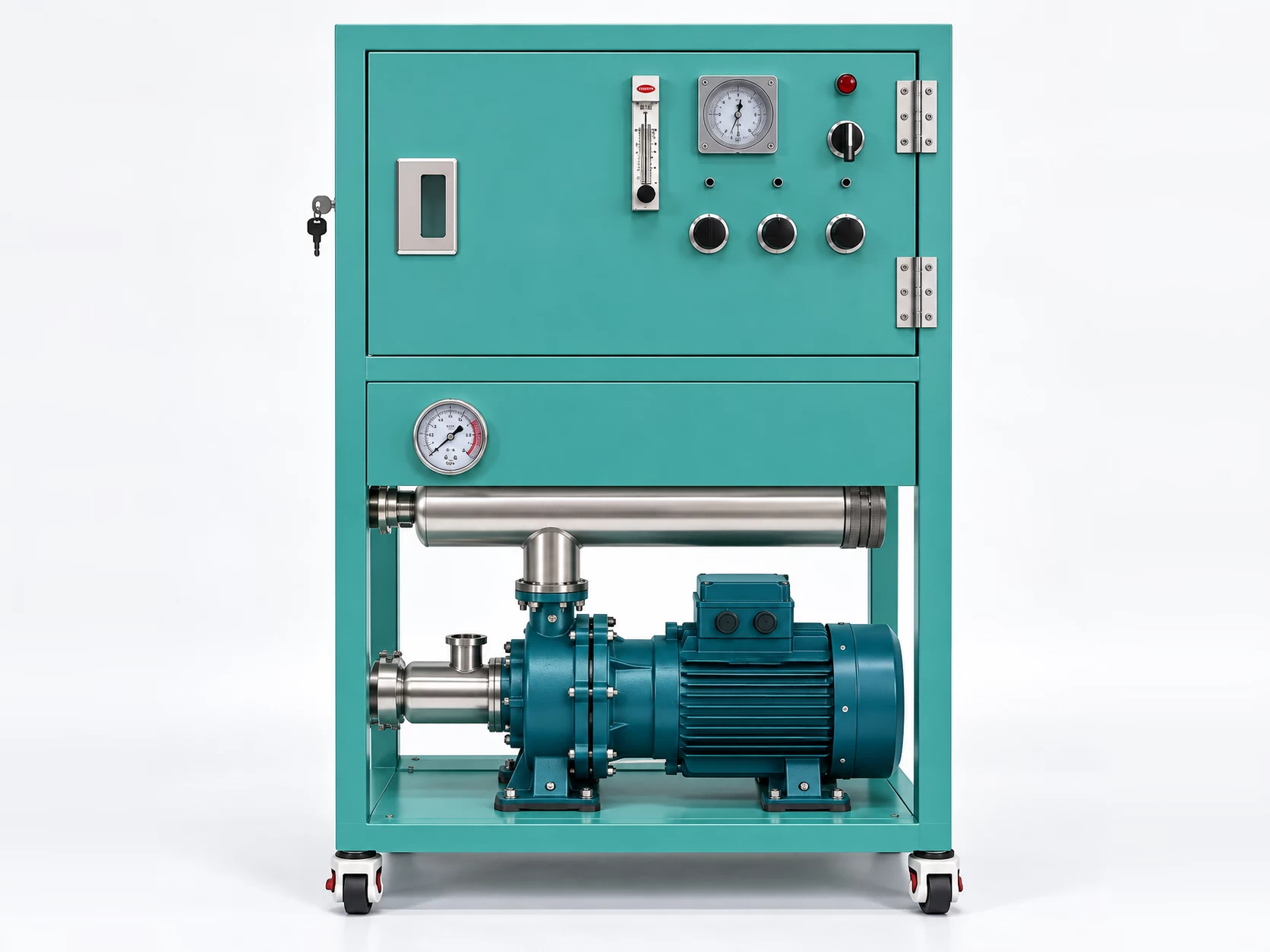
HEN or HOA is selected depending on the size of the water body and installation method. HEN is recommended where the unit sits on the shore and is connected by piping; HOA is considered where a submerged system is installed simply to raise dissolved oxygen.
| Sub-application | HEN High efficiency | HOA Oxygen dissolver |
|---|---|---|
| Ponds | Recommended | Optional |
| Lakes | Recommended | Optional |
| Reservoirs | Recommended | Optional |
| Details HEN | Details HOA |
Recommended Optional For large surface areas such as lakes and reservoirs, multiple units run in parallel. This table recommends installation and operating configurations; it does not mean water quality improvement has been validated for every type of water body.
Selection factors
- Surface area and depth
- Whether the unit can be submerged or there is space on the shore
- Power conditions and distance to power
- Inflow and outflow conditions
- Current dissolved oxygen, water quality and pollution load
- Operating goals (target dissolved oxygen, zones to manage)
Information to include in your inquiry
- Surface area and average/maximum depth
- Current water quality and main problems
- Site photos and installation space
- Power conditions
- Inflow and outflow conditions
Pond field trial results
In 2022, Honour Tech observed dissolved oxygen before and after oxygen nanobubble supply at the Khera, Kanheri and Dangra ponds in Haryana, India. Dissolved oxygen rose at all three after supply; these results apply to those sites and measurement conditions.
14.32 mg/L
Dissolved oxygen (1.80 mg/L before supply)
Khera pond, Haryana, India (2022)
Field trial · Observed
11.80 mg/L
Dissolved oxygen (1.50 mg/L before supply)
Kanheri pond, Haryana, India (2022)
Field trial · Observed
8.30 mg/L
Dissolved oxygen (0.23 mg/L before supply)
Dangra pond, Haryana, India (2022)
Field trial · Observed
Frequently Asked Questions
Common questions about dissolved oxygen rise, algal blooms and odors, system configuration for large waters, and choosing between HEN and HOA.
Does supplying oxygen nanobubbles actually raise dissolved oxygen in ponds or lakes?
Oxygen nanobubbles can raise dissolved oxygen in ponds, and Honour Tech has confirmed increases in dissolved oxygen at actual pond sites.
In 2022, dissolved oxygen was observed before and after oxygen nanobubble supply at the Khera, Kanheri and Dangra ponds in Haryana, India. Dissolved oxygen rose at all three sites; representative results are shown under evidence and cases on the pond and lake management page.
The extent of the increase, however, depends on water temperature, depth, pollution load, supply flow and oxygen quantity, and the location and timing of measurement. Honour Tech checks current dissolved oxygen and target levels to review an oxygen supply configuration suited to site conditions.
Can supplying oxygen nanobubbles remove algal blooms in ponds or lakes?
Oxygen nanobubbles are used to relieve dissolved oxygen shortage and manage water conditions that favor algal blooms. They should be distinguished from technologies that directly remove blooms that have already formed in large quantities, and we do not promise bloom removal.
Supplying oxygen to a pond or lake can help relieve oxygen shortage and the reducing environment near the bottom. However, algal blooms are affected by nutrients such as nitrogen and phosphorus, water temperature, sunlight and water residence time, so even keeping dissolved oxygen high cannot completely prevent them.
Honour Tech recommends using oxygen nanobubbles as a technology for preventing dissolved oxygen shortage and managing factors that degrade water quality, rather than for removing blooms directly. Only oxygen is supplied; no chemicals are added.
Can odors and black sediment at the bottom of a pond also be improved?
Oxygen nanobubbles can help suppress some odor generation by improving the reducing environment caused by oxygen shortage near the bottom.
When organic matter accumulates on the pond bottom and oxygen runs short, conditions favor the formation of odorous substances such as hydrogen sulfide. Oxygen supply can be used to improve these water conditions.
Oxygen nanobubbles do not, however, physically remove sediment that has already accumulated. Where sediment is heavy or pollution is severe, separate sediment management such as dredging may be needed. Honour Tech checks dissolved oxygen by depth, water quality and sediment condition to review oxygen supply points and circulation methods.
Is one nanobubble system enough for a large, deep lake?
Required system capacity is judged by total water volume, oxygen consumption, depth and circulation characteristics rather than by lake area, and large water bodies are served by several units configured in parallel.
Even with the same area, different depths and volumes require different oxygen supply. Oxygen shortage can occur at the bottom even when surface dissolved oxygen is sufficient, so whether oxygen reaches where it is needed must be considered along with the quantity of oxygen.
Honour Tech reviews system capacity and installation method based on water volume, depth, water temperature, dissolved oxygen by depth and target water quality. For large water bodies, multiple supply points or combinations with flow-generating devices are also considered. Lakes and reservoirs are currently at the "validation" stage.
Which is better for pond management, HEN or HOA?
HEN is considered first where equipment sits on the bank and connects by piping; HOA is considered where a submerged system is installed solely to raise dissolved oxygen.
HEN circulates stored water from the water body with a standard transfer pump and supplies oxygen nanobubble water. HOA is an oxygen dissolver that operates underwater with a submersible pump; the choice depends on installation conditions and operating purpose.
Honour Tech checks surface area, depth, oxygen supply target, installation space for equipment, and power and piping conditions to review the product and installation configuration. For large water bodies, the area over which oxygen is delivered across the whole water body is considered along with the treatment flow of a single unit.
Tell us the surface area and depth, current dissolved oxygen and water quality, installation space and power conditions, and we will review an oxygen supply configuration for your site.
Contact Us