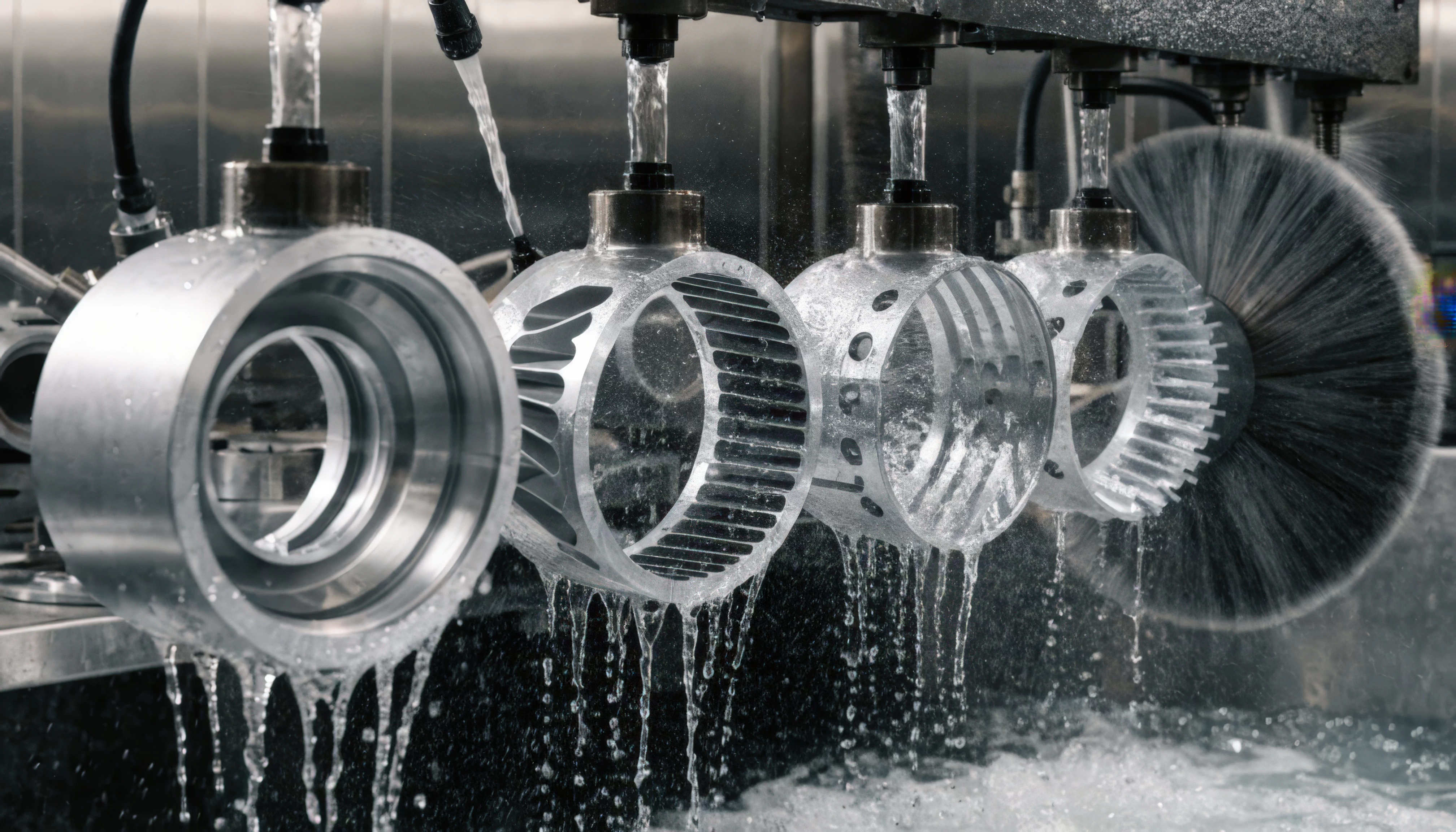
Nanobubbles in Industrial & Precision Cleaning
Nanobubble water is applied to cleaning and rinsing processes to supplement the removal of surface contaminants
and help stabilize cleaning quality.
Applications are reviewed for glass and optics, metal and machine parts,
electronic and precision parts, and semiconductor and ultra-precision cleaning.
When cleaning falls short
Contaminants left on surfaces affect the quality and yield of subsequent processes such as coating, bonding and assembly. Increasing detergent, rinse water and cleaning time to improve cleaning performance also raises operating costs.
-
Fine contamination and residues
Oil and particles tend to remain in fine gaps, complex shapes and blind holes, and remaining contaminants can cause coating, bonding and plating defects.
-
Variation in cleaning quality
When contamination and cleaning solution conditions change, results become uneven even within the same process, leading to re-cleaning and defects.
-
Detergent and water burden
Raising detergent concentration and rinse cycles to secure cleaning power increases chemical and water costs and the wastewater treatment burden.
Role of nanobubble water cleaning
- Supplements existing cleaning action Nanobubble water is applied to cleaning and rinsing processes to help separate surface contaminants together with existing actions such as spraying, agitation and ultrasound.
- Supply configured to the cleaning process Air or N₂ is used to suit the cleaning method, material and contaminant, and connected to the water supply of existing cleaning tanks or spray lines.
The current basis from in-house comparison tests is spray cleaning of glass surfaces. Immersion cleaning and other materials are first checked with customer sample tests.
What Are NanobubblesExpected benefits of nanobubble cleaning
Nanobubble water supplements the action of existing cleaning processes and can be used to reduce residual contamination and improve both cleaning quality and operating conditions. Verified effects are limited to in-house spray comparison tests on glass surfaces; the rest are expected benefits to be confirmed with process-specific tests.
-
Action
Supplemented cleaning performance
- Removal of oily contamination from glass surfaces
- Spray cleaning compared with tap water
- Removal effect observed under test conditions
Verified · In-house test (observed)
-
Field effect
Better process quality
- Less residual contamination and cleaning variation
- Less re-cleaning and fewer defects
- More stable quality in coating, bonding and assembly
Expected benefit
-
Business effect
Optimized operating conditions
- Room to adjust detergent concentration and use
- Optimized rinse water and cleaning time
- Potential to reduce wastewater treatment burden
Expected benefit
Applicable industrial and precision cleaning fields
Applications are reviewed in four sub-fields according to the material being cleaned and the required cleanliness. Glass and optics, metal and machine parts, and electronic and precision parts are at the 'early market' stage. Semiconductor and ultra-precision is at the 'validation' stage; before field application, process-specific technical suitability such as particle and metal leaching and surface damage is checked first.
-
Glass & optics
Plate glass, solar panels, displays and cover glass, optical components
-
Metal & machine parts
Machined metal products, machine parts, precision-machined parts with cutting oil or grease
-
Electronic & precision parts
PCBs, circuit boards, electronic modules, connectors, sensors
-
Semiconductor & ultra-precision
Wafers, semiconductor equipment parts, high-cleanliness process parts
- Early market: product and basic performance validated
- Validation: field and economic validation in progress
In-house validation scope by cleaning method
Spray, immersion/agitation and immersion/ultrasonic methods work differently, so their effects are validated separately. This table shows not where nanobubbles can be applied, but the scope in which Honour Tech has confirmed effects through its own tests.
| Item cleaned | Spray Nozzle spray | Immersion/agitation Circulation, agitation, oscillation | Immersion/ultrasonic Ultrasonic tank |
|---|---|---|---|
| Glass & optics | In-house comparison test1 | Field trial target | Field trial target |
| Metal & machine parts | Evaluated by application conditions | Field trial target | Field trial target |
| Electronic & precision parts | Material/process validation required | - | - |
| Semiconductor & ultra-precision | High-cleanliness process validation required | - | - |
¹ In-house spray comparison test (observed) on oil-based marker on glass surfaces. This does not represent performance validation for all industrial glass and optical components. For immersion/ultrasonic cleaning, the interaction between ultrasonic conditions and bubble behavior is checked as well. This table will be updated as tests progress.
Nanobubble products for industrial and precision cleaning
HQN or HTV is selected according to the material cleaned, required cleanliness and wetted-part requirements. HQN is recommended for metal and machine parts, and HTV for glass and optics and electronic and precision parts, where wetted-part material control matters. For semiconductor and ultra-precision, products and configuration are determined after process-specific validation.
| Sub-application | HQN High density | HTV All SUS |
|---|---|---|
| Glass & optics | Optional | Recommended |
| Metal & machine parts | Recommended | Optional |
| Electronic & precision parts | Optional | Recommended |
| Semiconductor & ultra-precision | Selected after process-specific validation | |
| Details HQN | Details HTV | |
Recommended Optional HTV's internal module is all stainless steel. However, this alone is not taken as suitability for ultrapure water (UPW) or ultra-high-cleanliness processes.
Selection factors
- Item cleaned and material
- Cleaning method (spray, immersion/agitation, immersion/ultrasonic)
- Type of contaminant (oil, particles, residues)
- Required cleanliness and wetted-part materials
- Gas used (air, N₂)
- Required flow and existing cleaning equipment
Information to include in your inquiry
- Item cleaned and material
- Type of contaminant
- Current cleaning process and method
- Required flow
- Required cleanliness
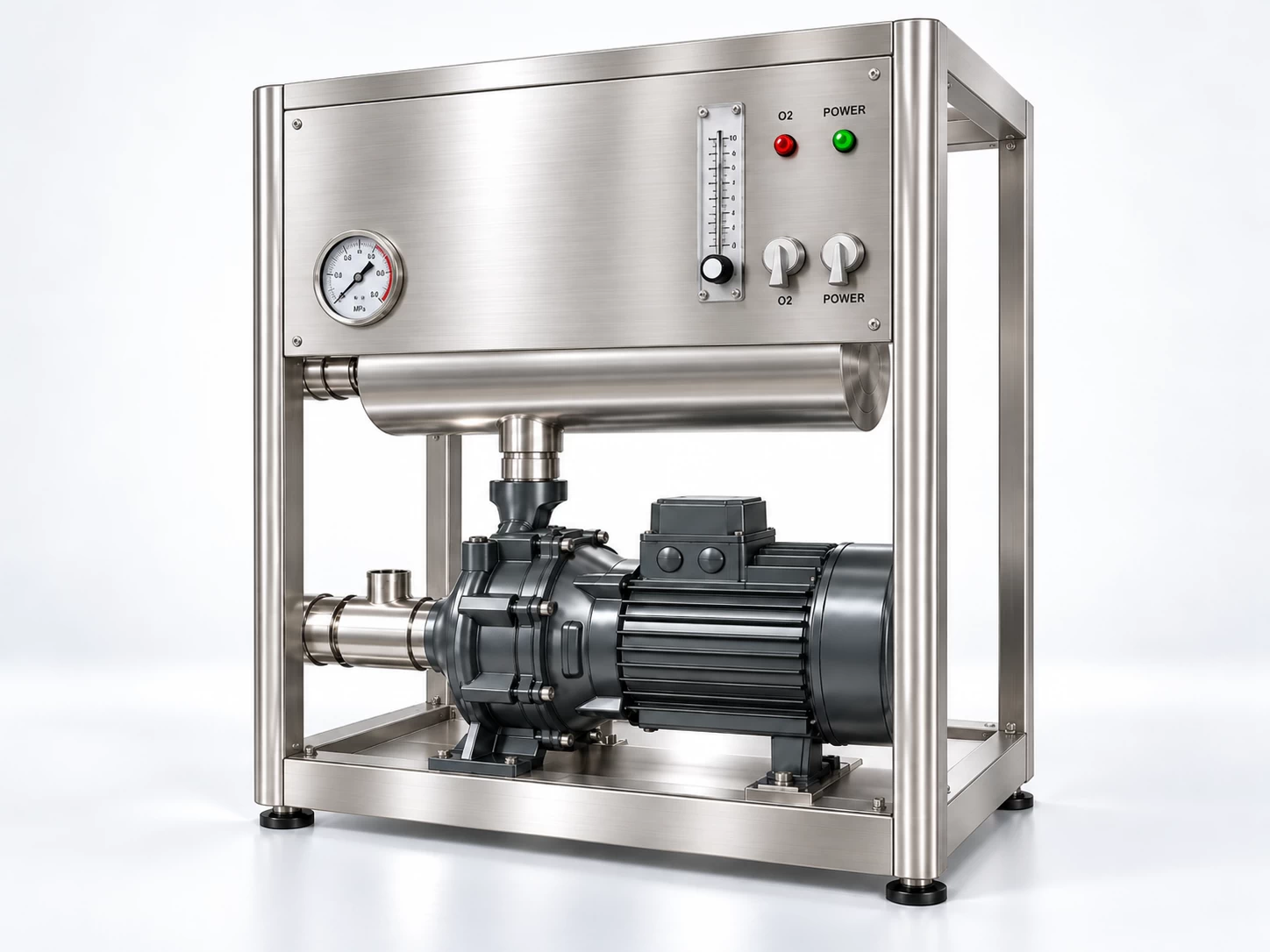
Glass surface spray cleaning comparison test results
Key results of an in-house test comparing spray cleaning with tap water and nanobubble water on oily contamination of glass surfaces. This is currently the most direct evidence Honour Tech offers for industrial and precision cleaning.
2 of 4 types
Oily contamination completely removed
4 types of oil-based marker on glass surfaces. Oxygen nanobubble water at 2.5 bar vs. tap water at 4.5 bar, straight-jet nozzle spray, visual comparison of residues
In-house test · Observed
Frequently Asked Questions
Common questions about spray and immersion cleaning, relation to existing ultrasonic and chemical cleaning, surface damage, gases used and semiconductor applications.
Can nanobubble water be used for both spray cleaning and immersion cleaning?
Nanobubble water supply can be considered for both, but Honour Tech's current in-house comparison test evidence is for spray surface cleaning, and the effect in immersion cleaning needs separate verification.
In spray cleaning, conditions such as nozzle pressure, flow rate and spray distance are important. In immersion cleaning, results vary with circulation and agitation of the cleaning solution, part movement and immersion time.
In ultrasonic immersion cleaning in particular, the interaction between ultrasonic conditions and bubble behavior must also be considered, so a test comparing the existing cleaning solution with nanobubble water under the same operating conditions is needed. Honour Tech reviews feasibility and verification methods according to the parts, contaminants and cleaning method in use.
Can nanobubble water replace existing ultrasonic or chemical cleaning?
Nanobubble water can be considered as a complement to existing ultrasonic and chemical cleaning, but whether a process can be replaced or simplified must be confirmed by a separate comparison test.
Ultrasonic cleaning relies on mechanical action and chemical cleaning on dissolving and breaking down contaminants. Nanobubble water is applied by improving the properties of the cleaning water supplied to the current process, and the right combination depends on the parts and contaminants.
Honour Tech compares soil removal, cleaning time, chemical use and surface condition together using customer samples to propose a direction for process improvement.
Can nanobubbles damage precision parts or sensitive surfaces?
The use of fine bubbles does not in itself cause surface damage, but for precision parts the flow velocity, pressure, gas and material of the cleaning equipment must be considered together.
The potential for damage depends on the part's material, surface finish, cleaning method and operating conditions. For optical components, electronic parts and precision-machined parts, surface deformation, micro-scratches and residues must be checked along with contaminant removal.
When reviewing precision cleaning, Honour Tech evaluates cleaning performance and surface safety together and sets pressure and flow conditions suited to the actual parts.
Which gases are used for industrial and precision cleaning?
Air and nitrogen (N₂) are used for industrial and precision cleaning, selected by considering the material and contaminants of the parts and the surface condition after cleaning.
The type of gas can affect not only soil removal but also the surface condition after cleaning. For parts where oxidation or discoloration must be controlled, such as metal parts, air and nitrogen conditions are compared before choosing.
Honour Tech's in-house glass surface comparison test was carried out with oxygen nanobubble water. Cleaning performance with air or nitrogen is not inferred directly from this result but confirmed through comparison tests with actual parts and contaminants.
Can nanobubbles be used in semiconductor or ultra-clean processes?
Semiconductor and ultra-clean processes are currently at the "validation" stage, and products and system configurations are selected after process-specific validation.
Ultra-clean processes require strict control of fine particles, metal ions, organics, leachables and recontamination, so wetted-part materials, piping design and cleaning and cleanliness conditions must be considered separately from general industrial use.
HTV has all-stainless internal modules, but this alone does not make it suitable for ultrapure water (UPW) or ultra-clean processes. Honour Tech evaluates particle and metal leaching, surface damage and recontamination with actual parts and process water before reviewing application and product configuration.
Tell us the item and material to be cleaned, the type of contaminant and the cleaning method (spray, immersion, ultrasonic), and we will start by reviewing a test method with you.
Contact Us