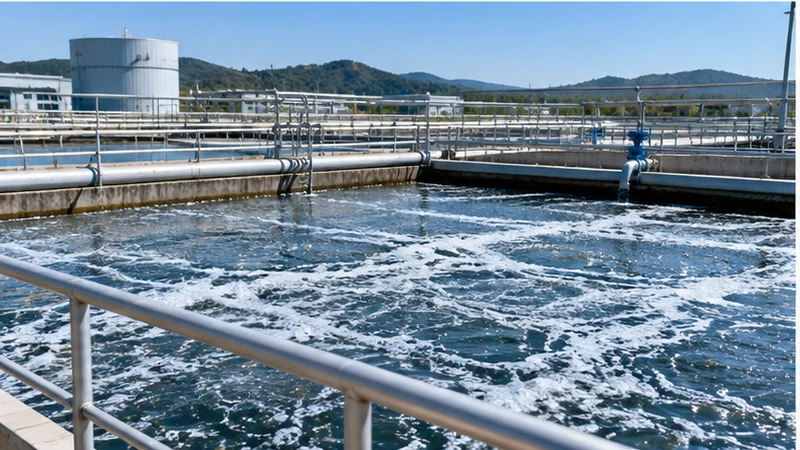
Nanobubbles in Wastewater Treatment & Advanced Oxidation
Oxygen nanobubbles reinforce oxygen supply for biological treatment and ozone nanobubbles reinforce oxidation,
supporting greater efficiency in existing sewage and wastewater treatment processes.
Applications are reviewed
for sewage treatment (STP), wastewater treatment (WWTP), industrial wastewater and ozone-based advanced oxidation
(AOP).
When oxygen transfer and oxidation fall short
Biological treatment needs enough oxygen delivered for microorganisms, and oxidation needs enough ozone delivered to react with contaminants. When transfer is insufficient, effluent quality fluctuates, and compensating by increasing supply raises power and operating costs.
-
Oxygen supply and energy burden
In biological treatment, oxygen supply accounts for a large share of operating costs, and when oxygen is short, organic decomposition and nitrification by microorganisms slow down.
-
Variable influent quality
When influent quality and flow change, it can be hard to keep effluent quality and discharge standards stable with the existing process alone.
-
Recalcitrant pollutants and ozone utilization
Color and recalcitrant organics are hard to reduce with biological treatment alone, and ozone that escapes without dissolving adds cost and off-gas treatment burden.
Role of oxygen and ozone nanobubbles
- Oxygen nanobubbles: reinforce oxygen supply Linked with existing biological treatment processes, they reinforce oxygen transfer and dissolved oxygen management.
- Ozone nanobubbles: reinforce oxidation They aid gas–liquid contact and dissolution of ozone and are used to treat oxidizable organics and color.
The two technologies differ in purpose and gas. Treatment location and operating conditions are set after checking the existing process and raw water.
What Are NanobubblesEffects of oxygen and ozone nanobubbles in water treatment
Oxygen and ozone nanobubbles reinforce oxygen transfer and oxidation in existing treatment processes and can be used to stabilize effluent quality and optimize operating conditions. Wastewater treatment and advanced oxidation are currently at the 'validation' stage. Field trial results reflect the whole treatment process, so all benefits below are expected benefits to be confirmed for each process.
-
Action
Reinforced oxygen transfer and ozone oxidation
- Reinforced oxygen supply for biological treatment
- Better gas–liquid contact and dissolution of ozone
- Operated together with existing treatment processes
Expected benefit
-
Field effect
More stable effluent quality
- Dissolved oxygen management
- Treatment of oxidizable pollutants and color
- Response to variable influent quality
Expected benefit
-
Business effect
Optimized treatment process operation
- Optimized oxygen and ozone use
- Management of power and chemical costs
- Potential to ease downstream treatment
Expected benefit
Applicable sewage and wastewater treatment processes
Oxygen or ozone nanobubbles are added to the existing process according to the treatment purpose. All four applications are currently at the 'validation' stage.
-
Sewage treatment (STP)
Reinforced oxygen supply for biological treatment · O₂
-
Wastewater treatment (WWTP)
Oxygen supply and water quality management at treatment facilities · O₂
-
Industrial wastewater
Process reinforcement matched to wastewater characteristics · O₂, O₃
-
Ozone advanced oxidation (AOP)
Treatment of oxidizable organics and color, linked to downstream treatment · O₃
- Validation: field and economic validation in progress
Oxygen nanobubbles vs. ozone nanobubbles
Even when used in the same treatment process, the two technologies differ in purpose and evaluation indicators.
| Category | Oxygen nanobubbles | Ozone nanobubbles |
|---|---|---|
| Main purpose | Oxygen supply for biological treatment | Oxidation |
| Key indicators | Dissolved oxygen, oxygen transfer performance, power, biological treatment performance | Ozone consumption, color, COD, changes in target substances |
| Key conditions | Flow, oxygen demand, tank configuration, existing aeration method | pH, water temperature, organic characteristics, ozone dose, contact time |
| Notes | Compare oxygen transfer efficiency with total operating cost | Review residual and off-gas ozone, oxidation by-products and ozone utilization efficiency |
Nanobubble systems for each water treatment purpose
For oxygen supply, HEN is recommended first for its high flow and lower initial cost and power consumption. For oxidation that dissolves ozone in water, HQN's ozone option is recommended.
Swipe left or right to see the full table.
| Sub-application | HQN High density | HQN Ozone option | HEN High efficiency | HEN Ozone option |
|---|---|---|---|---|
| Sewage treatment (STP) | Optional | Recommended | Recommended | Optional |
| Wastewater treatment (WWTP) | Optional | Recommended | Recommended | Optional |
| Industrial wastewater | Optional | Optional | Optional | Optional |
| Ozone advanced oxidation (AOP) | Recommended | Optional | ||
| Details HQN | Details HQN | Details HEN | Details HEN |
Recommended Optional Use HQN's ozone option to dissolve ozone in water, and HEN's ozone option only where oxidation reactions are the goal. When treatment flow exceeds a standard model (HQN 20 m³/h, HEN 25 m³/h), multiple units run in parallel.
Selection factors
- Wastewater type and quality
- Treatment purpose (oxygen supply, oxidation) and gas used (O₂, O₃)
- Treatment flow (parallel configuration if it exceeds a standard model)
- When using ozone: ozone generator, wetted-part materials, off-gas ozone treatment, safety conditions
- Existing treatment process and connection point
Information to include in your inquiry
- Wastewater type and water quality analysis data
- Treatment flow rate
- Existing treatment process
- Target water quality
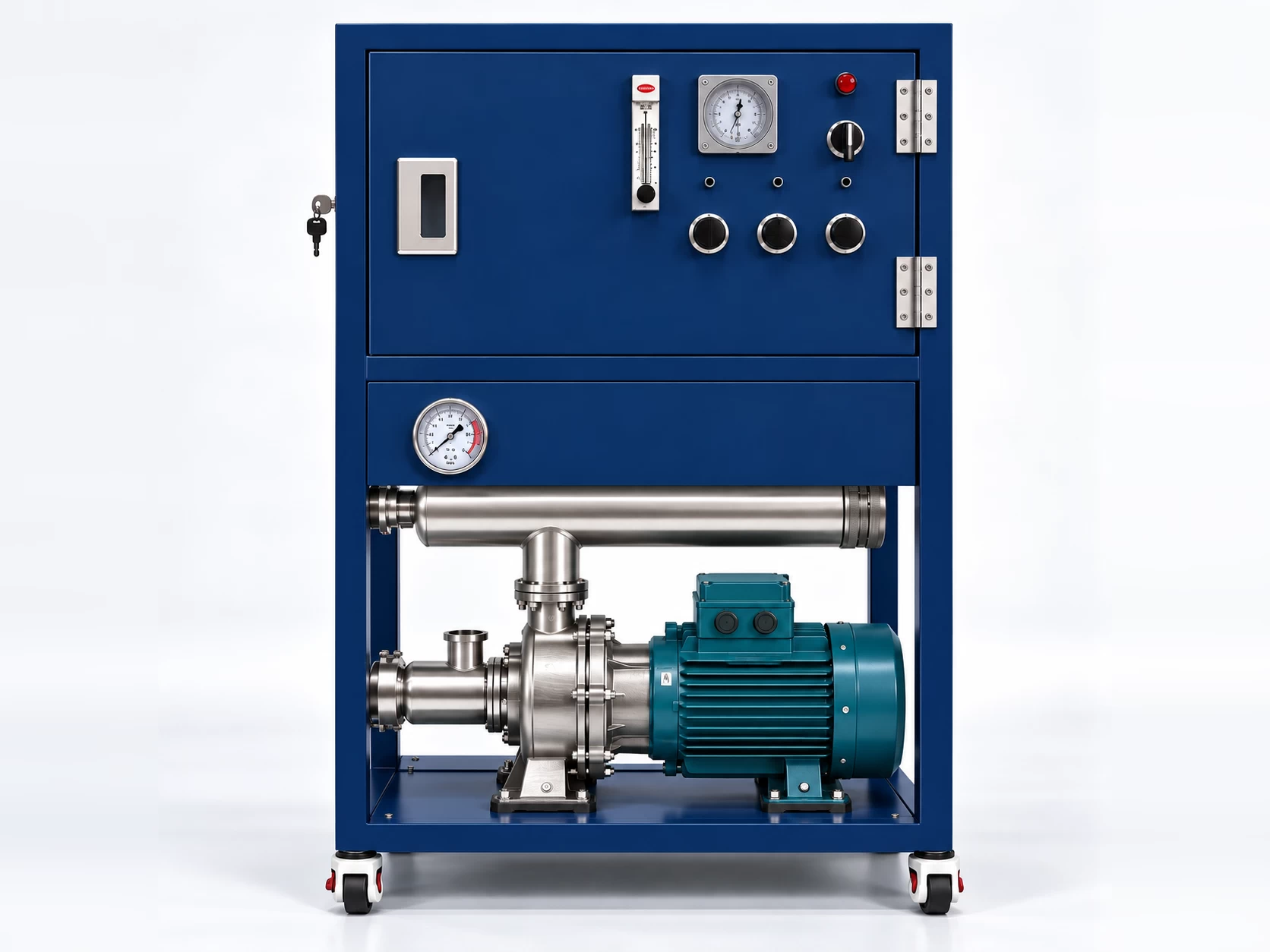
Sewage treatment field demonstration and ozone oxidation tests
Field trial results at a sewage treatment facility in India and in-house tests of ozone nanobubble oxidation are presented separately.
56–92%
COD reduction
Private sewage treatment facility in Mohali, India (1,250 m³/day). Result of the whole treatment process operated together with the existing process (Feb–Apr 2022)
Field trial · Measured
Frequently Asked Questions
Common questions about integration with biological treatment, differences between oxygen and ozone, high-COD wastewater, ozone utilization efficiency, and validation of treatment performance and economics.
How are oxygen nanobubbles applied to existing biological wastewater treatment?
Oxygen nanobubble systems are applied by supplying oxygen to the existing biological treatment process or by complementing the existing aeration method.
Processes such as microbial degradation of organics and nitrification require sufficient oxygen. The nanobubble system is configured considering the treatment tank's flow rate, oxygen demand, dissolved oxygen target and the design of existing aeration equipment.
Honour Tech checks the size and water quality of the treatment tank and current dissolved oxygen and operating conditions to review the installation point and operating method. Whether existing aeration can be reduced or replaced is judged after confirming the same treatment target is met, and oxygen transfer improvement and total power consumption are compared under actual process conditions.
How do oxygen nanobubbles and ozone nanobubbles differ in wastewater treatment?
Oxygen nanobubbles mainly supply the oxygen needed for biological treatment, while ozone nanobubbles are used for oxidative treatment of pollutants.
Oxygen nanobubbles improve the oxygen environment for aerobic microorganisms and raise dissolved oxygen in processes where oxygen runs short. Ozone nanobubbles are used for color improvement, oxidation of specific organics and hygiene management of water systems. Because ozone can also affect the microorganisms needed for biological treatment, the treatment point and residual ozone control are important.
The two technologies play different roles. Honour Tech reviews the characteristics of the wastewater and the existing treatment process to propose oxygen supply, ozone oxidation or a combination of both.
Can ozone nanobubbles treat industrial wastewater with high COD?
Ozone nanobubbles can be used to treat oxidizable organics and improve color in industrial wastewater; for high-COD wastewater they are considered as pretreatment or as part of an advanced oxidation process.
Ozone changes the chemical structure of organics or breaks down some substances. However, high COD alone does not predict the effect; the type of organics, their oxidation reactivity, pH and ozone consumption matter. Even when organics are partly oxidized, the final COD reduction may not be large.
Honour Tech compares ozone supply conditions and water quality changes using actual wastewater samples and, if needed, reviews combinations with other treatment technologies.
Can ozone nanobubbles reduce ozone generation and off-gas?
Improving the gas transfer and dissolution of ozone may reduce ozone use and undissolved off-gas while securing target treatment performance.
In conventional ozone treatment, part of the supplied ozone escapes without dissolving. Nanobubble systems can be used to improve gas-water contact and can therefore be considered for raising ozone utilization efficiency. Actual performance depends on the ozone generator's output concentration and gas flow, the ozone demand of the water, contact time and operating pressure.
Honour Tech evaluates supplied ozone, dissolved ozone concentration, off-gas generation and improvement toward target water quality together. Optimizing the ozone dose and operating cost needed to achieve the required treatment effect matters more than a high dissolved ozone concentration itself.
How are treatment performance and economics verified?
Water quality improvement, oxygen and ozone use, and power and chemical costs are compared together against actual raw water and existing process conditions.
For oxygen nanobubbles, dissolved oxygen and oxygen transfer performance, biological treatment performance and power consumption are evaluated. For ozone nanobubbles, items suited to the process purpose are checked, such as target pollutants, COD, color, ozone dose and residual and off-gas ozone.
Honour Tech reviews treatment conditions through raw water analysis and small-scale tests, and carries out field demonstrations where needed. The results of the overall treatment process and the individual contribution of the nanobubble system are evaluated separately.
Tell us the wastewater type and quality, throughput, current process and target water quality, and we will review the applicability of oxygen and ozone nanobubbles and preliminary test conditions.
Contact Us