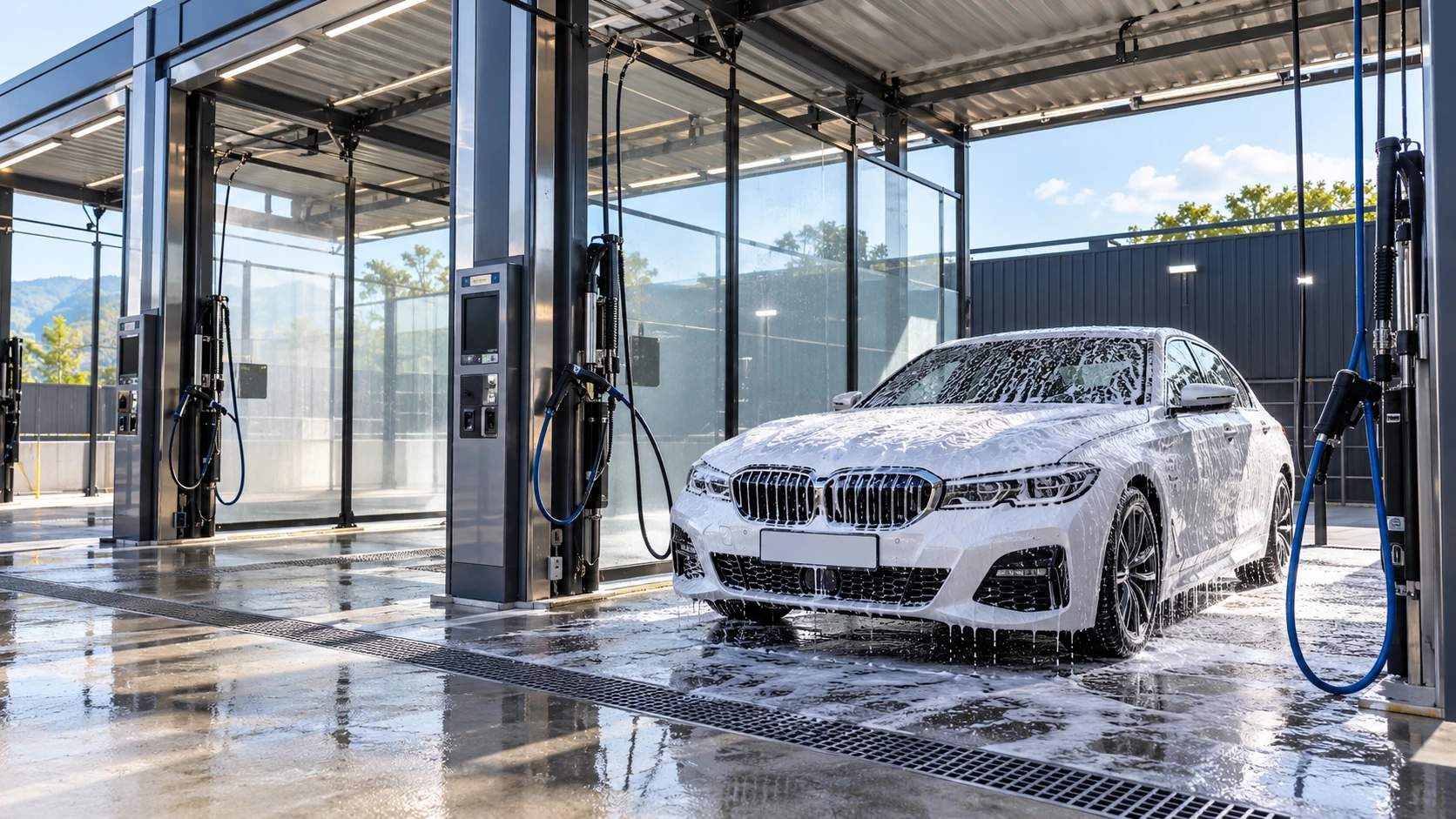
Nanobubbles in Car Wash Wastewater Reuse
A water reuse system that treats car wash wastewater for reuse as wash water, reducing fresh water use and wastewater discharge. It combines ozone nanobubble oxidation with coagulation, sedimentation and filtration, configured to suit each car wash's water quality and water use.
Reusing car wash wastewater
Car washes use a lot of water and discharge as much wastewater. Reusing treated water requires managing not only contaminant removal but also the quality of reclaimed water and supply conditions for each wash stage.
-
Fresh water use and water costs
The more cars washed, the greater the fresh water use and water and sewer charges.
-
Treating complex contaminants
Car wash wastewater contains oil, detergent components, suspended solids and various organic contaminants together, making it hard to handle with a single treatment method.
-
Reclaimed water quality management
Odor, color and residues in reclaimed water affect wash quality and customer impressions, so storage conditions and the water quality required at each wash stage must be managed together.
Role of ozone nanobubble treatment
- Better water quality through oxidation Ozone nanobubble oxidation, linked with coagulation, sedimentation and filtration, helps treat oxidizable organic contaminants and substances that cause color and odor.
- Reuse configured to the wash process The wash stages that receive reclaimed water and their volumes are set considering treated water quality and storage conditions.
Ozone nanobubbles are one stage of the overall treatment process. Separation of solids and contaminants is handled by coagulation, sedimentation and filtration.
What Are NanobubblesBenefits of nanobubbles in car wash wastewater reuse
A car wash wastewater treatment and reuse system can be used to reuse treated water for washing, reducing fresh water use and discharge and easing the car wash's water management burden. The car wash wastewater treatment system was commercialized in 2023; quantitative effects such as water savings will be presented once field operating data has been compiled.
-
Action
Better car wash wastewater quality
- Treatment of oxidizable organic contaminants
- Reduction of substances that cause color and odor
- Linked with coagulation, sedimentation and filtration
Expected benefit
-
Field effect
Stable supply of reclaimed water
- Water quality management by wash stage
- Reclaimed water storage and supply management
- Consistent treated water quality
Expected benefit
-
Business effect
Optimized water use and discharge
- Potential to reduce fresh water use
- Wastewater discharge management
- Optimized water and sewer charges and operating costs
Expected benefit
Applicable car wash wastewater reuse sites
Applied to car wash facilities that can collect and treat their wastewater. Car wash wastewater reuse is currently at the 'commercial' stage.
-
Automatic car washes
Wastewater treatment and reuse for rollover and tunnel washers
-
Self-service car washes
Wastewater treatment and reuse at high-pressure spray wash facilities
-
Commercial vehicle washing
Wastewater treatment at bus, truck and other commercial vehicle washing facilities
- Commercial: field use and repeated supply
Car wash wastewater treatment and reuse process
The treatment process Honour Tech applies in the field. Treatment stages and layout are adjusted according to raw water quality, throughput and reuse goals.
-
Coagulation
A coagulant is added to car wash wastewater so that fine contaminants clump together.
-
Ozone nanobubble oxidation
Treats oxidizable organic contaminants and substances that cause color and odor.
-
Sedimentation
Clumped solids settle and are separated in the sedimentation tank.
-
Filtration
A stainless steel filter removes remaining suspended solids.
-
Reuse
Treated water is stored and supplied again as wash water.
Nanobubble products for car wash wastewater treatment
For car wash wastewater treatment, HQN's ozone option, which dissolves ozone with high efficiency, is recommended. HEN's ozone option can also be considered depending on treatment goals and process conditions.
| Sub-application | HQN Ozone option | HEN Ozone option |
|---|---|---|
| Car wash wastewater reuse | Recommended | Optional |
| Details HQN | Details HEN |
Recommended Optional The ozone nanobubble system is one stage of the overall treatment process; coagulation and sedimentation tanks and filters are configured together to suit the site.
Selection factors
- Number of cars washed and daily wastewater volume
- Wastewater quality
- Target reclaimed water quality and wash stages for reuse
- Whether there is existing wastewater treatment equipment
- Installation space and discharge conditions
- When using ozone: wetted-part materials, off-gas ozone treatment, safety conditions
Information to include in your inquiry
- Daily number of cars washed and wastewater volume
- Current wastewater treatment method
- Reuse goals
- Installation space
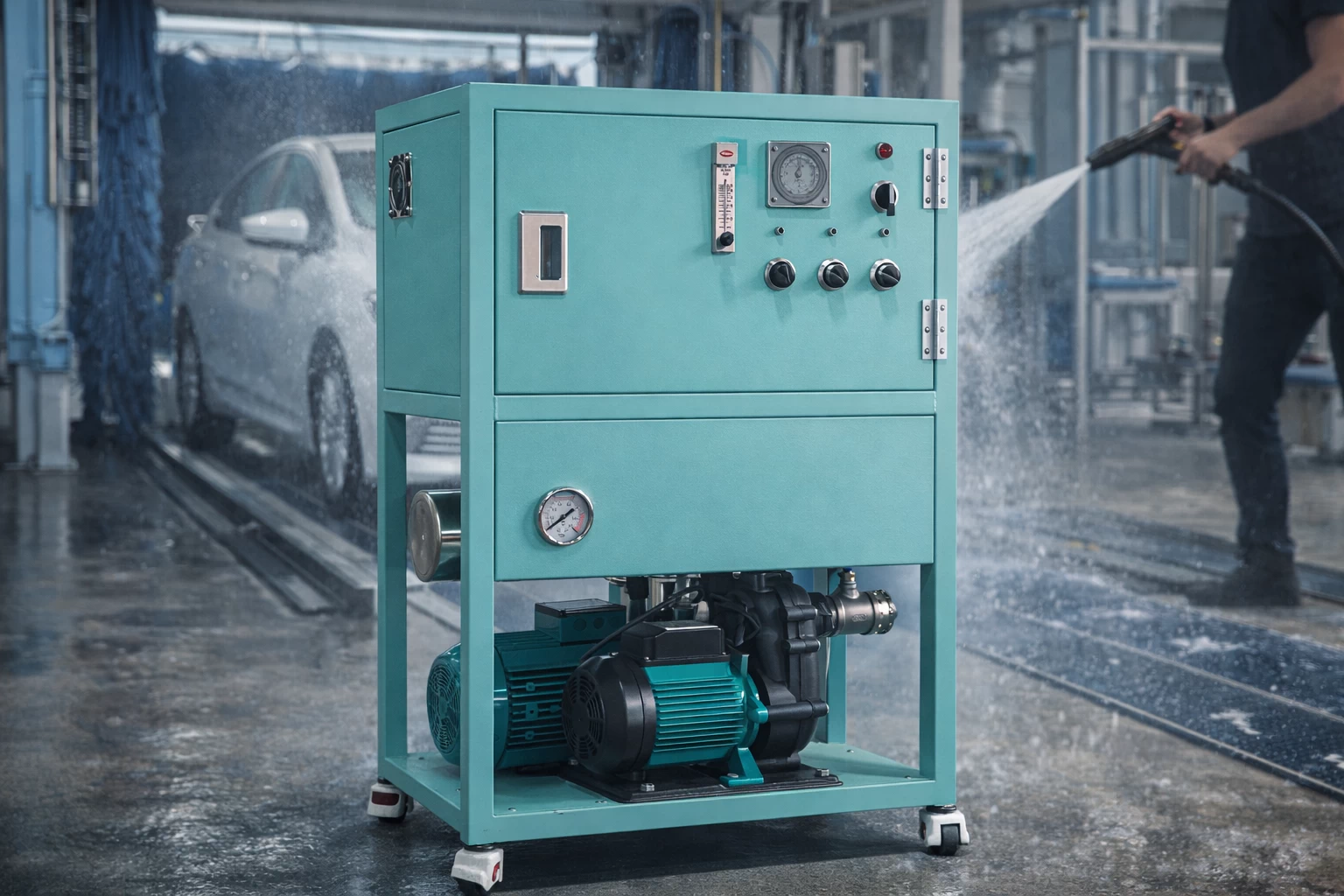
Commercialization status of the car wash wastewater treatment system
Honour Tech commercialized its car wash wastewater treatment system in 2023 and is applying it in the field.
Frequently Asked Questions
Common questions about whether reuse is possible, connection to existing treatment equipment, wash stages for reclaimed water, the role of ozone treatment, and water use and operating costs.
Can car wash wastewater be treated and reused as wash water?
Yes. Honour Tech applies car wash wastewater treatment and reuse systems using ozone nanobubble technology in the field, and the scope of reuse is set according to treated water quality and the wash process.
The process in use adds coagulant to car wash wastewater, treats it with an ozone nanobubble system, separates solids in a settling tank and then filters the water through a stainless steel filter for reuse as wash water. Ozone nanobubbles handle oxidation, while coagulation, settling and filtration separate solids and contaminants.
Which wash stages use reclaimed water, and how much, is decided by evaluating treated water quality together with actual wash quality. Honour Tech checks raw water quality, reuse targets and water use by wash stage to review the treatment configuration.
Can it be connected to existing car wash wastewater treatment equipment?
After confirming the configuration and performance of existing treatment equipment, we review linking the necessary treatment stages with an ozone nanobubble system.
If the existing facility has a collection tank and coagulation, settling and filtration equipment, the capacity of each process and any missing stages are checked first. The ozone nanobubble process is placed where it suits the nature of the wastewater and the purpose of the stages before and after it.
Honour Tech checks wastewater volume, layout of existing equipment, treated water quality and reuse targets to decide between a new installation and integration with existing equipment. Existing facilities do not all need to be replaced, but additional equipment may be needed depending on the target water quality.
Can reclaimed water be used for every wash stage?
The wash stages that use reclaimed water are set based on treated water quality and finish quality, with fresh water given priority for stages where finish quality is critical.
Stages where water left on the vehicle surface directly affects finish quality, such as high-pressure rinse and wax or coating, must take residues and water spots into account. Stages with relatively low water quality requirements, such as pre-wash and underbody wash, offer more room for reclaimed water.
Honour Tech checks water use by stage and treated water quality at the car wash to review how fresh and reclaimed water should be supplied.
Can car wash wastewater be reused with ozone nanobubble treatment alone?
Ozone nanobubble treatment alone cannot secure all reclaimed water quality requirements; it is configured together with other treatment processes such as coagulation, settling and filtration.
Ozone is used to treat oxidizable organics and substances that cause color and odor, but it does not remove all suspended solids and inorganic salts. In the process Honour Tech applies, coagulation, settling and stainless steel filtration handle the separation of solids and contaminants.
Higher reclaimed water standards may require additional treatment stages. Actual treated water quality is confirmed through sample tests and operating results.
How much can a car wash wastewater reuse system reduce water use and operating costs?
It can reduce fresh water use and the wastewater discharge burden, but the level of savings depends on wash volume, reuse rate and the operating conditions of the treatment equipment.
Economics are affected by the ratio of fresh to reclaimed water, water use by wash stage, discharge volume, water and sewer charges, chemicals and power, and filter media replacement and maintenance costs. If reclaimed water storage is full or reuse demand is low, part of the treated water may have to be discharged.
Based on the car wash's water use and target water quality, Honour Tech reviews fresh water use, reclaimed water use, discharge volume and system operating costs together. Savings rates and payback periods are calculated to reflect site conditions.
Tell us your daily number of cars washed and wastewater volume, current wastewater treatment method and reuse goals, and we will review a treatment configuration and water use plan for your car wash.
Contact Us