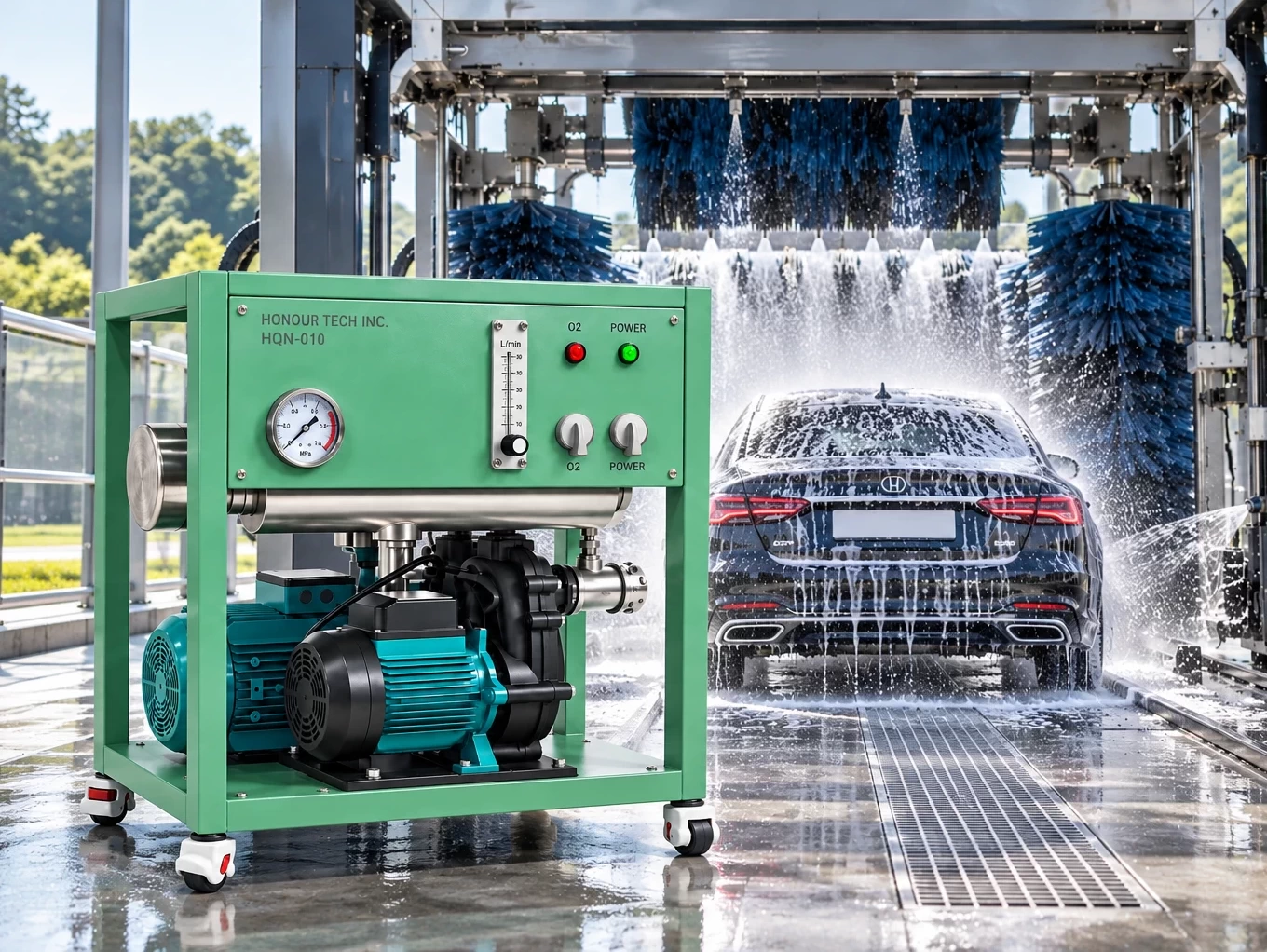
Nanobubble Generator for Car Washes NanoSplash
A dedicated car wash system linked to the wash water storage tank that generates and circulates nanobubble water. It works with existing wash equipment and water lines to support more efficient cleaning.
- Treatment flow rate
- 5 · 10 m³/h
- Operating pressure
- 4.0–4.5 bar
- Gas used
- Air (standard)
- Installation
- Reservoir connection · Ground installation
Tell us your storage tank size and maximum hourly use, and we will propose a suitable model.
Cleaning process improvements with nanobubbles
Benefits car wash operators can expect, based on nanobubble water cleaning comparison tests. Actual effects vary with operating conditions.
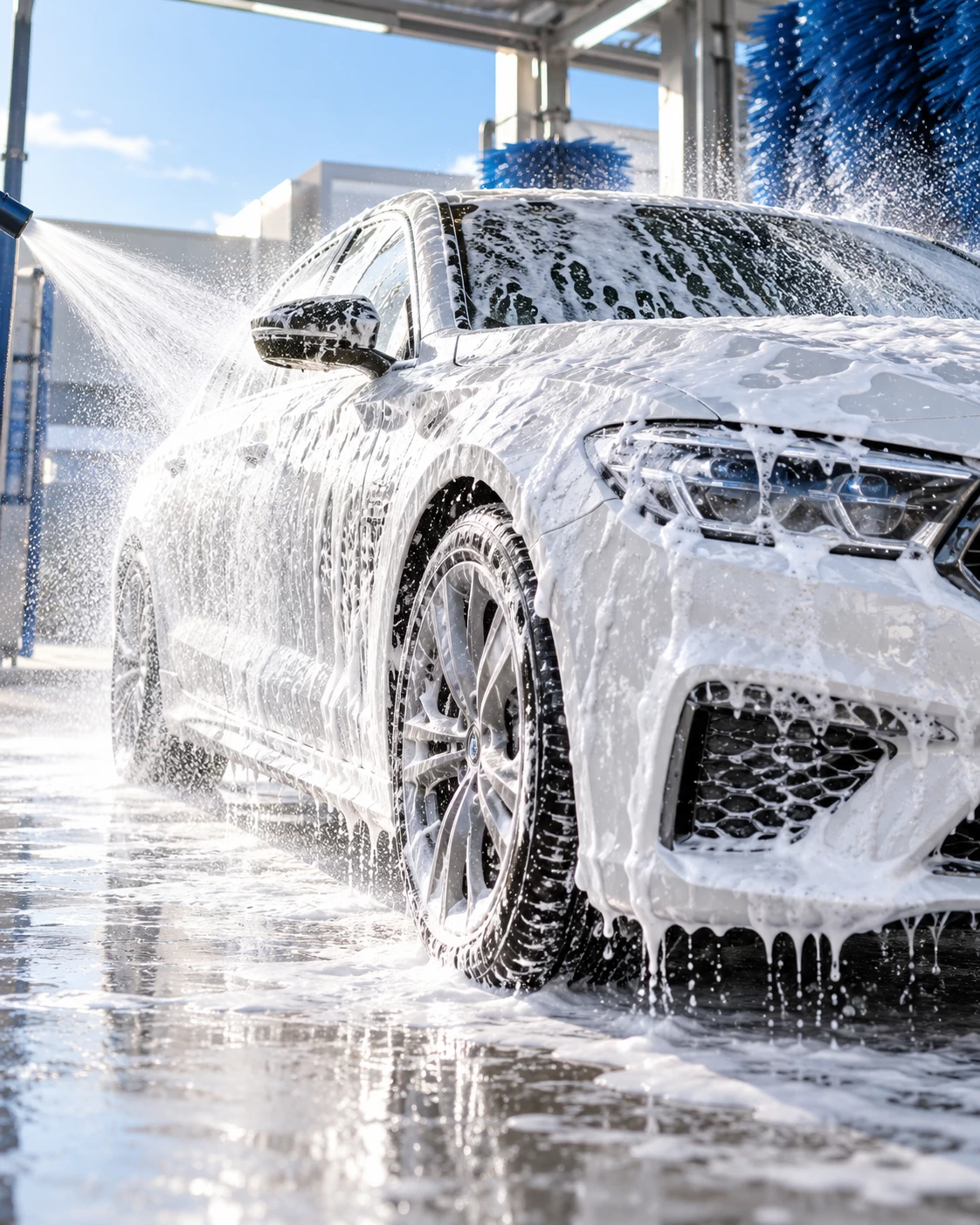
Less detergent and water
Adjusting wash conditions at the same time can reduce detergent and rinse water use.
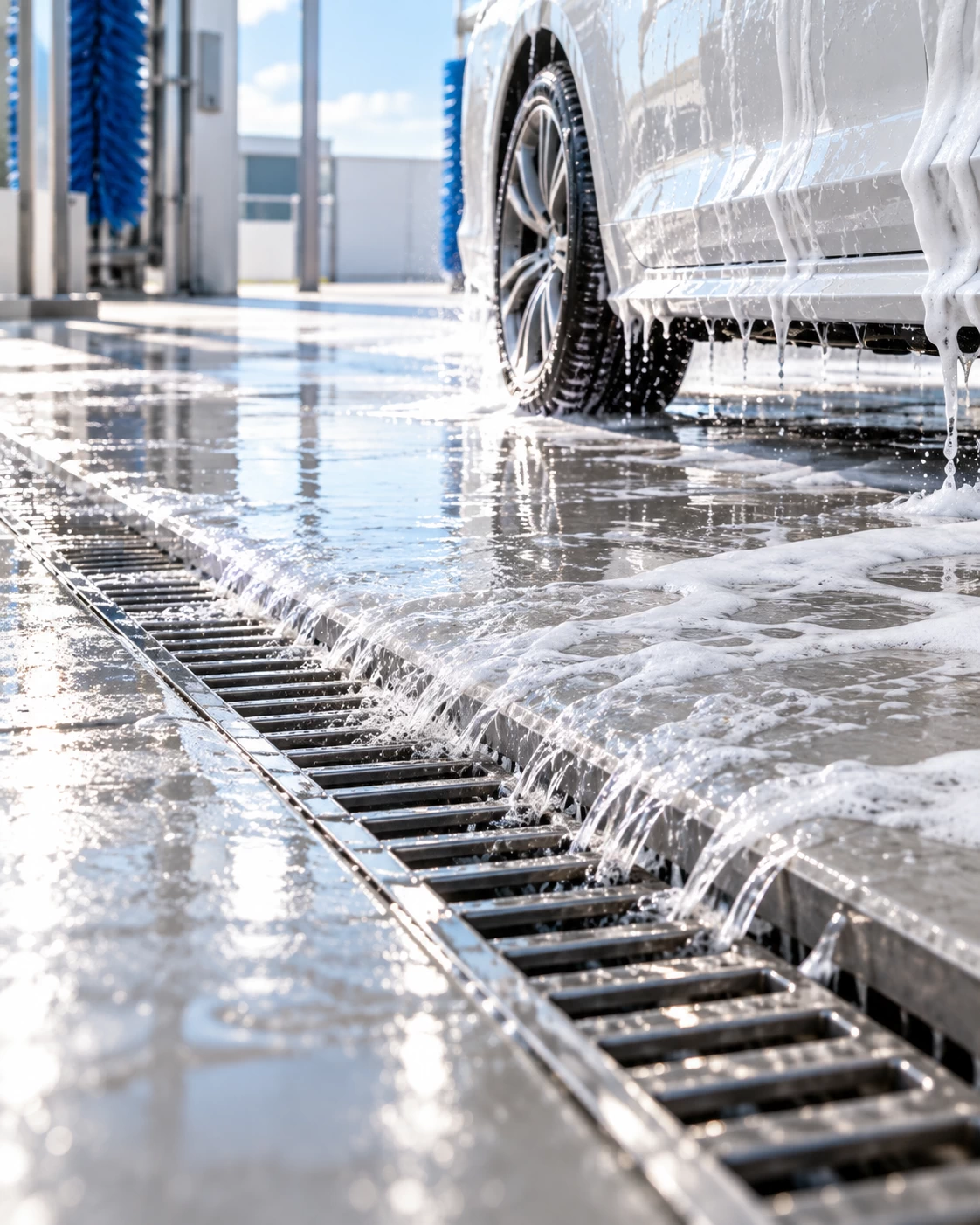
Lower water and wastewater costs
Using less water can reduce water bills as well as wastewater volume and treatment burden.
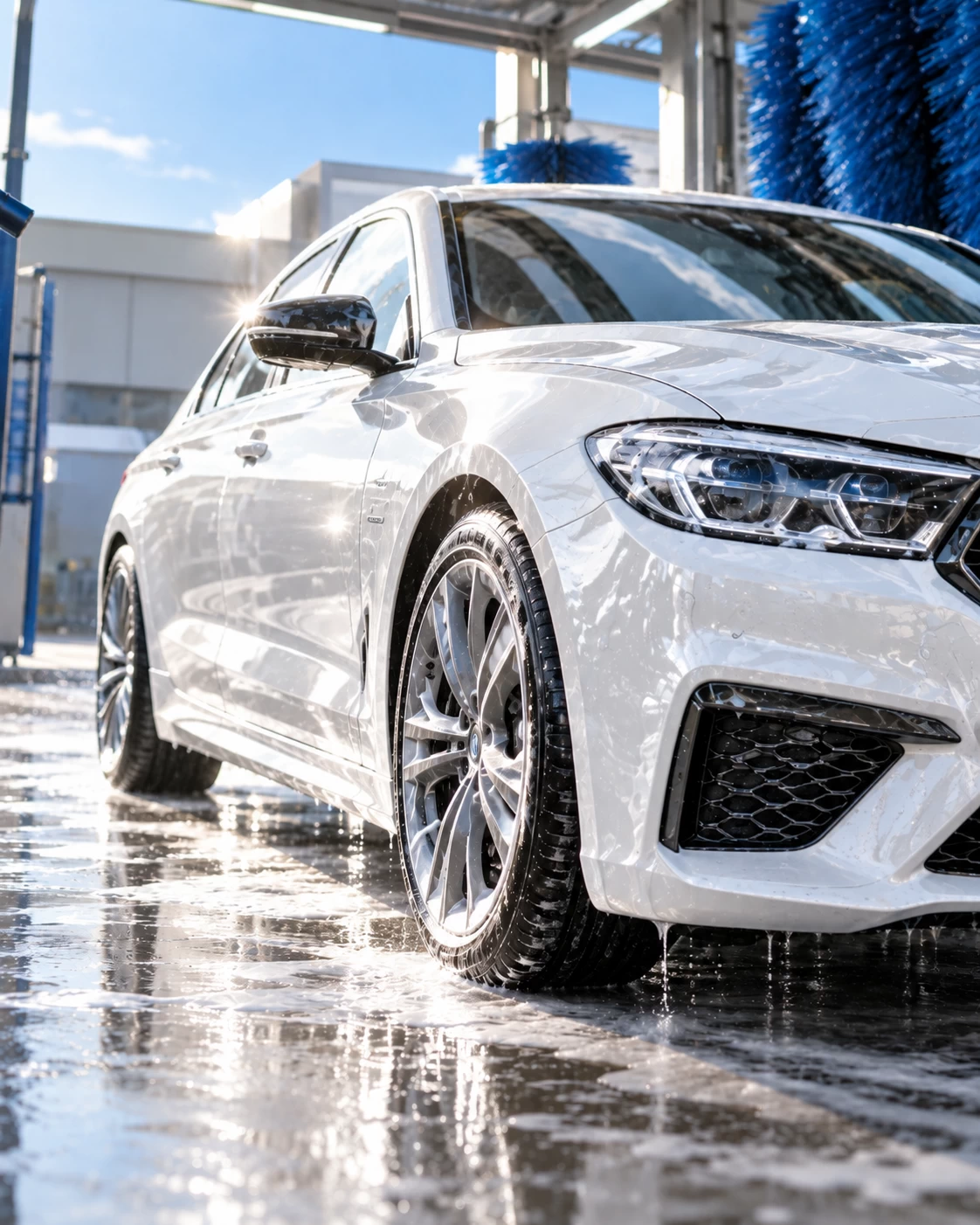
Better wash quality
Better contaminant removal by the wash water can be expected to leave less residue after washing.

Customer satisfaction and repeat visits
Consistent wash quality can contribute to customer satisfaction and repeat visits.
For reservoir-based automatic and self-service car washes
Applied to automatic and self-service car washes that use a wash water reservoir. We check the reservoir, installation space and power conditions to advise on installation.
-
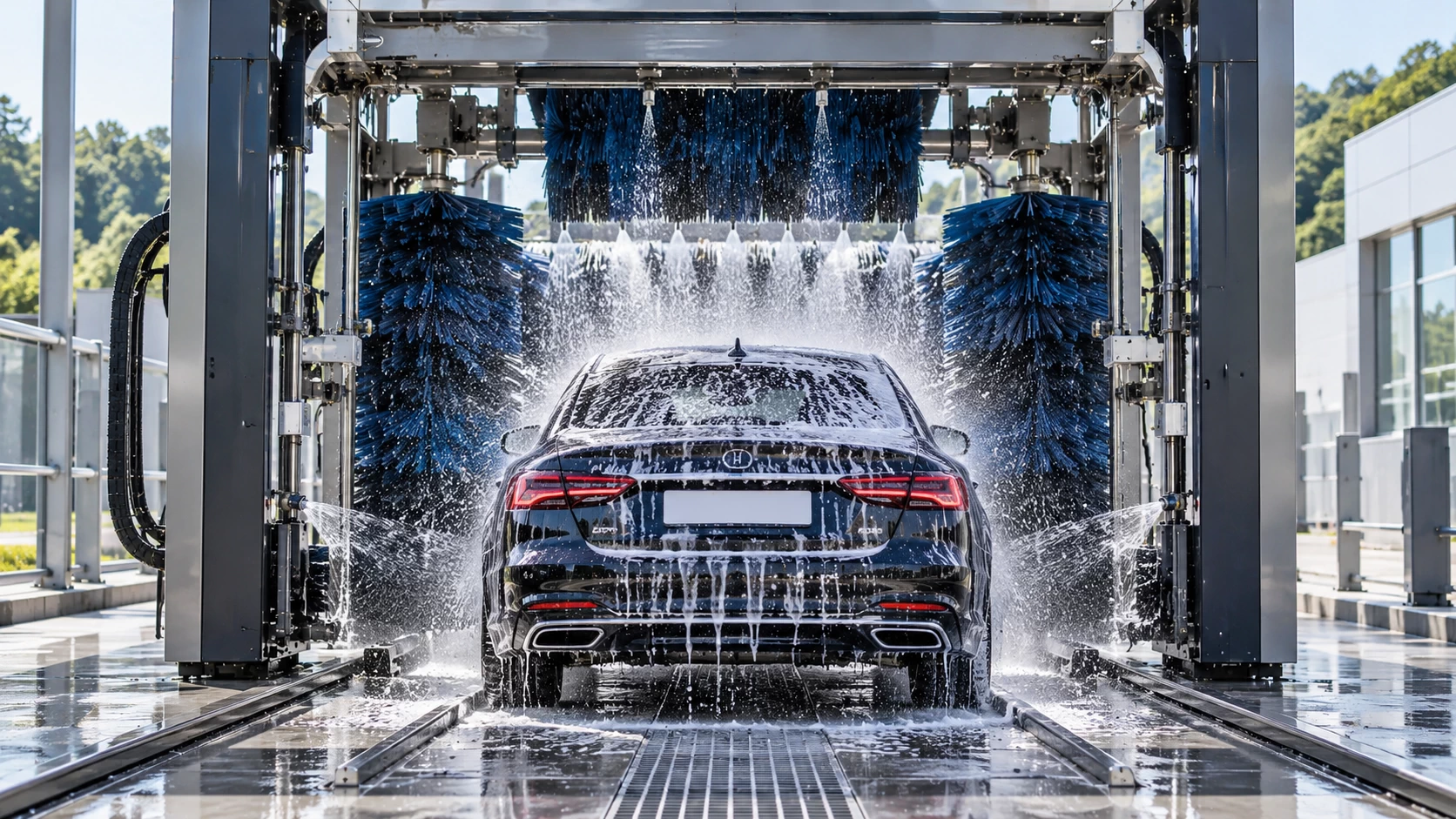
Automatic car washes
Wash water reservoir supplying the automatic washer
-
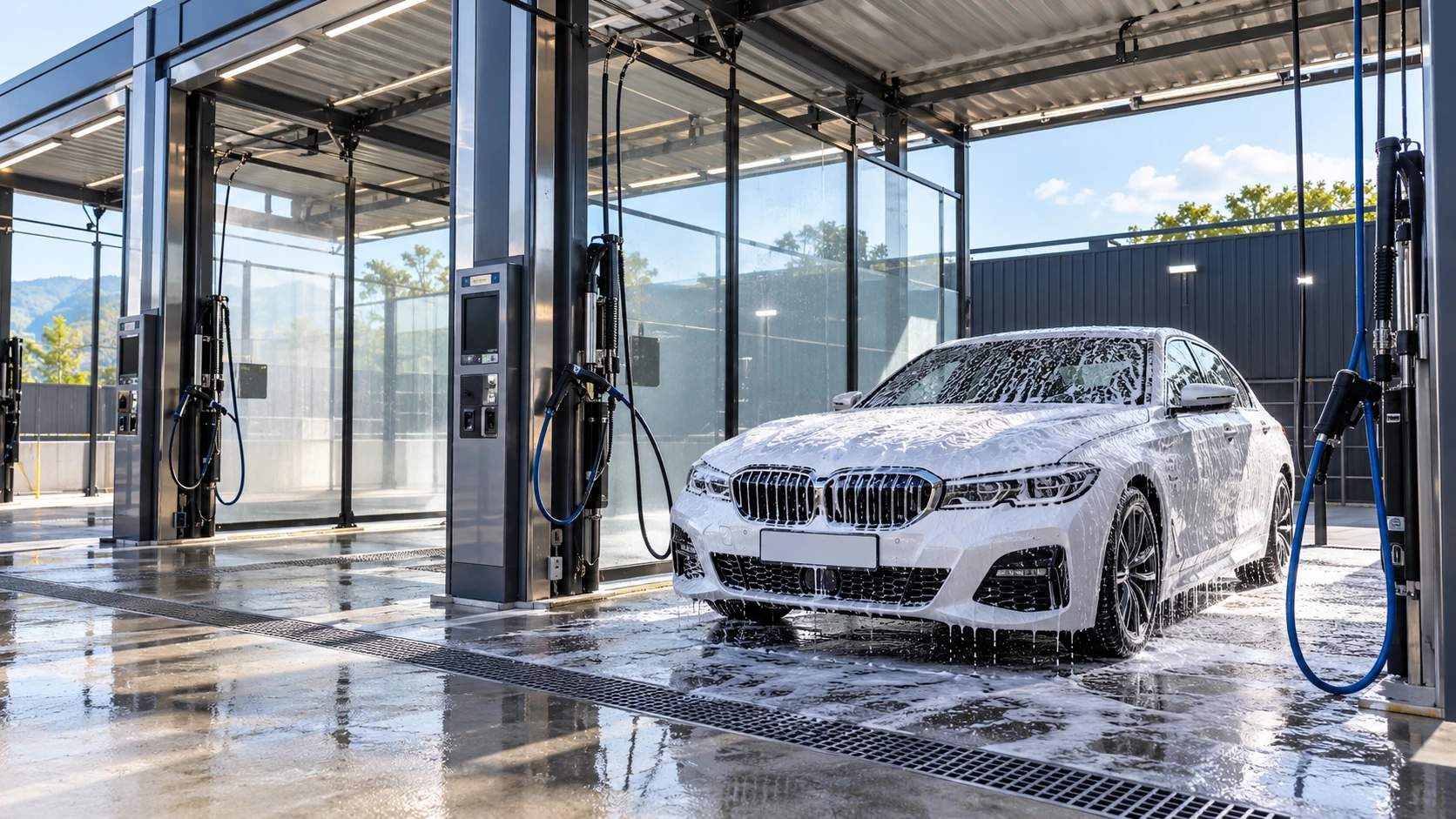
Self-service car washes
Wash water reservoir supplying the wash bays
When NanoSplash is a good fit
- Automatic and self-service car washes that store wash water in a reservoir
- Car washes that want to apply it without changing existing washers or water piping
- Car washes with space beside the reservoir for the unit (50 W × 60 L × 60 cm H)
- Car washes that want to run on air without separate gas equipment
When another option is needed
- If reusing car wash wastewater is the goal, a car wash wastewater reuse configuration designed together with the treatment process
- For car washes that use mains water directly from the piping without a reservoir, an HQN configuration connected directly to the piping
Circulation configuration linked to existing wash equipment
A circulation treatment system is installed outside the reservoir while keeping existing wash equipment and water lines.
Nanobubble water surface cleaning comparison test
Results of Honour Tech's surface cleaning comparison test with nanobubble water, showing its cleaning characteristics.
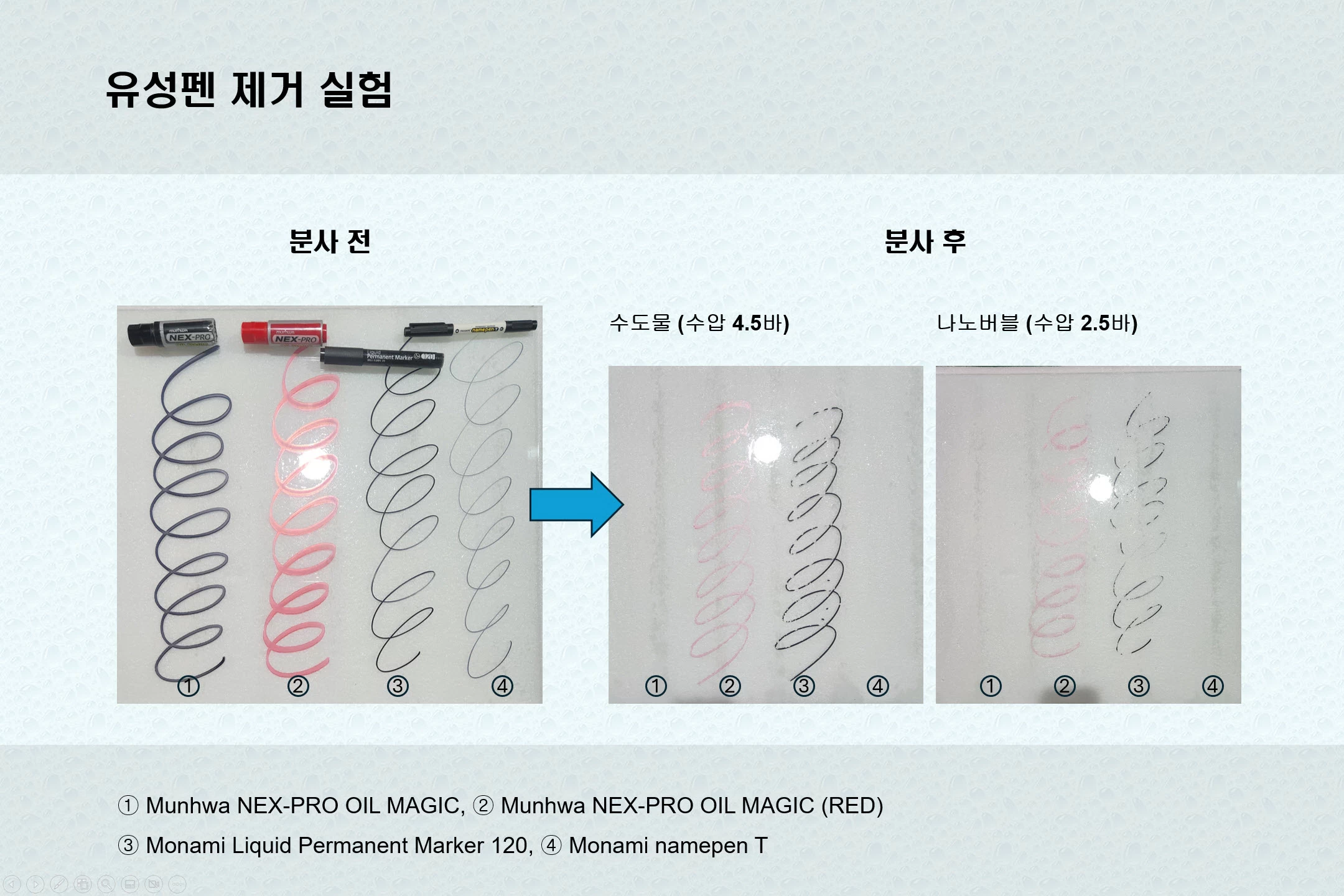
Oily contamination on glass (4 types of oil-based marker)
- Result
- About 50% higher cleaning efficiency index (based on a residual-area comparison)
- Comparison conditions
- Oxygen nanobubble water (2.5 bar) vs. tap water (4.5 bar) · straight-jet nozzle spray · visual comparison of residues
- Evidence
- Technology comparison test · Measured
Results vary with contaminant type, surface material, spray pressure and cleaning conditions. The test was carried out with oxygen nanobubble water.
Circulation treatment linked to the wash water reservoir
Wash water in the reservoir is pumped through the bubble mixer for nanobubble treatment and returned to the storage tank. The treated water is supplied to the washing process through the existing feed pump and wash equipment.
Swipe left or right to see the full table.
-
Air supply
The standard configuration uses ambient air, so no gas cylinders or generators are needed.
-
Reservoir circulation
The pump draws water from the reservoir and returns it through the bubble mixer.
-
Washing with existing equipment
Nanobubble water is delivered to the wash bays through the existing feed pump and washer.
NS-005 · NS-010 Specifications
The model is reviewed against storage tank size and maximum hourly use, and confirmed after checking installation and operating conditions.
Swipe left or right to see the full table.
| Item | NS-005 | NS-010 |
|---|---|---|
| Treatment flow rate | 5 m³/h | 10 m³/h |
| Pump power | 1.5 kW | 2.1 kW |
| Power supply | 220 V single-phase | 380 V three-phase |
| Piping (suction / discharge) | 50A / 32A | 50A / 40A |
| Common specifications | Details |
|---|---|
| Product name | NanoSplash |
| Base series | HQN High-Density Nanobubble System |
| Type | Pump + bubble mixer, installed on the ground beside the reservoir, piped to the wash water reservoir |
| Operating pressure | 4.0–4.5 bar |
| Gas used | Air (standard) · oxygen, ozone, nitrogen and others by arrangement when ordering |
| Size | 50 W × 60 L × 60 H cm |
| Wetted-part materials | Stainless steel, polycarbonate |
Standard specifications. For configurations tailored to site conditions, please contact us.
Scope of supply, from technical consultation to delivery and installation
Supplied as an integrated unit combining a pump and bubble mixer. Give us two pieces of information and we will recommend a suitable model and quote.
Included
- Bubble mixer · nanobubble generating section
- Pump · ground-mounted unit combined with the bubble mixer
Site preparation
- Wash water reservoir · the reservoir to be piped to the unit
- Installation space · 50 W × 60 cm L beside the reservoir
- Power · 220 V single-phase for NS-005, 380 V three-phase for NS-010
- Reservoir connection piping · suction 50A, discharge 32A or 40A
Information needed for a quote
- Storage tank size · capacity of the wash water reservoir (m³)
- Maximum hourly use · water used in one hour at the busiest time
From technical consultation to delivery and installation
-
Inquiry
Send us the information above via the inquiry form or by phone.
-
Site check
We check reservoir location, installation space and power.
-
Quote & specification
We provide a model and quote suited to your site conditions.
-
Delivery & installation
Delivery takes 2–3 weeks after ordering.
-
Warranty & service
The warranty period is 1 year.
NanoSplash FAQ
Answers to key technical and adoption questions when considering NanoSplash.
What kinds of car washes can it be installed in?
It can be installed at car washes that store wash water in a reservoir.
The unit is placed outside the reservoir and connected by piping; installation space and power are checked in advance. For car washes that use mains water directly from the piping without a reservoir, direct connection to the piping is reviewed separately.
What is the difference between NS-005 and NS-010?
They differ in treatment flow, pump power, power supply and discharge piping.
NS-005 is 5 m³/h, 1.5 kW, 220 V single-phase; NS-010 is 10 m³/h, 2.1 kW, 380 V three-phase. Operating pressure (4.0–4.5 bar) and size are the same.
Do I need to provide gas separately?
Not in the standard configuration. It uses ambient air.
If oxygen, ozone, nitrogen or other gases are needed, the corresponding gas supply equipment is configured as well.
Do I need to replace my existing wash equipment?
In most cases, existing equipment stays as it is.
The unit is connected to the reservoir by separate piping and circulates the water, so washers and water piping are not changed. Space beside the reservoir for the unit (50 W × 60 cm L) and power are checked before installation.
How does nanobubble water make a difference in cleaning?
In an in-house comparison test, the cleaning efficiency index for oily contamination on glass was about 50% higher.
This was a surface cleaning test comparing tap water (4.5 bar) with oxygen nanobubble water (2.5 bar); results vary with contaminant type, surface material and spray pressure.
Can it also reuse car wash wastewater?
Reuse is proposed as a separate system.
NanoSplash supplies nanobubbles to the wash water reservoir; car wash wastewater reuse is designed together with a treatment process.
Which model should I choose?
The model is selected based on storage tank size and maximum hourly use.
NS-005 is a 5 m³/h model and NS-010 a 10 m³/h model; tell us your site conditions and we will recommend a suitable model.
What are the lead time and warranty?
Delivery takes 2–3 weeks after ordering, and the warranty period is 1 year.
Service requests are accepted via the inquiry form or by phone.
Tell us two things and we will send a quote. Tell us your storage tank size and maximum hourly use, and we will provide a suitable model and quote.
Request a Quote