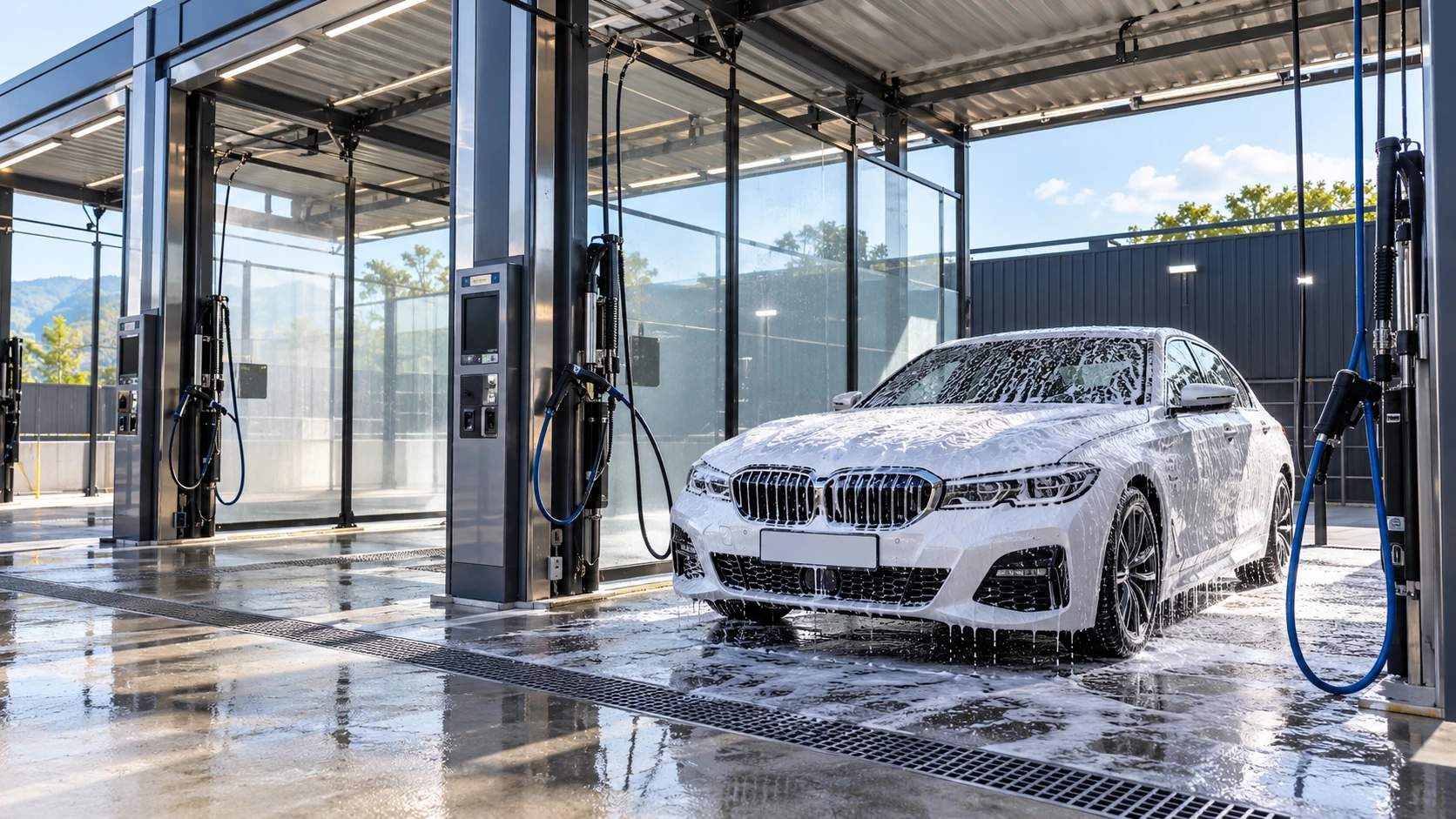
Nanobubbles in Car Washing
Nanobubble technology is applied to car wash water to support contaminant removal from vehicle surfaces and better cleaning performance. In automatic, self-service and commercial vehicle washing, it helps improve wash quality and use detergent and water more efficiently.
Limits of existing car wash processes
Contaminants stuck firmly to vehicle surfaces are hard to remove with ordinary water spray and detergent alone, and the more cleaning power is pushed, the more detergent, water and operating costs rise.
-
Hard-to-remove stuck-on contaminants
Contaminants that stick firmly to vehicle surfaces, such as road grime, insect remains and exhaust residue, can be hard to remove completely with ordinary water spray and detergent alone.
-
Detergent and water burden
Raising detergent concentration or the number of spray and rinse passes to boost cleaning power increases detergent and water use, as well as water, sewer and wastewater treatment costs.
-
Uneven wash quality
Results vary with the vehicle's condition, wash program and spray pressure, so some contaminants may remain or extra washing may be needed.
Role of nanobubble wash water
- Supports contaminant removal from vehicle surfaces Nanobubble water applied to the wash process supplements the cleaning action of detergent and helps remove contaminants on the surface.
- Linked to existing wash processes Water in the reservoir is circulated and treated, then supplied as before through the existing feed pump and washer.
The basic configuration uses air, so no gas equipment is needed.
What Are NanobubblesCar washing benefits of nanobubbles
Nanobubble water supplements the cleaning action of detergent, helps remove stubborn contaminants and can contribute to better wash quality and optimized detergent and water use. Reinforced cleaning power was confirmed in in-house cleaning comparison tests; detergent and water savings and better wash quality are expected benefits.
-
Action
Reinforced cleaning power
- Supports removal of stuck-on contaminants
- Supplements the cleaning action of detergent
- Linked to existing wash processes
Verified · In-house test (observed)
-
Field effect
Better wash quality
- Less residual contamination
- More consistent wash results
- Less need for extra washing
Expected benefit
-
Business effect
Optimized detergent and water use
- Adjusted detergent use
- Potential to save rinse water
- Lower water, sewer and wastewater treatment costs
Expected benefit
Applicable car wash sites
Applied to car wash sites that store wash water in a reservoir or supply it through a water line. Car washing is currently at the 'commercial' stage.
-
Automatic car washes
Wash water for rollover and tunnel washers
-
Self-service car washes
High-pressure spray wash water at self-service car washes
-
Commercial vehicle washing
Washing of buses, trucks and other commercial vehicles
- Commercial: field use and repeated supply
Nanobubble products for car washing
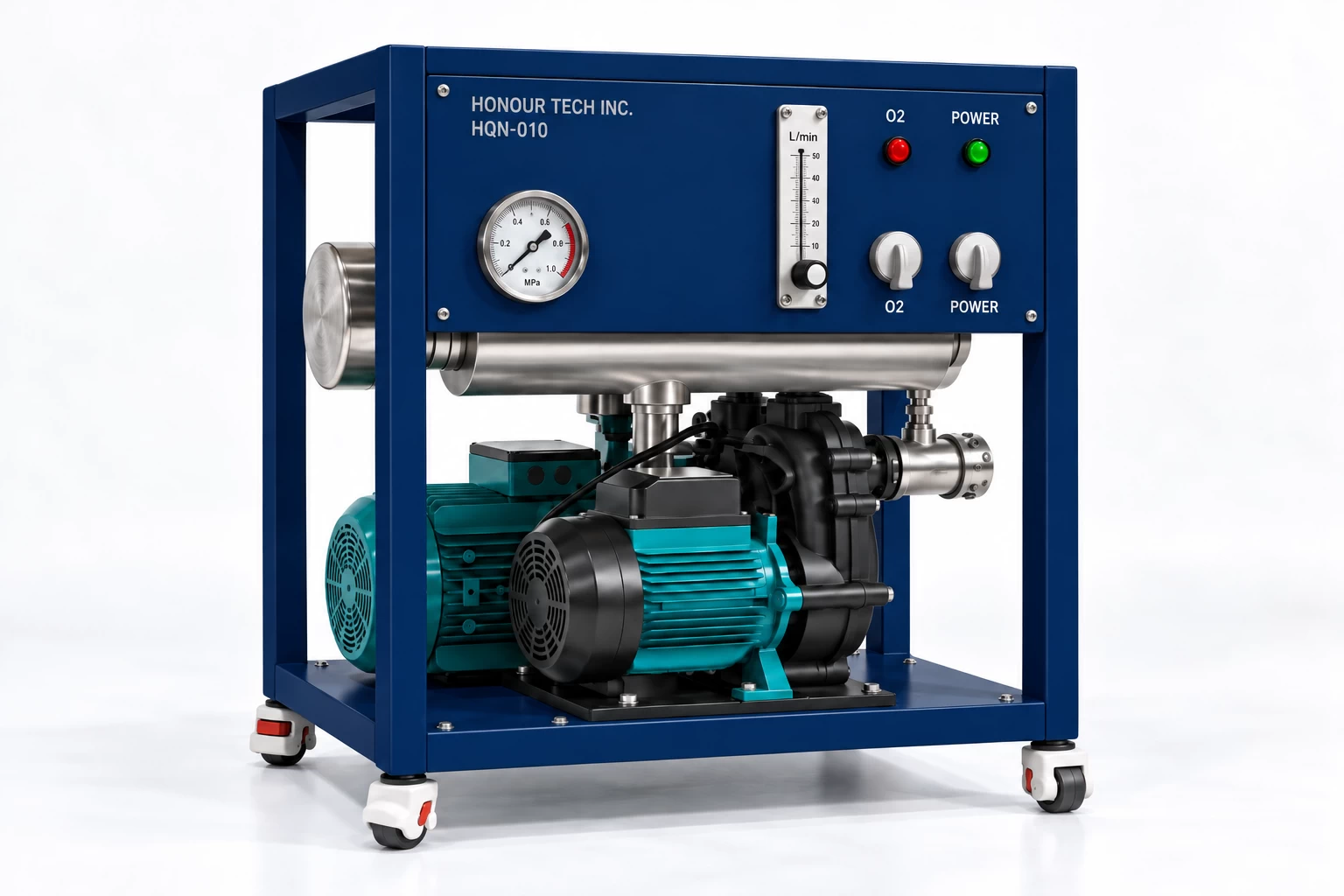
NanoSplash, a dedicated car wash configuration based on HQN, is recommended for car washes. It is connected to existing wash equipment to suit the reservoir and water supply structure.
| Sub-application | HQN NanoSplash |
|---|---|
| Car wash | Recommended |
| Details HQN |
Recommended NanoSplash is a dedicated car wash configuration based on HQN.
Selection factors
- Whether there is a wash water reservoir (if not, consider direct connection to the piping)
- Installation space next to the reservoir (50 cm wide × 60 cm long)
- Power supply (220 V single-phase, 380 V three-phase)
- Gas used (air by default)
- If reusing car wash wastewater is the goal, consider a wastewater treatment and water reuse configuration
Cleaning comparison test results
Key results of an in-house test comparing cleaning with tap water and nanobubble water on oily contamination of glass surfaces.
2 of 4 types
Oily contamination completely removed
4 types of oil-based marker on glass surfaces. Oxygen nanobubble water at 2.5 bar vs. tap water at 4.5 bar, straight-jet nozzle spray, visual comparison of residues
In-house test · Observed
Frequently Asked Questions
Common questions about cleaning power, detergent use, connection to existing wash equipment, gas used, and water and operating costs.
How much better is car washing with nanobubble water than with ordinary water?
The cleaning effect of nanobubble water depends on the type and adhesion of the soil and on washing conditions, and improvement is most likely for soils that are hard to remove with ordinary water.
In an in-house comparison test with four oil-based markers applied to a glass surface, Honour Tech observed soil removal with tap water at 4.5 bar and oxygen nanobubble water at 2.5 bar. Under the oxygen nanobubble water condition, two of the four markers were completely removed.
This test, however, is an observation made with specific soils and spray conditions. It cannot be concluded that air nanobubble water, the standard configuration for car washes, produces the same result, and the actual washing effect should be evaluated taking into account vehicle soiling, detergent, spray pressure and wash program.
Can nanobubble water reduce car wash detergent?
If the target cleaning quality can be achieved with nanobubble water, detergent use may be optimized, but a uniform reduction rate cannot be given.
Dust and loosely attached soil on vehicle surfaces can be removed with water and mechanical washing, but for oily or firmly bonded soils the chemical action of detergent is important. Nanobubble water is a means of complementing these existing cleaning actions.
Honour Tech recommends first comparing the cleaning performance of ordinary water and nanobubble water at the existing detergent concentration, then adjusting detergent use step by step once the target quality is achieved. Whether detergent can be reduced must be confirmed against actual vehicle soiling and wash programs.
Do existing automatic or self-service car wash systems need to be replaced?
In most cases, a nanobubble water supply system can be added while the existing car wash equipment continues to be used.
Typically, water in the wash water storage tank is circulated through the nanobubble system and then supplied through the existing feed pump and wash piping. For facilities without a storage tank, direct connection is reviewed separately according to feed flow and pressure conditions.
Honour Tech checks storage tank capacity, peak hourly use, piping layout, installation space and power conditions to propose a configuration that minimizes changes to existing car wash equipment. Where wastewater treatment and reuse are also needed, a separate water reuse system is reviewed as well.
Which gas is used in nanobubble systems for car washes?
Honour Tech's NanoSplash for car washes runs on ordinary air as standard, so no separate oxygen supply equipment is needed.
NanoSplash is a system based on the HQN bubble mixer, configured to connect to the wash water storage tank and existing feed equipment. It produces nanobubble water from ordinary air and supplies it to the existing wash process.
Other gases such as oxygen can be considered when there is a specific purpose and test condition. Standard product selection for car washes prioritizes flow rate, storage tank configuration, continuous operating conditions and ease of maintenance.
Can nanobubble water reduce water use and operating costs at a car wash?
Better cleaning performance may help optimize detergent and water use and the burden of rewashing, but actual cost savings must be judged by comparing on-site operating conditions.
Car wash operating costs include not only detergent and water but also power for feed pumps and wash equipment, water and sewer charges and wastewater treatment costs. Adding a nanobubble system also brings its own power consumption and maintenance costs.
It is therefore important to compare detergent use, water consumption per wash, rewash frequency and equipment operating costs at the same wash quality. Honour Tech checks the size and current operating conditions of your car wash to review a suitable system configuration and economic evaluation method.
Tell us your reservoir size and maximum hourly use, and we will propose a configuration for your car wash.
Contact Us