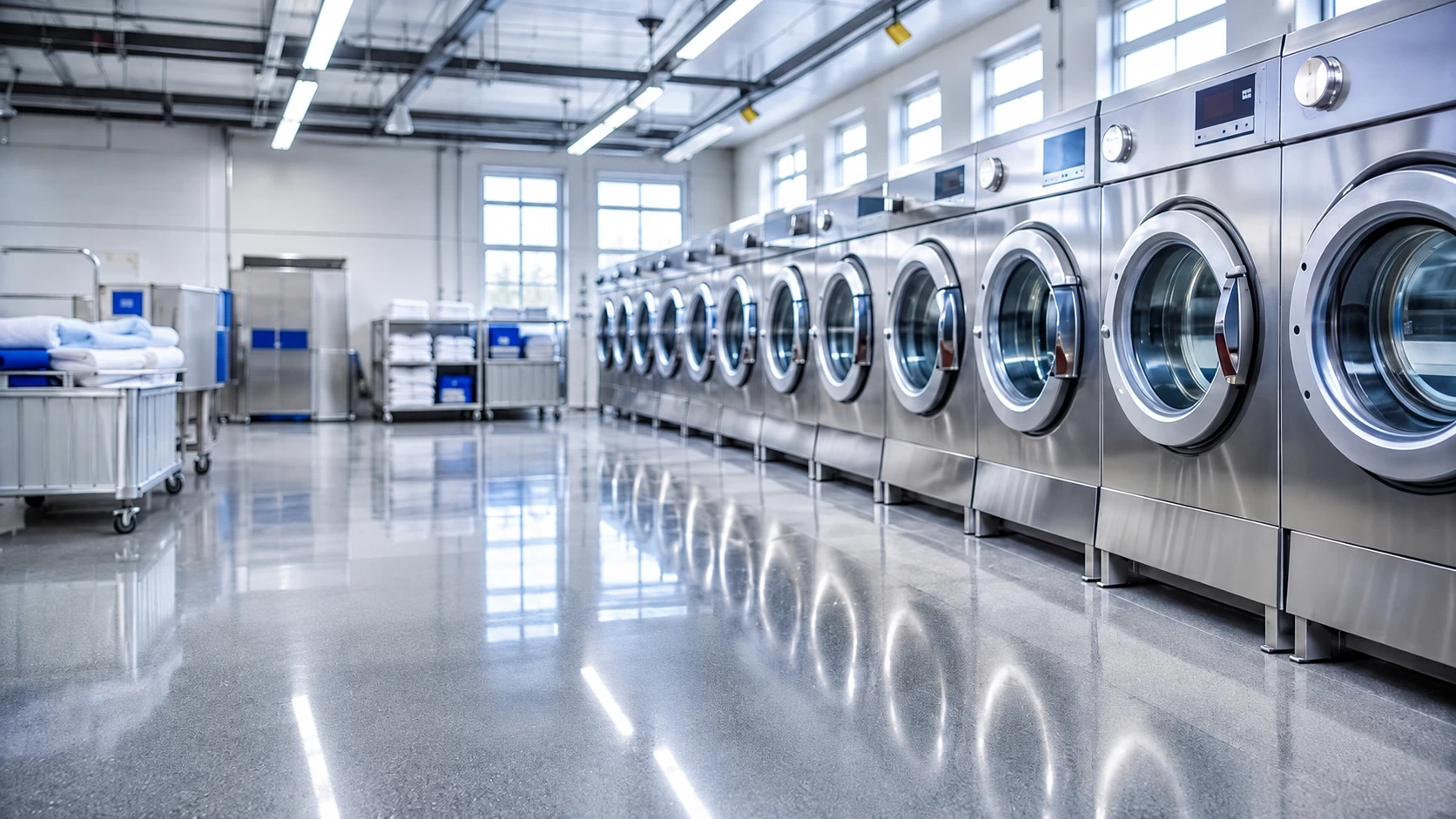
Nanobubbles in Laundry
Nanobubble technology is applied to laundry water to support the removal of various soils and better cleaning performance. In commercial washers, industrial laundries and self-service laundromats, it helps improve wash quality and reduce rewashing and detergent and water use.
Limits of existing laundry processes
Soils that penetrate fibers are hard to remove under ordinary washing conditions, and adding more detergent increases rinsing and rewashing.
-
Residual hard-to-remove soils
Soils that penetrate or stick firmly to fibers, such as oil, cosmetics and food, may not be removed sufficiently under ordinary washing conditions.
-
Detergent use and rinsing burden
Increasing detergent to remove soils can increase the rinse water and process time needed to remove residual detergent.
-
Rewashing and quality control burden
Results vary with fiber and soil type, and if cleaning quality is not achieved, rewashing and extra work are needed.
Role of nanobubble laundry water
- Supports removal of soils from fibers Nanobubble water applied to the laundry process supplements the cleaning action of detergent and helps remove soils between fibers.
- Linked to existing detergents and wash programs Existing washers and wash programs stay as they are, and nanobubble water is supplied through the washer's water feed.
Expected benefits of nanobubble laundry water
Nanobubble water supplements the cleaning action of detergent, helps remove stubborn soils and can contribute to better wash quality and optimized detergent and water use. Soil removal performance was confirmed in in-house laundry comparison tests; less rewashing and detergent and water savings are expected benefits. Laundry is currently at the 'early market' stage.
-
Action
Better soil removal
- Supports removal of hard-to-remove soils
- Supplements the cleaning action of detergent
- Applied to suit fiber properties
Verified · In-house test (measured)
-
Field effect
Better wash quality
- Less residual contamination
- Less rewashing
- More consistent wash results
Expected benefit
-
Business effect
Optimized detergent and water use
- Adjusted detergent use
- Optimized rinsing conditions
- Potential to cut rewashing costs
Expected benefit
Applicable laundry sites
Reviewed for commercial laundry sites where nanobubble water can be supplied through the washer's water feed. Laundry is currently at the 'early market' stage.
-
Commercial washers
Commercial washers at hotels, hospitals and workplaces
-
Industrial laundries
Laundry water for high-volume laundry equipment
-
Self-service laundromats
Water feed for coin-operated washers
- Early market: product and basic performance validated
Nanobubble products for laundry
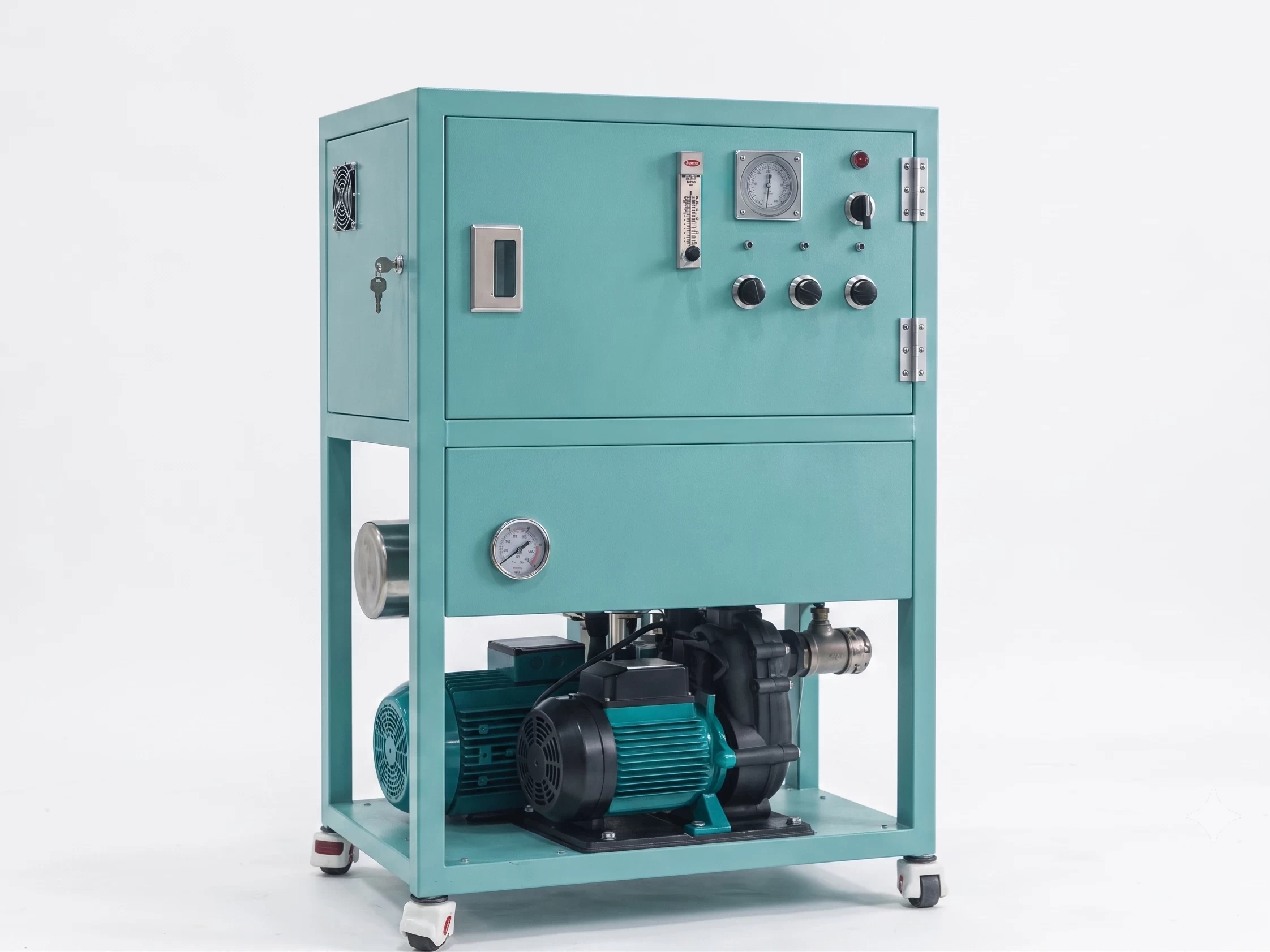
HQN is recommended for commercial laundry. The model and connection method are set according to the number of washers, water supply method and whether hot water is used.
| Sub-application | HQN High density |
|---|---|
| Laundry | Recommended |
| Details HQN |
Recommended The model is set according to the washer's water supply conditions.
Selection factors
- Number of washers and water supply method (reservoir, direct mains)
- Hourly water supply
- Whether hot water is used
- Installation space and power
- Gas used (air by default)
Information to include in your inquiry
- Daily laundry volume
- Number and capacity of washers
- Water supply method
- Current detergent and wash program
Laundry comparison test results
Key results of an in-house test comparing laundry washed under the same conditions with tap water and nanobubble laundry water. Figures match those on the case study page (case-laundry.html).
+23–42%
Cleaning rate
Oxygen nanobubble laundry water, 6 of 7 soil types (+4% for blood stains)
In-house test · Measured
+27–61%
Oil-based ink cleaning rate
Ozone nanobubble laundry water, 3 colors of oil-based marker
In-house test · Measured
About 10% lower
Residual detergent indicator (TOC)
Oxygen nanobubble wash 5.4 mg/L, tap water wash 6.0 mg/L
In-house test · Measured
Frequently Asked Questions
Common questions about removable soils, detergent use, connection to existing washers, fabric quality and economic evaluation.
Which types of laundry soils is nanobubble water effective against?
Nanobubble water can be used to complement cleaning performance on soils that are hard to remove under ordinary laundry conditions, and the degree of improvement depends on the soil and fabric type.
Honour Tech has compared the laundry performance of ordinary water and nanobubble water on various fabrics and soils, including cotton, polyester and blends. In-house comparison tests showed a tendency for larger differences in cleaning performance on hard-to-remove soils than on soils that wash out easily with ordinary water.
However, results confirmed on specific soils cannot be applied equally to all fabrics or laundry conditions. When considering adoption, it is appropriate to select frequently occurring soils and fabric types and compare removal performance under the same conditions as the existing wash program.
Can nanobubble water reduce detergent use?
Once the cleaning effect of nanobubble water is confirmed, detergent use can be adjusted step by step while maintaining the target wash quality.
Laundry performance is affected by detergent type and concentration, water temperature, wash time, mechanical action and the properties of the fabric and soil. Because nanobubble water is applied to complement detergent action, eliminating or cutting detergent across the board is not recommended.
It is best to first compare cleaning results with ordinary water and nanobubble water at the existing detergent dose, then, once improvement is confirmed, lower the detergent concentration step by step while checking wash quality and residual soil. Rinse conditions and operating time can also be evaluated where needed.
Do existing commercial washers or wash programs need to be changed?
In most cases, a nanobubble system can be added to the water supply while keeping existing washers and wash programs.
In facilities with a storage tank, laundry water is circulated through the nanobubble system and then supplied to the existing washers. For facilities without one, the connection method is reviewed according to peak instantaneous supply, piping pressure and whether hot water is used.
Honour Tech checks the number and capacity of washers, daily laundry volume, water supply method and current detergents and wash programs to determine the right HQN model and installation configuration. Initially, it is best to keep existing wash conditions so the effect of nanobubble water itself can be compared.
Can nanobubble water damage fabrics or affect wash quality?
Using nanobubble water does not in itself cause fabric damage, but quality effects should be checked according to fabric type and wash conditions.
Fabric damage and deformation are affected by the washer's mechanical action, water temperature, detergents and bleaches, wash time and the material and structure of the fabric. When introducing nanobubble water, it is appropriate to evaluate cleaning performance and fabric condition together against existing wash conditions.
For premium garments and delicate fabrics in particular, quality items such as color change, shrinkage, surface damage and hand feel should be compared. Cleaning comparison tests to date cannot guarantee that every fabric will be undamaged, so testing with the items you actually handle is recommended.
How are the benefits and economics of a nanobubble system evaluated?
In commercial laundry, economics should be evaluated by comparing cleaning quality, the potential to reduce rewashing, detergent and water use, and equipment operating costs together.
The economics of a nanobubble laundry system are evaluated by comparing cleaning quality, detergent and water use, rewashing frequency, heating energy and system operating costs as a whole.
Honour Tech recommends comparing soil removal results and key operating indicators under existing wash conditions and under nanobubble conditions. It is sensible to calculate economics after confirming whether detergent, water and rewashing can be reduced while maintaining the target wash quality.
Tell us your daily laundry volume, number of washers and water supply method, and we will propose a configuration for your laundry.
Contact Us