77.3%
77.3% pesticide removal from apples with air micro/nanobubbles and an antimicrobial
Bacteria and yeasts reduced by more than 3 log. Result obtained in combination with an antimicrobial.
Research paper · Lu et al. · 2025
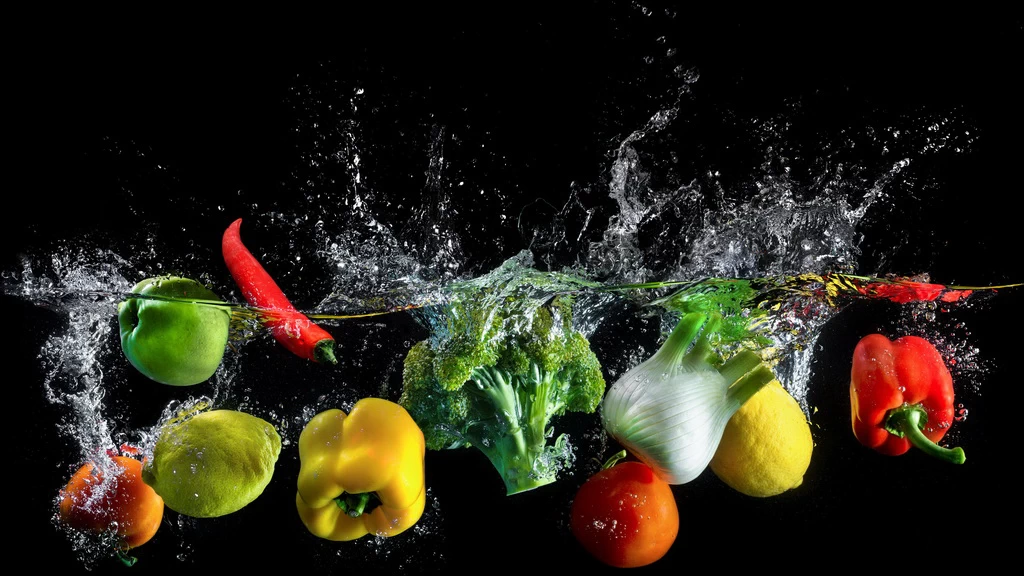
Nanobubble technology is applied to produce and food washing water to support better cleaning performance, such as removing soil and foreign matter from surfaces. Applications for better wash quality and product quality retention are reviewed in fruit and vegetable washing and washing before food processing.
Soil and foreign matter on produce surfaces are hard to remove evenly, and vigorous washing can reduce marketability.
Leafy vegetables and produce with uneven surfaces tend to retain soil, dust and other foreign matter, making even washing difficult.
High-volume washing uses a lot of wash water, and as foreign matter accumulates, the water must be replaced and its quality managed.
Vigorous physical washing can damage produce surfaces, so foreign matter removal and quality retention must be considered together.
Microbial reduction (sanitizing) is not an effect of ordinary nanobubbles; the gas used, such as ozone, and treatment conditions are designed separately.
What Are NanobubblesNanobubble water supplements the removal of soil and foreign matter attached to produce surfaces and can be used to optimize washing conditions and wash water use for each item. Honour Tech's produce and food washing application is currently at the 'early market' stage, and all benefits below are expected benefits.
Expected benefit
Expected benefit
Expected benefit
Reviewed for sites where nanobubble water can be supplied as wash water for immersion or spray washing equipment. Produce and food washing is currently at the 'early market' stage.
Removal of surface foreign matter from leafy and fruit vegetables
Washing of raw materials before processing
Washing before sorting and packing
HQN can be selected for processes centered on wash water supply performance, and HTV for food processes where wetted-part materials and hygiene and cleaning management matter.
| Sub-application | HQN High density | HTV All SUS |
|---|---|---|
| Produce & food washing | Recommended | Optional |
| Details HQN | Details HTV |
Recommended Optional HTV is considered for food processes where wetted-part materials and hygiene and cleaning management matter.
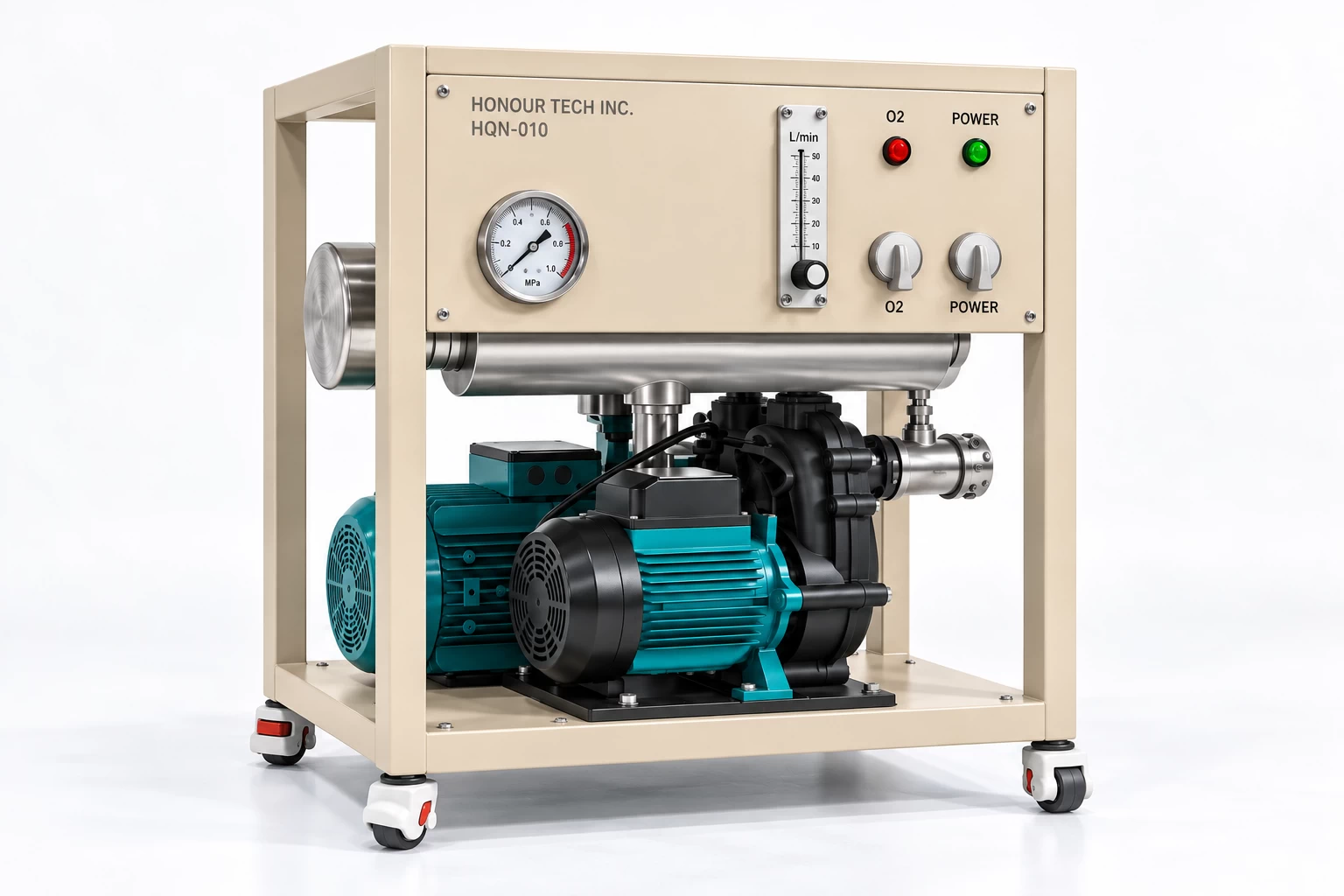
Honour Tech compares and evaluates the cleaning performance of nanobubble water in several cleaning fields and presents in-house test results and research papers separately.
77.3%
Bacteria and yeasts reduced by more than 3 log. Result obtained in combination with an antimicrobial.
Research paper · Lu et al. · 2025
No significant difference found
Bacteria were significantly reduced only when combined with ultrasound.
Research paper · Rafeeq, Ovissipour · 2021
Common questions about washable items, foreign matter removal, the difference between sanitizing and cleaning, surface damage and choosing between HQN and HTV.
Nanobubble water can be considered for removing surface debris from produce such as fruits and vegetables and for pre-processing washes in food processing.
Items such as leafy vegetables and fruit vegetables differ in surface structure, attached soils and sensitivity to physical damage. Nanobubble water can be considered as wash water supplied to existing immersion or spray washing equipment.
However, the same washing conditions cannot be applied to every food. Honour Tech checks the items, throughput, washing method and current water and sanitizing method to review a suitable system configuration, and the actual cleaning effect is best confirmed through comparison tests with the target items.
Nanobubble water can be considered as wash water that complements the removal of soil, dust and other debris attached to produce surfaces.
Debris tends to remain on produce depending on surface contours and tissue characteristics, and washing performance depends on immersion time, water flow, spray pressure and wash water condition. Nanobubble water can be used in conjunction with these existing washing methods.
However, Honour Tech's produce and food washing application is currently at the "early market" stage, and removal performance needs to be verified for individual items. In practice, it is appropriate to compare ordinary water and nanobubble water under the same conditions to evaluate residual debris and washing quality.
Air or oxygen nanobubbles are used for washing soil and debris from produce surfaces; where microbial reduction is needed, the gas, such as ozone, and treatment conditions are designed separately.
Ordinary nanobubble washing and disinfection or oxidation with ozone differ in purpose and action. With ozone nanobubbles, dissolved ozone concentration, contact time, target microorganisms and organic content of the raw water are important, and direct application to food must also meet the safety and hygiene standards for that use.
It is therefore best to evaluate produce washing processes separately for cleaning performance (removing debris) and hygiene performance (reducing microorganisms). Honour Tech reviews the gas and test conditions suited to the treatment purpose.
When applying nanobubble water, surface damage and retention of marketability must be checked as well as debris removal performance.
Surface damage to produce is affected not only by the wash water itself but also by spray pressure, flow velocity, immersion time, mechanical contact and the characteristics of the item. It therefore cannot be concluded that switching from ordinary water to nanobubble water will by itself reduce surface damage or improve quality.
Honour Tech recommends comparing existing washing conditions with nanobubble conditions for each item, evaluating debris removal, appearance changes and surface damage together. Washing intensity and treatment time can be adjusted if needed, but maintaining product quality standards comes first.
HQN is the first choice for processes centered on wash water supply performance, while HTV can be chosen for food processes where wetted-part materials and hygiene and cleaning management matter.
HQN is a product series for washing processes that require a supply of dense nanobubble water. HTV is a product series with stainless steel (All SUS) internal modules and can be considered for processes where wetted-part materials and hygiene requirements are critical.
However, the use of stainless steel alone does not guarantee that every hygiene requirement or cleaning and sterilization suitability of food manufacturing equipment is met. Honour Tech checks the items, gas, supply flow rate, wetted-part materials and hygiene standards of existing equipment to review a suitable model and connection method.
Tell us the items washed, hourly throughput and washing method, and we will propose a configuration for your washing process.
Contact Us