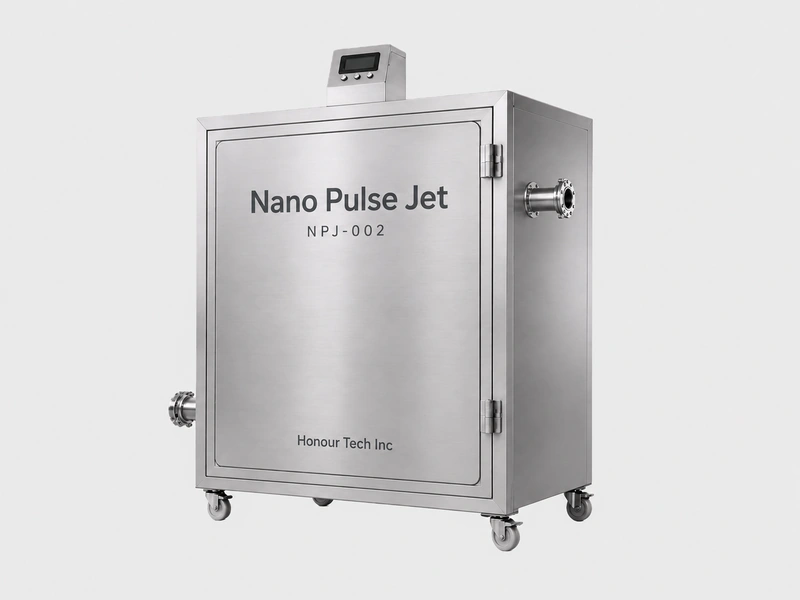
Nano Pulse Jet NPJ
NPJ is a cleaning system that adds pulsed flow to nanobubble water to reinforce cleaning inside tanks and pipes. It connects to existing WIP/CIP lines.
- Category
- Cleaning system
- Applicable flow
- Models of 5 m³/h or less
- Connection point
- Between the cleaning water supply line and cleaning nozzles
- Wetted-part materials
- SUS304 · SUS316L
- Installation
- Mobile · Fixed
Tell us the items to be cleaned, contaminants, current cleaning method and acceptance method, and we will review a suitable configuration.
Benefits of combined nanobubble and pulsed-flow cleaning
Rather than raising pressure and flow, it reinforces existing WIP/CIP cleaning by improving the cleaning mechanism. Technical characteristics and conditions for each process are covered on the application pages.
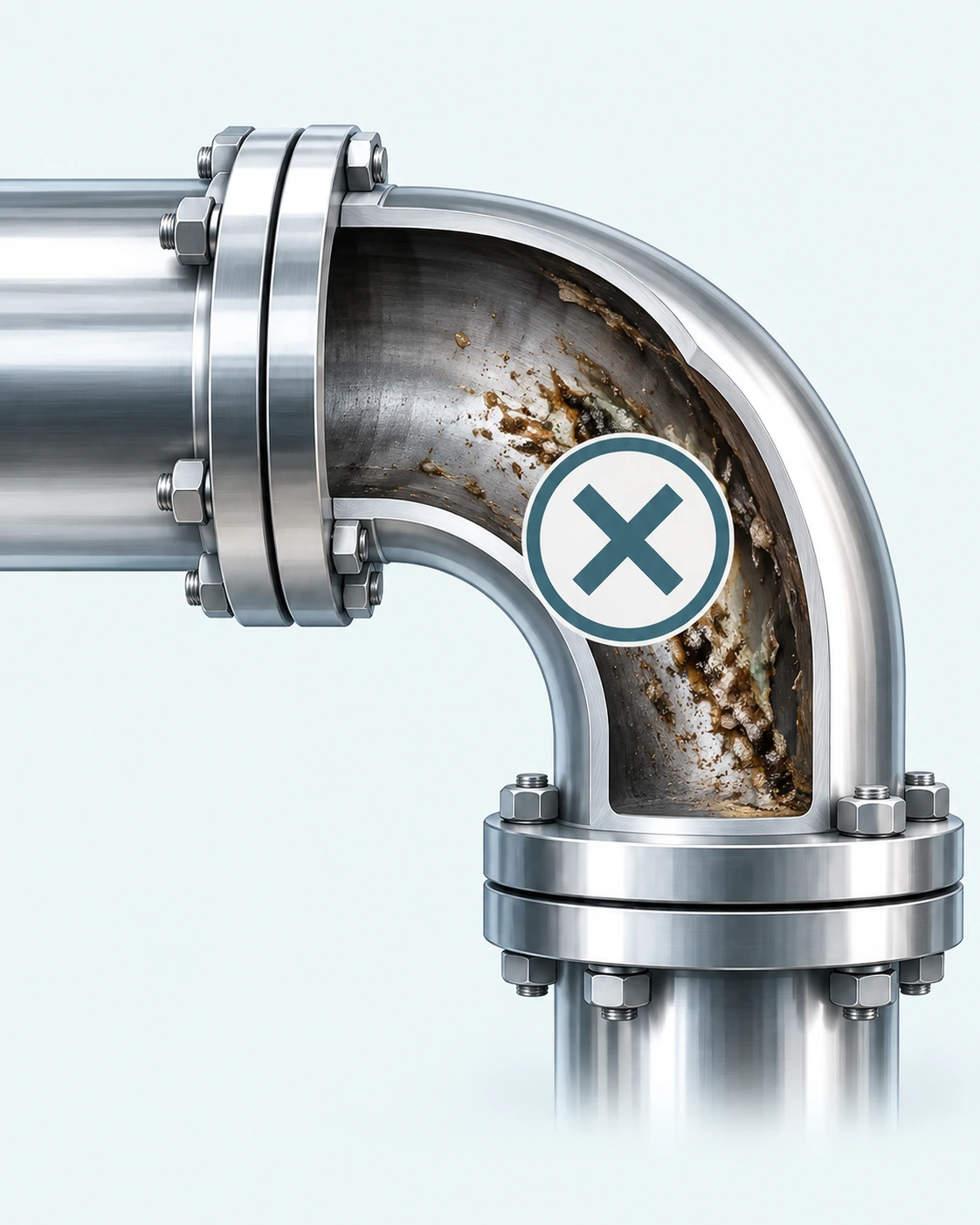
Helps hard-to-clean sections
Changes in flow velocity and pressure can be expected to supplement cleaning in low-velocity sections such as bends and branches.
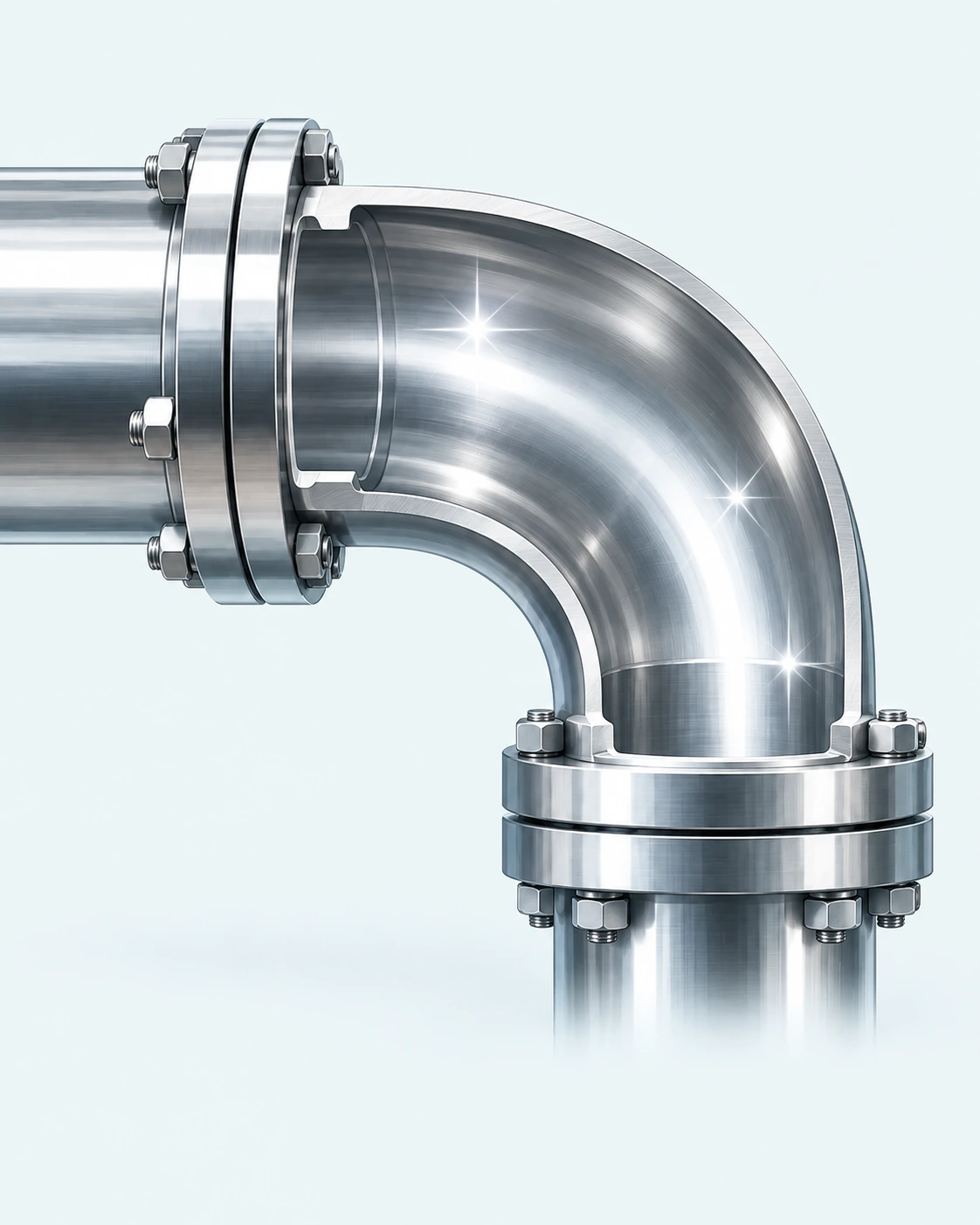
Uses existing equipment
Existing cleaning water supply lines and nozzles are used as they are, easing the burden of changing equipment.
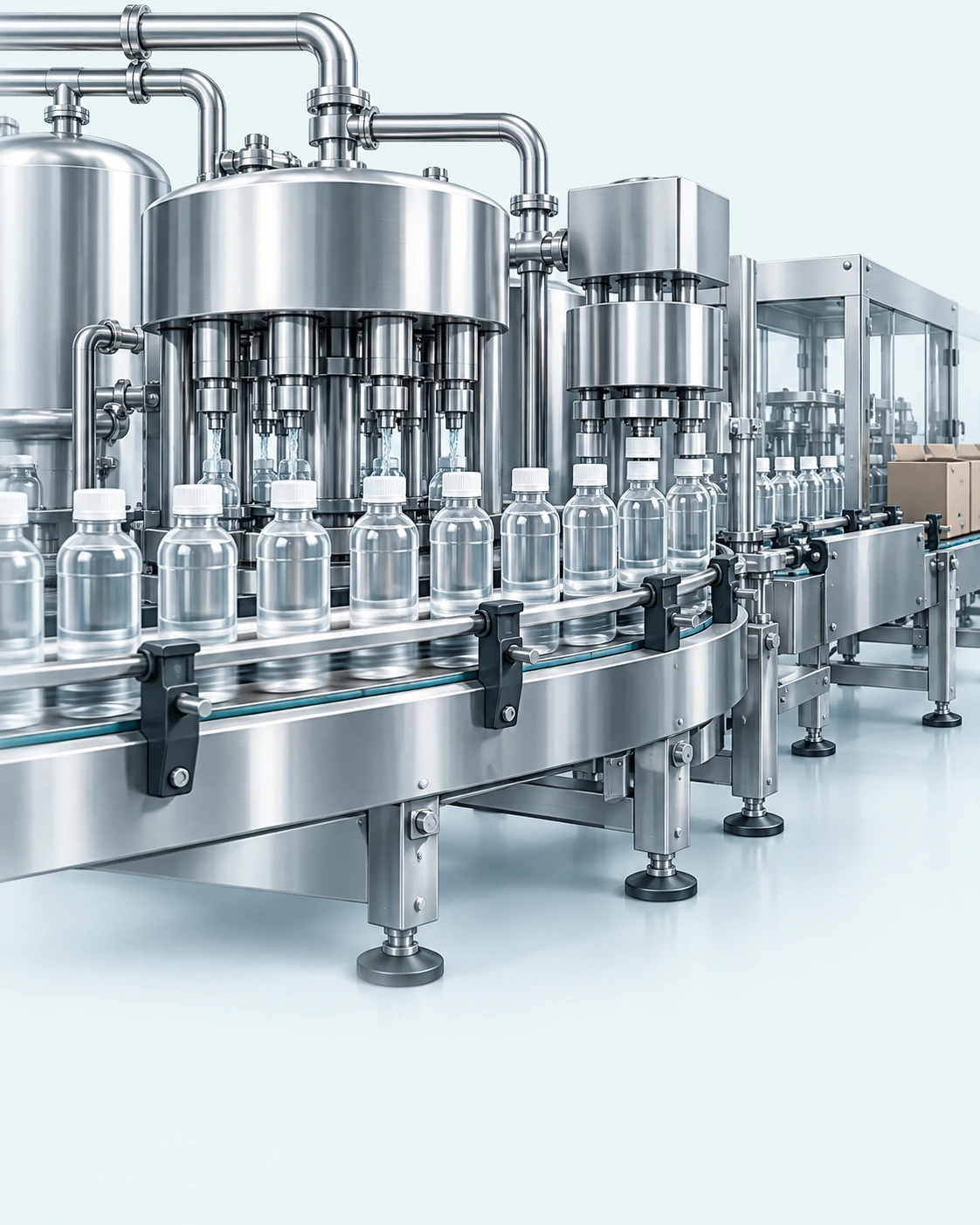
Consistent cleaning conditions
Running cleaning cycles automatically can help reduce variation between operators.
Applications for NPJ
Applied to batch processes in which tanks and pipes are cleaned before the next product is produced.
When NPJ is a good fit
- Batch production lines with frequent changeovers and many cleaning cycles
- Processes where residues remain after cleaning and re-cleaning is repeated
- Equipment with low-velocity sections such as bends and branches
- Sites that want to reinforce cleaning while keeping existing WIP/CIP equipment
When another product fits better
- For spray or immersion cleaning of parts or open surfaces, HQN
- For nanobubble water supply in processes with strict hygiene standards, HTV
NPJ configuration and installation
Water from the existing cleaning water supply line is turned into pulsed nanobubble water and sent through the existing cleaning nozzles into tanks and pipes.
Swipe left or right to see the full table.
-
Connection
The existing cleaning water supply line and compressed air are connected to the unit.
-
Nanobubble generation and pulsing
Nanobubbles are generated in the cleaning water and pulsed flow is added.
-
Cleaning
The pulsed nanobubble water enters tanks and pipes through the cleaning nozzles.
NPJ Application Range
The Nano Pulse Jet is configured with models of 5 m³/h or less. Detailed specifications are set after checking the items cleaned and site conditions.
| Item | Nano Pulse Jet (NPJ) |
|---|---|
| Category | Cleaning system |
| Applicable flow | Models of 5 m³/h or less |
| Paired products | HQN, HTV |
| Connection point | Between the existing cleaning water supply line and cleaning nozzles |
| Wetted-part materials | SUS304 · SUS316L |
| Installation | Mobile · Fixed |
| Main uses | Equipment and pipe cleaning (WIP/CIP), supporting cross-contamination control in batch production |
Specifications are set to suit the items cleaned and site conditions.
NPJ FAQ
Answers to key technical and adoption questions when considering NPJ.
Do I need to replace existing WIP/CIP equipment?
Existing equipment stays as it is.
It connects between the existing cleaning water supply line and cleaning nozzles. It can be used as a mobile unit shared among several pieces of equipment or installed permanently on one line.
What roles do nanobubbles and pulses each play?
Nanobubbles help separate residues, and pulses help flush them out.
Nanobubble water supports the removal of contaminants attached to surfaces. Pulses help detach and flush out residues through repeated changes in flow velocity and pressure.
Which models is it used with?
It is used with models of 5 m³/h or less.
It is configured with HQN and HTV models of 5 m³/h or less. Larger flows are outside its application range.
Do we still need to use detergent?
It is used with detergent, and the amount is determined by cleaning tests.
Existing cleaning agents can be used as they are. Cleaning tests determine the detergent amount that maintains the same cleaning level.
How are cleaning results verified?
Existing cleaning evaluation methods are kept.
Existing cleaning evaluation methods such as TOC, conductivity and visual inspection are applied as they are.
Tell us the items to be cleaned, contaminants, current cleaning method and acceptance method, and we will review a suitable configuration.
Contact Us